How to Read Terrarium Temperature for Small Reptiles
Zoo Med’s Digital Terrarium Thermometer leads for accurate probe readings across a wide range, Etekcity’s Lasergrip infrared gun handles quick basking-spot checks, and the Exo Terra Digital Thermometer Hygrometer covers humidity-sensitive species. Probe placement affects accuracy more than brand name in small reptile and amphibian enclosures.
Zoo Med’s Digital Terrarium Thermometer earns the top spot here, with a probe range spanning minus 58 to 158 degrees Fahrenheit that covers both basking zones and cool hides in one enclosure. Its main limitation is a probe cable short enough to restrict placement in taller tanks.
Small reptiles and amphibians tolerate a narrower temperature band than larger species, so accuracy matters more than price here. We compared probe range, sensor type, and humidity features across seven models to match each one to a specific enclosure setup.
The top picks, ranked
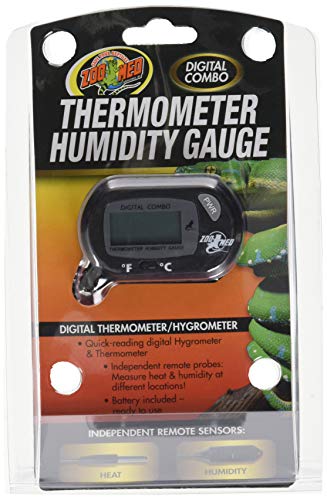
Zoo Med Digital Terrarium Thermometer
A wired probe on this thermometer reads from minus 58 to 158 degrees Fahrenheit, wide enough to cover both a cool hide and a basking zone in one enclosure. Leopard gecko and small snake owners report stable readings once the probe settles for a few minutes. A suction-cup mount holds the probe against glass or mesh without sliding.
Pros
- Wide range covers most small reptile setups
- Suction mount keeps the probe fixed in place
- Clear LCD display easy to read at a glance
Cons
- Short probe cable limits placement in tall tanks
- Battery cover reported as flimsy by some owners

Etekcity Lasergrip 774 Infrared Thermometer
Pointing this infrared gun at a basking rock or substrate gives a surface reading without opening the enclosure. It works alongside a probe thermometer rather than replacing one, since it takes no continuous readings. Response comes back almost instantly, faster than any probe-based reader.
Pros
- Instant surface temperature readings
- No permanent installation required
- Wide range useful beyond reptile care
Cons
- Reads surface temperature only, not ambient air
- Needs manual spot-checking instead of continuous monitoring

Exo Terra Digital Thermometer Hygrometer
Tropical species like tree frogs and crested geckos need humidity tracking alongside temperature, and this combo unit reads both from one display. An external probe measures temperature while an internal sensor tracks humidity separately. Min and max memory flags overnight swings that a single reading would miss.
Pros
- Tracks humidity and temperature from one display
- Min/max memory catches overnight temperature swings
- Compact size fits smaller terrariums
Cons
- Narrower temperature range than dedicated probe units
- Humidity sensor needs periodic recalibration
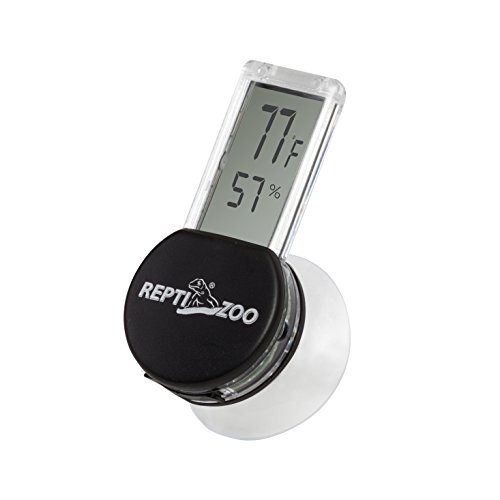
REPTIZOO Digital Terrarium Thermometer Hygrometer
This combo unit covers similar ground to the Exo Terra at a lower cost, with a display large enough to read from across a room. Tanks under 20 gallons, common for geckos and small snakes, suit this unit well. A shorter probe cable fits compact enclosures better than tall ones.
Pros
- Large display readable from a distance
- Lower cost than the Exo Terra equivalent
- Fits compact tank setups well
Cons
- Shorter cable limits placement in taller tanks
- Accuracy varies slightly more between units
Fluker’s Digital Thermometer and Humidity Gauge
First-time reptile owners get a straightforward digital display paired with basic humidity tracking here. Setup involves sticking the sensor to the glass and running a short probe to the target spot. Memory features found on pricier combo units are missing, though core readings stay reliable.
Pros
- Simple setup suited to new reptile owners
- Combines temperature and humidity in one gauge
- Affordable for single-tank households
Cons
- No min/max memory function
- Adhesive mount wears out faster than suction cups

Zilla Digital Thermometer and Humidity Monitor
A slim probe design lets this monitor fit through narrow mesh lids common on smaller enclosures. Households running several tanks for different species find the low cost practical for buying multiple units. One probe placement handles both temperature and humidity readings.
Pros
- Slim probe fits narrow mesh lids
- Affordable enough for multiple tanks
- Reads humidity and temperature together
Cons
- Display lacks backlight for low-light rooms
- Probe wire shorter than Zoo Med’s
REPTI ZOO Infrared Temperature Gun
Non-contact spot checks come at a lower cost with this infrared gun, though its temperature range runs narrower than the Etekcity model. Basking spots and substrate checks suit it fine without needing lab-grade precision. A simpler display helps battery life last longer between charges.
Pros
- Lower cost than name-brand infrared guns
- Long battery life between uses
- Fast readings for spot-checking
Cons
- Narrower range than Etekcity’s infrared model
- Build quality feels less durable per owner feedback
How to choose
What to look for in a reptile thermometer Probe and infrared sensing measure differently, so deciding between them comes first. A probe reads one fixed spot continuously, while an infrared gun checks any surface instantly. Small pets like geckos and frogs need readings accurate within a few degrees, since their comfort range runs narrower than larger reptiles.
Covering basking and cool zones in one enclosure Every small reptile enclosure needs a warm basking area and a cooler retreat, so one reading point only shows half the picture. Placing a probe at the basking spot and spot-checking the cool end with an infrared gun covers both zones without buying two fixed units. Combo units with humidity tracking help species like crested geckos that need both metrics at once.
Humidity monitoring for amphibians and tropical species Amphibians and certain gecko species need humidity monitoring as much as temperature, since dry air causes shedding problems. Combo units like the Exo Terra or REPTIZOO cover both readings in one display. Arid-habitat reptiles like bearded dragons generally skip humidity tracking and do fine with a temperature-only probe.
Multiple tanks or one thermometer per enclosure Larger enclosures with more than one heat source benefit from multiple probes, since a single point misses temperature gradients across the tank. Households running several tanks save money with budget probes like the Zilla monitor instead of premium combo units in each one. Breeders monitoring incubation temperatures need the tightest accuracy and should prioritize probe range over cost.
How they compare
| # | Model | Sensor type | Best for | Score | Price |
|---|---|---|---|---|---|
| 1 | Zoo Med Digital Terrarium Thermometer | Wired probe | Best overall | 9.3 | Check price |
| 2 | Etekcity Lasergrip 774 Infrared Thermometer | Infrared, non-contact | Best for spot checks | 8.9 | Check price |
| 3 | Exo Terra Digital Thermometer Hygrometer | Wired probe plus internal humidity sensor | Best for humidity-sensitive species | 8.7 | Check price |
| 4 | REPTIZOO Digital Terrarium Thermometer Hygrometer | Wired probe plus internal humidity sensor | Best value | 8.6 | Check price |
| 5 | Fluker’s Digital Thermometer and Humidity Gauge | Wired probe plus humidity sensor | Best for beginners | 8.4 | Check price |
| 6 | Zilla Digital Thermometer and Humidity Monitor | Wired probe plus humidity sensor | Best for multi-tank setups | 8.3 | Check price |
| 7 | REPTI ZOO Infrared Temperature Gun | Infrared, non-contact | Best budget | 8.0 | Check price |
Good to know
What temperature range do small reptile tanks need?
Most small reptiles need a basking spot between 90 and 100 degrees Fahrenheit and a cool zone between 70 and 80 degrees Fahrenheit, though exact needs vary by species.
Are infrared thermometers accurate for reptile tanks?
Infrared guns read surface temperature accurately but skip ambient air readings, so pairing one with a probe thermometer works better than using either alone.
Can one thermometer track both temperature and humidity?
Yes. Combo units like the Exo Terra Digital Thermometer Hygrometer and REPTIZOO models track both readings on a single display.
How often should reptile thermometers be checked for accuracy?
Comparing readings against a separate reference thermometer every few months catches sensor drift, especially in probes running continuously.
Do amphibians need a different thermometer than reptiles?
Amphibians generally need humidity tracking alongside temperature, since dry conditions cause health problems, while many reptiles need only temperature monitoring.
Where should the probe sit inside a reptile tank?
Place the probe at the basking spot or whichever zone matters most, since readings reflect only that exact point, not the whole enclosure.
Wired probe vs infrared gun: what is the difference?
A wired probe gives continuous readings from a fixed spot, while an infrared gun gives instant spot checks from any surface at a distance.
Is a digital thermometer better than a stick-on strip?
Digital thermometers give more accurate, continuous readings than adhesive strip thermometers, which tend to run less precise according to owner comparisons.
Best thermometer for a bearded dragon or leopard gecko?
Zoo Med’s wide-range probe thermometer suits both species well, since its range covers the higher basking temperatures they need without a separate humidity sensor.
Final word
Zoo Med’s Digital Terrarium Thermometer remains the strongest all-around choice, thanks to its wide range and dependable probe accuracy across most small reptile species. Owners keeping humidity-sensitive amphibians should pick the Exo Terra combo unit instead, since it tracks both metrics on one display. Anyone spot-checking multiple surfaces quickly will still want an infrared gun like the Etekcity alongside either primary thermometer.
Olivia Hartley
Olivia spent several years working at an animal shelter and a pet-supply retailer before joining the editorial team. She researches pet gear with an emphasis on safety, comfort and the fine print that owners often miss.