Foggers vs Misters: Reptile Humidity Equipment Compared
Zoo Med’s ReptiFogger is the strongest all around humidifier for most terrariums, while the MistKing Starter Misting System v5.0 scales to large or multi tank setups. Zoo Med’s HygroTherm turns either into an automated system, and the Exo Terra Monsoon Solo II suits planted vivariums best.
Zoo Med’s ReptiFogger tops this list for raising terrarium humidity in a typical single enclosure. The MistKing Starter Misting System v5.0 takes over once one fogger cannot keep pace across large or multiple tanks. Zoo Med’s HygroTherm is the accessory that stops either device from overshooting its target.
Humidity gear gets tricky fast, since output that suits a crested gecko will drown a bearded dragon setup within days. A device running on a plain timer works regardless of what the enclosure actually needs at that moment, which causes swings. We compared reservoir capacity, output rates, nozzle counts and controller compatibility, along with what owners report about mineral buildup and long term reliability.
The best picks, ranked
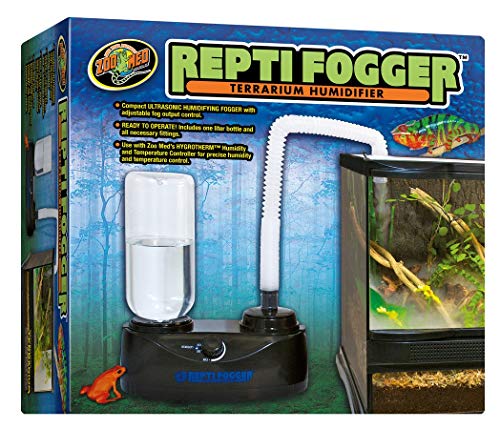
Zoo Med ReptiFogger Terrarium Humidifier
Dense, cool fog settles evenly through a terrarium instead of soaking substrate the way a misting nozzle can. An adjustable dial and a flexible hose let you aim output from outside the enclosure. Owners report distilled water is essential here, since tap minerals shorten the ultrasonic disc’s life.
Pros
- Even fog coverage without wetting substrate
- Output dial adapts to different species needs
- Works alongside external humidity controllers
Cons
- Needs distilled water to prevent scale buildup
- Reservoir drains quickly at high settings

MistKing Starter Misting System v5.0
A pressurized pump drives multiple nozzles at real force, so one system can service several enclosures from a single timer. Reach extends into the back corners of a tall vivarium, unlike a basic fogger. Installation takes real time, since tubing must be routed and nozzles positioned, but owners consistently praise its multi year reliability.
Pros
- Serves multiple enclosures from one pump
- Seconds level timer gives precise control
- Nozzles and tubing expand as your setup grows
Cons
- Longest setup time among the options here
- Costs more upfront than a single fogger

Zoo Med HygroTherm Humidity and Temperature Controller
This controller is not a humidifier at all, it is the brain that stops one from running blind. A combined probe reads humidity and temperature inside the enclosure, switching the fogger or mister on only below your set point. Pairing it with a ReptiFogger is the most common way keepers reach stable humidity.
Pros
- Holds an actual set point instead of a timer guess
- Manages humidity and heat from one unit
- Prevents the over misting that leads to mold
Cons
- Adds cost on top of the humidifier itself
- Accuracy depends heavily on probe placement

Exo Terra Monsoon Solo II Rainfall System
Programmed misting cycles run from a sizeable reservoir, suiting planted vivariums where both live plants and drinking droplets matter. Duration and frequency are both adjustable across a full day. It runs on a timer rather than a sensor, so pairing it with a hygrometer and adjusting seasonally still matters.
Pros
- Large reservoir cuts down on refills
- Duration and interval settings are both flexible
- Droplet size suits live plants well
Cons
- No humidity sensing, timer only
- Nozzles need descaling on a regular schedule
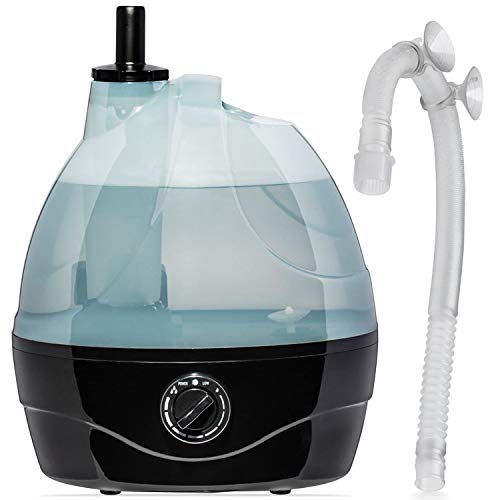
Evergreen Pet Supplies Reptile Humidifier
A large tank pairs with an extra long flexible hose here, so the unit can sit on the floor and still feed a tall enclosure. Run time between refills stands out, which matters for keepers who cannot top up daily. Fog runs a bit coarser than the ReptiFogger, so medium and large terrariums suit it better than small ones.
Pros
- Long run time between refills
- Extended hose reaches taller tanks
- Strong value against name brand foggers
Cons
- Fog output is coarser than premium units
- Housing build feels basic

REPTI ZOO Reptile Fogger Humidifier
A modest reservoir and gentle output keep this fogger from swamping a compact terrarium. Its built in timer covers basic cycling without a separate controller. Larger vivariums will need refills too often for this unit to stay practical.
Pros
- Gentle output suits small tanks well
- Built in timer needs no extra controller
- Small footprint fits tight spaces beside a tank
Cons
- Refills become frequent on larger setups
- Timer lacks the precision of a dedicated controller

Exo Terra Digital Hygrometer with Probe
None of the equipment above means much without an accurate reading, and analogue dial gauges are notoriously unreliable. A remote probe lets this hygrometer measure at the animal’s level instead of at the glass. Minimum and maximum memory reveals overnight swings that a single spot check would miss.
Pros
- Far more accurate than analogue dial gauges
- Remote probe reads at the animal’s level
- Min and max memory catches overnight swings
Cons
- Measures conditions only, does not control them
- Probe wire needs careful routing
How they stack up
| # | Model | Type | Best for | Score | Price |
|---|---|---|---|---|---|
| 1 | Zoo Med ReptiFogger Terrarium Humidifier | Ultrasonic fogger | Best overall | 9.4 | Check price |
| 2 | MistKing Starter Misting System v5.0 | Pressurised misting pump | Best for large setups | 9.2 | Check price |
| 3 | Zoo Med HygroTherm Humidity and Temperature Controller | Humidity and temperature controller | Best for automation | 9.0 | Check price |
| 4 | Exo Terra Monsoon Solo II Rainfall System | Programmable misting system | Best for planted vivariums | 8.8 | Check price |
| 5 | Evergreen Pet Supplies Reptile Humidifier | Ultrasonic fogger | Best value | 8.6 | Check price |
| 6 | REPTI ZOO Reptile Fogger Humidifier | Ultrasonic fogger | Best for small terrariums | 8.3 | Check price |
| 7 | Exo Terra Digital Hygrometer with Probe | Digital hygrometer | Best for monitoring | 8.0 | Check price |
Before you buy
How to match humidity equipment to your species A crested gecko and a ball python want very different humidity levels, and gear built for one will harm the other. Look up your species target range before buying anything. Choose equipment that reaches the top of that range without running at full output constantly. A unit maxed out all day is already undersized.
Fogger vs misting system: what is the difference Ultrasonic foggers produce a cool visible mist that raises ambient humidity gradually while keeping substrate fairly dry. Misting systems spray droplets instead, raising humidity faster while watering live plants and giving arboreal species something to drink. Many keepers run a fogger for baseline humidity and add a short mist cycle morning and evening.
Why a humidity controller stops the biggest failures A humidifier on a plain plug timer cannot react to a hot afternoon or a suddenly dry room. Humidity either spikes toward mold territory or drops without anyone noticing. A controller such as the HygroTherm reads a probe and switches output only when needed. That is the difference between a stable enclosure and one swinging twenty points across a single day.
Does water quality affect humidifier maintenance Tap water leaves mineral scale on ultrasonic discs and clogs misting nozzles, which is the most common reason this equipment quits working. Distilled or reverse osmosis water avoids the problem entirely. Rinse the reservoir weekly and descale nozzles monthly regardless of water source, since standing warm water also breeds bacteria.
Common questions
What humidity level does my reptile need?
It ranges from around thirty percent for desert species to eighty percent or higher for tropical ones. Check a care sheet for your specific animal, since equipment choice should follow that number rather than lead it.
Should I use a fogger or a misting system?
Foggers raise ambient humidity gently while keeping substrate drier, suiting enclosures that need steady moderate humidity. Misting systems water plants and give arboreal species drinking droplets. Larger planted vivariums often benefit from running both.
Can I use tap water in a reptile humidifier?
Better not to. Minerals build up on ultrasonic discs, clog misting nozzles and leave residue on glass. Distilled water costs little and extends equipment life considerably.
Do I need a separate humidity controller?
If your enclosure needs a narrow humidity band, yes. A timer runs regardless of conditions, while a controller like the Zoo Med HygroTherm actually holds a set point as the room changes.
Where should I place the humidity probe?
At the animal’s level, away from the fog outlet and away from the glass. A probe placed right beside a mister reads too high, causing the system to shut off before the enclosure reaches its real target.
Will high humidity cause mold in a terrarium?
It can, especially with poor airflow and organic substrate. Keep some ventilation, spot clean often, and let humidity dip naturally between cycles instead of holding it at maximum. Live plants and springtails help a lot in bioactive setups.
How noisy are ultrasonic foggers?
Most produce a soft hum with an occasional gurgle as water shifts in the reservoir. Owners describe them as quiet enough for a living room, while a misting pump runs noticeably louder during its short cycles.
How often do I need to refill a fogger reservoir?
It depends on output setting and tank size. A two litre fogger on moderate output typically needs a refill every two to four days, while a large misting reservoir can last a week or more on short cycles.
What is the best humidity setup for a large or multi tank collection?
The MistKing Starter Misting System v5.0 handles this best, since its pressurized pump can drive several nozzles across multiple enclosures from one timer.
Is a fogger or a controller more important to buy first?
Buy the humidifier first to solve the immediate humidity gap, then add a controller like the HygroTherm once you know your baseline. Skipping the controller works short term but risks swings over time.
The verdict
For a single terrarium, pairing the Zoo Med ReptiFogger with the HygroTherm controller gives the steadiest humidity without constant manual adjustment. Keepers running several enclosures should look at the MistKing Starter Misting System v5.0, which scales in a way single foggers cannot. Whatever you choose, a proper digital hygrometer is not optional, since everything else is guesswork without an accurate reading.
Olivia Hartley
Olivia spent several years working at an animal shelter and a pet-supply retailer before joining the editorial team. She researches pet gear with an emphasis on safety, comfort and the fine print that owners often miss.