Recumbent Bikes for Tall Riders and Small Rooms
Schwinn 270 Recumbent Bike leads the group with 25 resistance levels, 29 programs and Bluetooth export. Nautilus R618 suits riders over six feet thanks to longer rail travel and a 325 pound capacity. Marcy ME-709 keeps things simple for steady daily pedalling.
Schwinn 270 Recumbent Bike fits most home gyms, since 25 magnetic levels cover both recovery spins and hard intervals on one machine. A ventilated seat back and dual display make hour long sessions bearable. Assembly is heavy work, and the frame claims roughly six feet by three of floor.
Pedalling feels similar across these bikes; fit is what splits opinion between two riders on the same model. We compared resistance range, program counts, rail travel, weight capacity and console connectivity. Owner feedback on seat comfort, console accuracy and step-through height separated the close calls.
The shortlist, ranked
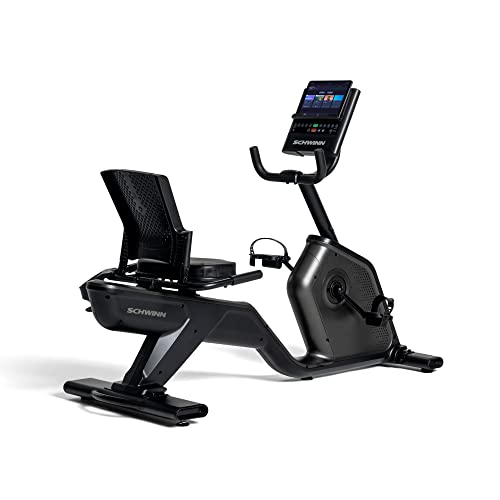
Schwinn 270 Recumbent Bike
Twenty five resistance levels give fine control, so one notch up is a nudge rather than a jump. Bluetooth sends ride data to fitness apps, and 29 built-in programs handle sessions without a phone. A ventilated seat back and USB port suit rides long enough to finish an episode.
Pros
- Small resistance steps suit interval blocks
- Rides log automatically to connected apps
- Ventilated back panel cuts heat on long sessions
Cons
- Assembly is heavy and fills most of an hour
- Console menus feel dated beside tablet-based rivals
Nautilus R618 Recumbent Bike
Longer rail travel and a 325 pound capacity make this the safer choice above six feet. Two screens display speed and heart rate together, which saves cycling through menus mid-ride. Resistance matches the Schwinn 270 at 25 levels, so fit is the real dividing line.
Pros
- Extra rail travel gives longer legs full extension
- Highest weight capacity among these picks
- Dual screens show more metrics at a glance
Cons
- Wants more floor length than compact frames
- Grip heart rate reads less accurately than a chest strap
Schwinn 230 Recumbent Bike
Sixteen resistance levels and 22 programs handle everyday riding without the 270’s extras. Frame geometry and seat design carry over, so comfort holds up across long sessions. Skip it if structured intervals need fine resistance steps.
Pros
- Seat layout matches the 270 for comfort
- Twenty two programs cover a varied week
- Media shelf holds a tablet at eye level
Cons
- Sixteen levels jump more coarsely than 25
- No Bluetooth, so rides need manual logging
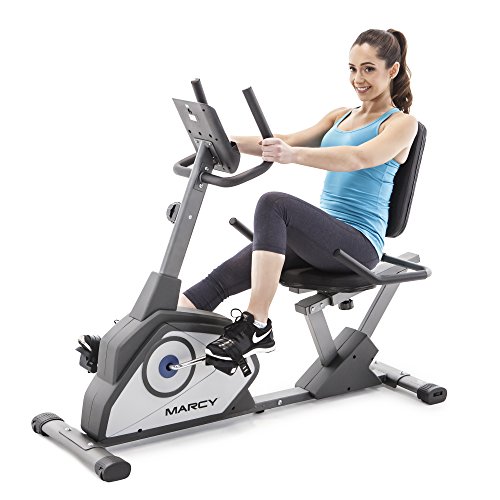
Marcy ME-709 Recumbent Exercise Bike
Eight tension levels and a plain readout keep this uncomplicated. Counterbalanced pedals with adjustable straps hold the foot steady at low cadence. Step-through height is low, which helps anyone who struggles to swing a leg over a frame.
Pros
- Low frame makes mounting easy
- Few electronics means little to fail
- Compact enough for a spare bedroom
Cons
- Eight levels cap effort for fitter riders
- No programs and no data export

Sunny Health & Fitness SF-RB4616
Sunny shortens the frame so this suits rooms that cannot host a full length recumbent. Eight tension levels adjust by knob instead of through a console. Front transport wheels let you tip and roll it back against a wall between sessions.
Pros
- Shortest frame of these seven bikes
- Knob resistance works without mains power
- Wheels make weekly repositioning quick
Cons
- Short rail leaves tall riders cramped
- Display covers only basic metrics

YOSUDA Recumbent Exercise Bike
A wide step-through gap and a 330 pound rating make this approachable for riders returning after a break. Sixteen magnetic levels give more range than most simple consoles allow. Seat position moves on a sliding lever, so two people can swap in seconds.
Pros
- Widest step-through gap in this group
- Sixteen levels despite a basic display
- Lever seat adjustment needs no tools
Cons
- Belt drive hums louder than the Schwinn models
- No programs and no Bluetooth export

Teeter FreeStep LT1 Recumbent Cross Trainer
Moving handles link to the stride, so arms work alongside legs from a seated position. Stride path runs linear rather than circular, keeping knee travel shallow. Treat it as a cross trainer, because cadence and feel differ from a crank drive.
Pros
- One seated movement works arms and legs
- Shallow knee path suits cautious joints
- Magnetic drive runs close to silent
Cons
- Feel is unlike a standard pedal stroke
- Takes more floor space than compact recumbents
Side by side
| # | Model | Resistance | Best for | Score | Price |
|---|---|---|---|---|---|
| 1 | Schwinn 270 Recumbent Bike | 25 magnetic levels | Best overall | 9.4 | Check price |
| 2 | Nautilus R618 Recumbent Bike | 25 magnetic levels | Best for tall riders | 9.2 | Check price |
| 3 | Schwinn 230 Recumbent Bike | 16 magnetic levels | Best value | 9.0 | Check price |
| 4 | Marcy ME-709 Recumbent Exercise Bike | 8 magnetic levels | Best budget | 8.7 | Check price |
| 5 | Sunny Health & Fitness SF-RB4616 | 8 magnetic levels | Best compact | 8.5 | Check price |
| 6 | YOSUDA Recumbent Exercise Bike | 16 magnetic levels | Best for easy mounting | 8.3 | Check price |
| 7 | Teeter FreeStep LT1 Recumbent Cross Trainer | Linear seated stride | Best for low impact full body work | 8.0 | Check price |
How to pick the right one
What to look for in a recumbent exercise bike Resistance range sets the ceiling on effort. Eight level bikes handle steady pedalling, while 25 levels allow the small increases interval work depends on. Seat design does the rest, so look for a rail that slides far enough for your inseam and a back that vents heat. Weight capacity describes frame strength, and staying well under the figure keeps the ride stable. Consoles run from a single readout to Bluetooth export, which only earns its keep if you actually log sessions.
How much floor space a recumbent bike needs Recumbents stretch out where uprights stand tall, so measure length before anything else. Full size frames like the Nautilus R618 want roughly six feet by three, plus room to walk past. Compact models such as the Sunny SF-RB4616 trim about a foot, and that foot comes out of seat travel. Riders over six feet should prioritise rail length over program count. Check ceiling height too if the bike lives under a sloped roof.
Best recumbent bikes for tall riders and easy mounting Step-through height is the feature most buyers notice only after delivery. YOSUDA and Marcy ME-709 keep the frame low and the gap between seat and console wide, which helps stiff hips. At the other end of the range, Nautilus R618 offers the longest rail travel here plus a 325 pound capacity. Seat adjustment method shapes daily use, and a side lever beats a pin and bolt when two people swap between sessions. Pedal straps steady the foot at low cadence, while side handles give something to push against when standing up.
Noise, app tracking and sharing one bike Magnetic resistance runs near silent across every pick, so drive belts create the difference. Schwinn and Nautilus frames stay quieter than the budget belt drives, which matters in a flat or a shared room. Only the Schwinn 270 exports rides over Bluetooth, so app users should not compromise on that one feature. Households with several riders gain more from tool free seat adjustment and a high capacity than from extra programs. Anyone wanting arm movement should take the Teeter FreeStep LT1 rather than hold dumbbells on a bike.
Common questions
What is the best recumbent exercise bike for home use?
Schwinn 270 Recumbent Bike, because 25 resistance levels, 29 programs and Bluetooth export cover easy rides and structured intervals on one machine.
Are recumbent bikes better than upright bikes for the lower back?
A reclined seat with back support shifts load off the lower spine and removes the forward lean. Riders who find upright saddles painful usually last longer on a recumbent.
Which recumbent bike is best for tall riders?
Nautilus R618 offers the longest rail travel here along with a 325 pound capacity. Short frames like the Sunny SF-RB4616 leave long legs bent at full extension.
How much space does a recumbent bike need?
Budget roughly six feet by three for a full size frame, plus walking clearance. Compact models save about a foot of length by shortening seat travel.
Schwinn 270 vs Schwinn 230: what is the difference?
Nine more resistance levels, seven more programs and Bluetooth export separate the 270. Seat and frame comfort track closely, so the 230 suits steady riding.
How many resistance levels do you actually need?
Eight is enough for gentle daily pedalling at a fixed effort. Interval training benefits from 16 or 25, since each step up is small enough to hold for a minute.
Do recumbent bikes help with weight loss?
Calories burned follow the effort and time you sustain, not the bike style. A supportive seat helps people ride longer, which is where the advantage comes from.
Can two people share one recumbent bike?
Yes. Lever-adjusted seats on the YOSUDA and Schwinn models slide without tools, so swapping between riders takes seconds.
Are recumbent bikes quiet enough for an apartment?
Magnetic resistance makes no noise on its own, so the belt drive sets the volume. Schwinn and Nautilus frames run quieter than budget belts under a television.
Is a recumbent cross trainer better than a recumbent bike?
Teeter FreeStep LT1 adds linked arm movement and a shallower knee path. Pick a bike instead if you want a familiar pedal stroke and simple resistance steps.
The verdict
Schwinn 270 Recumbent Bike is the one to buy, since 25 resistance levels and Bluetooth export serve recovery spins and interval blocks equally well. Riders over six feet should take the Nautilus R618 for its longer rail instead. Anyone who only wants gentle daily pedalling and an easy step-through can save the difference with Marcy ME-709 and live with eight levels.
Derek Holt
Derek has a background coaching recreational and amateur athletes and has worked the sales floor at specialty fitness retailers. He focuses on equipment durability, ergonomics and realistic use cases rather than marketing claims.


