What Record Player Setup Actually Protects Your Vinyl?
Among these seven turntables, the AT-LP120XUSB stands out for direct-drive precision, a switchable preamp, and USB ripping. The Fluance RT81 offers warmer sound for a modest step up in complexity. Beginners drawn to simplicity should start with the AT-LP60X, which needs no manual cueing at all.
Sound quality, cartridge type, and whether a preamp is built in decide how a turntable performs, more than any marketing badge. The AT-LP120XUSB leads this lineup for its direct-drive motor, adjustable tonearm, and USB output. Close behind, the Fluance RT81 brings warmer sound at a gentler price, and the AT-LP60X strips things down for anyone starting fresh.
Specs sheets rarely explain what actually matters: motor vibration, cartridge tracking, or whether Bluetooth costs you audio quality. To rank these seven, we compared drive type, cartridge quality, connectivity, and build materials against how owners describe each deck holding up over months of use.
What we recommend

Audio-Technica AT-LP120XUSB Turntable
Direct drive delivers strong torque and steady speed on the AT-LP120XUSB, a build DJs have relied on for years. A fully adjustable tonearm with counterweight and anti-skate lets you dial in tracking force precisely. Its switchable phono preamp and USB output mean it connects to nearly any system and can digitize vinyl straight to a computer.
Pros
- Adjustable tonearm gives precise tracking control
- Switchable preamp works with powered speakers or a receiver
- USB output rips records directly to a computer
Cons
- Larger footprint than entry-level decks
- Manual cueing takes practice for beginners
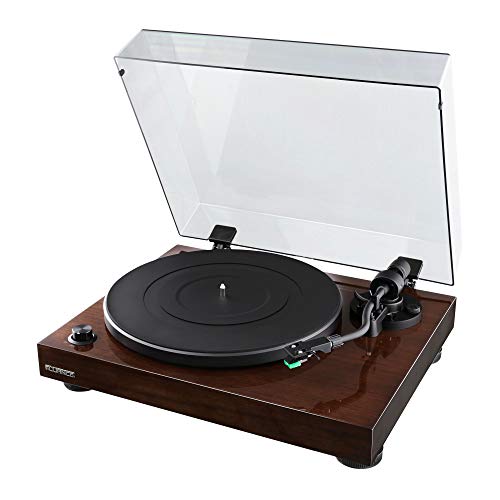
Fluance RT81 Elite Turntable
A solid wood plinth damps vibration on the Fluance RT81, and its Audio-Technica AT-95E cartridge tracks grooves with a warm, detailed tone. An aluminum platter keeps rotation stable, while the built-in switchable preamp connects straight to powered speakers. Owners report the sound rivals decks costing considerably more.
Pros
- Wood plinth and aluminum platter cut vibration
- AT-95E cartridge delivers warm, detailed sound
- Built-in preamp skips the need for extra gear
Cons
- No auto return, so you lift the tonearm manually
- Larger footprint than compact turntables

Sony PS-LX310BT Turntable
Built-in Bluetooth sets the PS-LX310BT apart, pairing directly with wireless speakers or headphones. One-touch playback and a fully automatic tonearm make it forgiving for first-time owners. A built-in phono preamp also lets it run through a wired connection when you want the cleanest signal.
Pros
- Bluetooth pairs with wireless speakers and headphones
- Fully automatic operation suits beginners
- Built-in preamp supports a wired connection too
Cons
- Bluetooth streaming adds slight audio compression
- Cartridge is not designed for easy upgrades

Pro-Ject Debut Carbon EVO Turntable
Audiophiles gravitate toward the Debut Carbon EVO for its one-piece carbon fiber tonearm and heavy, damped platter. A Sumiko Rainier cartridge comes factory-installed and already aligned. Adjustable feet help with leveling, though most owners still pair it with a separate phono preamp for best results.
Pros
- Carbon fiber tonearm and heavy platter reduce resonance
- Sumiko Rainier cartridge arrives pre-mounted and aligned
- Adjustable feet simplify precise leveling
Cons
- No built-in preamp on the standard version
- Manual setup rewards patience over convenience
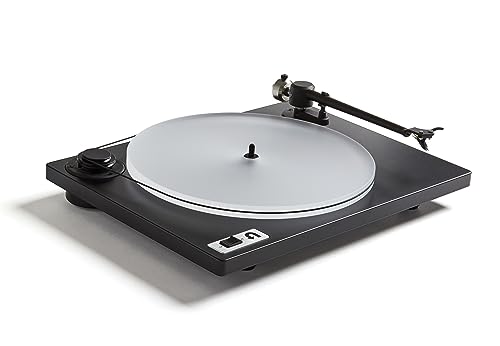
U-Turn Orbit Plus Turntable
An acrylic platter keeps speed stable on the Orbit Plus, paired with an Ortofon OM5E cartridge for clean, honest playback. Its simple, serviceable design makes swapping the cartridge or adding a preamp straightforward later. Buyers who want a foundation to build on tend to start here.
Pros
- Acrylic platter supports stable, consistent speed
- Ortofon OM5E cartridge tracks records cleanly
- Simple design makes future upgrades easy
Cons
- Speed changes require moving the belt by hand
- External preamp needed unless you choose that configuration

Denon DP-300F Turntable
Pressing a single button starts and returns the tonearm on the DP-300F, no manual cueing required. A die-cast aluminum platter adds stability that lighter decks lack. Built-in preamp support means it connects to most receivers or powered speakers without extra hardware.
Pros
- One-button start and return simplifies daily use
- Die-cast platter adds stability during playback
- Built-in preamp works with most existing systems
Cons
- Stock cartridge is basic for critical listening
- Fewer manual adjustments than audiophile-focused decks

Audio-Technica AT-LP60X Turntable
One-button operation makes the AT-LP60X genuinely plug-and-play for new vinyl owners. A built-in preamp connects straight to powered speakers, and the light, compact build keeps setup effortless. Its fixed cartridge caps future upgrades but keeps the entry cost low.
Pros
- Truly plug-and-play with one-button operation
- Built-in preamp works with powered speakers directly
- Compact and light, easy to fit anywhere
Cons
- Fixed cartridge cannot be swapped later
- Lightweight body picks up more vibration
How they compare
| # | Model | Drive type | Best for | Score | Price |
|---|---|---|---|---|---|
| 1 | Audio-Technica AT-LP120XUSB Turntable | Direct drive | Best overall | 9.4 | Check price |
| 2 | Fluance RT81 Elite Turntable | Belt drive | Best value | 9.1 | Check price |
| 3 | Sony PS-LX310BT Turntable | Belt drive | Best for Bluetooth streaming | 8.9 | Check price |
| 4 | Pro-Ject Debut Carbon EVO Turntable | Belt drive | Best for audiophiles | 8.7 | Check price |
| 5 | U-Turn Orbit Plus Turntable | Belt drive | Best for future upgrades | 8.5 | Check price |
| 6 | Denon DP-300F Turntable | Belt drive | Best for hands-off convenience | 8.2 | Check price |
| 7 | Audio-Technica AT-LP60X Turntable | Belt drive | Best budget pick | 8.0 | Check price |
How to choose
What to check before buying a turntable Turntable shopping comes down to four real factors: drive type, cartridge quality, whether a preamp is built in, and how much setup you want to do. Skipping any one of these leads to mismatched expectations once the box arrives. Motor design affects torque and vibration. Cartridge quality affects detail and record wear. A missing preamp means buying separate gear before you hear a single track.
Belt drive vs direct drive: what actually changes Belt-drive motors isolate the platter from vibration through an elastic belt. The Fluance RT81, U-Turn Orbit Plus, and the automatic Audio-Technica and Denon decks all rely on this design. That isolation favors quiet, warm playback for home listening. Direct drive, as on the AT-LP120XUSB, spins the platter directly for higher torque and near-instant start-up. DJs favor direct drive because it handles hand contact and quick cueing without losing speed. Home listeners rarely need that torque, so belt drive remains the common choice.
Do you need a phono preamp, and how does Bluetooth fit in A turntable’s signal is too weak for speakers until a phono preamp boosts it. Several models here, including the Sony, Denon, and both Audio-Technica decks, build that preamp in and let you switch it off for external use. The Pro-Ject Debut Carbon EVO skips a built-in preamp on its standard version, expecting a separate unit for cleaner amplification. Bluetooth on the Sony PS-LX310BT adds wireless convenience at a small cost to audio fidelity. USB output, found on the AT-LP120XUSB, lets you record vinyl straight to a laptop.
Which turntable fits beginners, upgraders, or audiophiles Beginners usually do best with a fully automatic deck. Both the AT-LP60X and Denon DP-300F start and return the tonearm on their own. Buyers planning future upgrades should look at the U-Turn Orbit Plus, which accepts a new cartridge or preamp without special tools. Audiophiles with an existing amplifier tend to choose the Pro-Ject Debut Carbon EVO for its carbon tonearm and damped platter. Anyone who already streams to wireless speakers should consider the Sony PS-LX310BT instead of running new cables.
Questions worth asking
What is the best record player overall?
Owners and specifications both point to the AT-LP120XUSB. Its direct-drive motor, adjustable tonearm, and switchable preamp cover casual listening, careful setup, and USB ripping in one deck. Few turntables at this level offer that range of use cases.
Do turntables need a separate amplifier?
It depends on the model. A built-in preamp, found on the Sony, Denon, and both Audio-Technica turntables, lets you connect straight to powered speakers. Passive speakers still need an amplifier or receiver somewhere in the chain.
What does a phono preamp actually do?
It boosts a turntable’s very weak signal to line level so an amplifier or powered speakers can use it. Without one, records sound thin and quiet through normal inputs. Many decks here switch a built-in preamp on or off as needed.
Is belt drive or direct drive better for home listening?
Belt drive isolates motor vibration, which suits quiet home listening on decks like the Fluance RT81. Direct drive offers higher torque and instant start-up, better suited to cueing and manual platter handling. Most casual listeners are happier with belt drive.
Which record players here connect to Bluetooth speakers?
Only the Sony PS-LX310BT streams wirelessly among this group. The rest rely on wired connections through a preamp or USB output. Wired connections avoid the slight compression Bluetooth introduces.
Can a budget turntable damage my vinyl records?
A properly set up budget deck will not harm records under normal use. Most damage traces back to a worn stylus, wrong tracking force, or careless handling. Clean the stylus regularly and set any adjustable counterweight correctly.
Can I upgrade the cartridge on these turntables later?
Some allow it and some do not. The U-Turn Orbit Plus and AT-LP120XUSB use a standard mount that accepts new cartridges. Budget models like the AT-LP60X use a fixed cartridge instead, so you replace the whole stylus assembly at once.
What is the difference between automatic and manual turntables?
Automatic decks, such as the AT-LP60X and Denon DP-300F, start and return the tonearm at the press of a button. Manual turntables require you to cue and lift the tonearm yourself. That extra effort often buys better parts for the same money.
How do I digitize records to a computer?
A turntable with USB output, like the AT-LP120XUSB, connects directly to a computer for recording. Recording software captures each side as a digital file. Decks without USB can still be digitized using an external audio interface between the preamp and computer.
Which record player suits a complete beginner?
The AT-LP60X keeps things simple with automatic start, a built-in preamp, and one-button operation. Sony’s PS-LX310BT is a strong alternative for anyone who wants Bluetooth streaming from day one. Both skip the manual cueing that trips up new owners.
The verdict
The AT-LP120XUSB remains the strongest all-around pick, combining direct-drive precision with USB ripping and a switchable preamp. Buyers who want warmth on a tighter budget should look at the Fluance RT81 instead. First-time owners who want zero setup will get there fastest with the AT-LP60X.
Marcus Chen
Marcus covered consumer electronics for enthusiast tech publications for six years before joining ChoiceCrest. He specializes in translating manufacturer spec sheets into plain-language buying advice, with a focus on audio, computing accessories and smart-home gear.