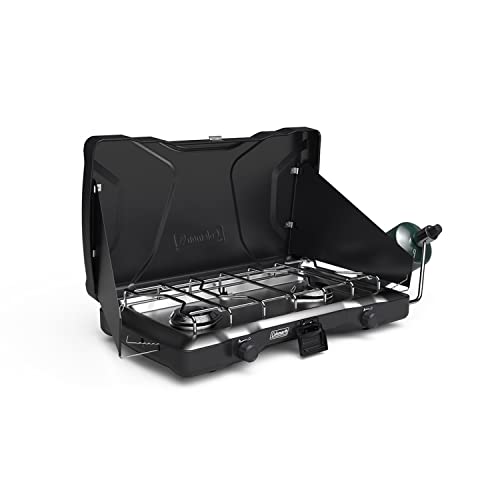
Rechargeable camping stoves: wood fire vs induction
BioLite CampStove 2+ is the only true rechargeable here, burning twigs while a 3200mAh cell runs the fan and charges a phone. Duxtop 9600LS suits anyone already carrying a power station. NuWave PIC Flex draws about 1300 watts, so mid sized batteries still cook a full meal.
BioLite CampStove 2+ is the pick for campers who want heat and charging from one unit. Fallen twigs supply the fuel, and an internal 3200mAh battery drives the combustion fan plus a USB port. Scale is its limit, because one small burner struggles past two people. Groups running a power station should look at the induction hobs below.
Rechargeable covers three different products, which is where buyers get caught. Fan assisted wood stoves store energy to improve combustion. Induction hobs store nothing at all and drain whatever battery you plug them into. Solar ovens cook on sunlight and keep a 12V element only as backup. Our ranking compared rated wattage, fuel type, battery capacity, cookware compatibility and owner reports on real cooking times.
The top picks, ranked

BioLite CampStove 2+
A thermoelectric module turns stove heat into electricity and tops up the 3200mAh internal cell that drives the fan. Four fan speeds set the burn rate, so a handful of sticks can hold a simmer or push a rolling boil. USB output charges a phone while dinner cooks, and no canisters come in or go out.
Pros
- Fuel costs nothing and lies around most pitches
- Waste heat charges a phone through the USB port
- Four fan speeds cover simmer through boil
Cons
- One small burner feeds two people at most
- Damp wood makes lighting slow and smoky
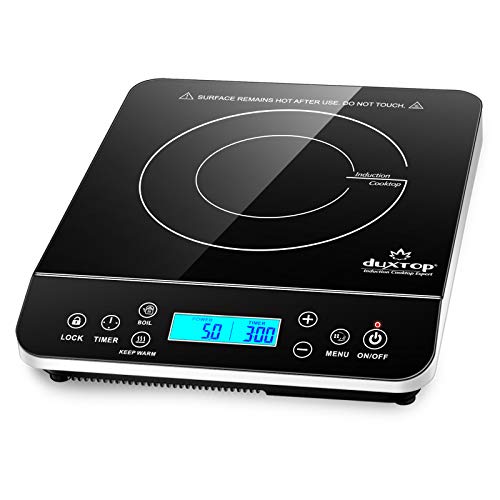
Duxtop 9600LS Portable Induction Cooktop
Rated at 1800 watts, this hob matches a home burner for boil speed, provided the station behind it sustains that draw. Twenty power steps and twenty temperature steps make simmering a sauce realistic, not just boiling water. Induction needs magnetic cookware, so cast iron and steel pans work while aluminium and most titanium mess kits stay cold.
Pros
- Fastest boil times in this lineup
- Fine steps allow genuine low temperature simmering
- Flat glass top wipes clean in seconds
Cons
- Full output demands a 2000 watt class station
- Aluminium and titanium camp pots will not heat

NuWave PIC Flex Precision Induction Cooktop
Peak draw lands near 1300 watts instead of 1800, which keeps mid sized power stations inside their inverter limit. Precise temperature settings and a timer suit reheating and slow cooking, the jobs most campers actually do after a day out. A slimmer body also packs easier than full size hobs.
Pros
- Fits inverters too small for 1800 watt hobs
- Timer runs the cooking while you set up camp
- Slimmer and lighter than full size induction plates
Cons
- Boils slower than an 1800 watt unit
- Small cooking zone limits pan diameter

Lixada Camping Wood Stove with USB Fan
Stainless steel panels form a gasifier chamber, and a small rechargeable fan forces air through it for a hotter, cleaner burn. That fan tops up over USB from a power bank, so it joins the same routine as a headtorch. Build quality sits below BioLite, though the supply of twigs and pine cones costs the same nothing.
Pros
- Forced air burn cuts smoke against an open fire
- Fan recharges from any USB power bank
- Nests down into a backpack side pocket
Cons
- No output for charging your own devices
- Thin steel warps after heavy repeated use

Cuisinart ICT-60 Double Induction Cooktop
Two induction zones let pasta and sauce run together, which cuts the wait when four people are hungry. Combined draw reaches 1800 watts and both zones share that budget, so a large power station is the entry ticket. Width and weight make it a drive-in camp item rather than a hiking one.
Pros
- Two dishes cook at once for group meals
- Each zone takes its own setting
- Glass surface cleans easily after boil-overs
Cons
- Shared wattage means both zones run cooler together
- Too wide and heavy to carry any distance

Ninja Woodfire Outdoor Grill OG701
Electric elements do the cooking while a scoop of wood pellets supplies smoke, which skips charcoal management entirely. Grilling, smoking, roasting, baking and air frying all run from one body, handy when a pitch has mains hookup. Draw sits near 1760 watts, so battery use means a big station and short sessions.
Pros
- Pellet smoke flavour without tending charcoal
- One unit covers grilling and air frying
- No gas canisters to carry or store
Cons
- Practical session lengths need mains power
- Bulky and heavy to load into a car

GoSun Fusion Solar Oven
Parabolic reflectors focus sunlight onto a vacuum tube chamber, cooking a meal with no fuel and no battery drain. On cloudy days or after dark, a 12V element takes over at a draw small enough for a portable power bank. Cooking runs slow and the tube shape limits portions, so treat it as a companion to a stove.
Pros
- Clear weather cooking costs no fuel at all
- Backup element draws little enough for a power bank
- Flameless operation suits pitches under fire restrictions
Cons
- Meals measure in hours, not minutes
- Tube chamber restricts pan and portion size
The lineup, side by side
| # | Model | Fuel | Best for | Score | Price |
|---|---|---|---|---|---|
| 1 | BioLite CampStove 2+ | Wood, twigs, pellets | Best overall | 9.4 | Check price |
| 2 | Duxtop 9600LS Portable Induction Cooktop | 1800 watts maximum | Best for power station cooking | 9.2 | Check price |
| 3 | NuWave PIC Flex Precision Induction Cooktop | About 1300 watts maximum | Best value | 9.0 | Check price |
| 4 | Lixada Camping Wood Stove with USB Fan | Wood, twigs, pine cones | Best budget | 8.6 | Check price |
| 5 | Cuisinart ICT-60 Double Induction Cooktop | Two independent induction burners | Best for group meals | 8.4 | Check price |
| 6 | Ninja Woodfire Outdoor Grill OG701 | Mains electric, about 1760 watts | Best for powered campsites | 8.2 | Check price |
| 7 | GoSun Fusion Solar Oven | Direct sunlight via parabolic reflectors | Best for fuel-free off-grid cooking | 8.0 | Check price |
What matters most
What rechargeable actually means for a camp stove Three distinct designs share the label. Fan assisted wood stoves such as the BioLite CampStove 2+ carry a cell and use it to force air through the fire, raising temperature and cutting smoke. Induction hobs store no energy whatsoever; they pull from whatever battery or hookup you supply. Solar ovens sit between, cooking free in sunshine and falling back to a small 12V element. Sorting the category first prevents the classic mistake of pairing an 1800 watt hob with a 300 watt inverter.
How to match a stove to your power station Two numbers decide whether a setup works. Continuous inverter output has to exceed the hob’s draw, so an 1800 watt Duxtop wants a 2000 watt class station while the 1300 watt NuWave fits smaller units. Capacity in watt hours then sets cooking time. A 1000Wh station running at 1000 watts gives roughly an hour, and a twenty minute pasta boil at 1800 watts eats around 600Wh. Solar input rarely keeps pace during a meal, so charge before the cooking window, not during it.
Best rechargeable camping stove for one or two people Weight and fuel logistics dominate at this scale. BioLite’s stove and the Lixada gasifier both burn found wood, which removes canister weight and empty cartridges from the pack. Boil times for a litre run several minutes, longer than gas, so choose meals that tolerate the wait. Fire rules are the real constraint. Under a dry season ban a wood burner is unusable, and a solar oven like the GoSun Fusion becomes the only flame free option. Check local restrictions before committing to a fuel type.
Cooking for a group at a drive-in campsite Park a car beside the pitch and weight stops mattering; throughput takes over. Two zones on the Cuisinart ICT-60 let sauce and pasta cook together, which counts when four people are waiting. Ninja’s Woodfire grill answers a different need, swapping charcoal for electric heat and pellet smoke on larger cuts. Both assume mains hookup or a large station, so confirm electricity before packing either. Without a hookup, one powerful burner plus a little patience beats two underfed zones.
Common questions
Is there a truly battery powered camping stove?
Not one that runs a full meal from its own cell. Induction hobs depend on an external power station. BioLite CampStove 2+ comes closest, using its battery for the fan while wood supplies the heat.
What size power station runs a portable induction cooktop?
Match continuous inverter output to the hob first. An 1800 watt Duxtop needs a 2000 watt class station. Around 1000Wh of capacity then covers roughly an hour of moderate cooking.
Can I use my normal camping pots on an induction cooktop?
Only if a magnet sticks to the base. Cast iron and magnetic stainless steel heat fine. Aluminium and most titanium backpacking pots do nothing at all on induction.
How long does a BioLite CampStove take to boil water?
Owners report several minutes for a litre using dry hardwood and the fan on high. Damp fuel stretches that noticeably. Keeping a small stash of dry tinder in the pack is the practical fix.
Are wood burning camp stoves allowed during a fire ban?
Usually not, since they throw open flame and embers. Solar cooking and electric induction are the two methods that generally stay permitted. Rules vary by district, so check before driving out.
Induction cooktop vs propane camp stove: which is better for camping?
Propane wins on independence and cold weather reliability. Induction wins on temperature control, zero fumes and no canisters to dispose of. That trade only makes sense with a power station already in the boot.
Does a solar oven work on cloudy days?
Direct sun does most of the cooking, so heavy overcast slows it dramatically. GoSun Fusion covers the gap with a 12V element that a portable power bank can feed.
What is the best rechargeable camping stove for backpacking?
BioLite CampStove 2+, for found fuel plus device charging in one body. Pick the Lixada gasifier instead when pack weight and simplicity outrank a USB output.
Which rechargeable camping stove works for a family of four?
Cuisinart ICT-60, because two independent zones let a main and a side finish together. Pair it with a station rated above 2000 watts continuous, since both burners share the same 1800 watt total.
The bottom line
BioLite CampStove 2+ takes the top spot because it solves heat and charging together using fuel you collect at the pitch. Campers who already own a large power station should buy the Duxtop 9600LS instead, since induction delivers control no wood stove can match. Under a fire ban, take the GoSun Fusion and accept hours instead of minutes.
Derek Holt
Derek has a background coaching recreational and amateur athletes and has worked the sales floor at specialty fitness retailers. He focuses on equipment durability, ergonomics and realistic use cases rather than marketing claims.