Which Reading Toys Teach Phonics and Sight Words
LeapFrog LeapStart 3D Interactive Learning System covers the widest span, running from letter sounds at two to simple sentences by seven. Osmo Little Genius Starter Kit builds letters from silicone pieces read by an iPad camera. Screen-free homes get more from the Toniebox Starter Set, which grows listening vocabulary through audio stories.
LeapFrog LeapStart 3D Interactive Learning System fits families wanting one device to last several years. Stylus and book levels climb from preschool letter sounds up to early sentence reading. Children work it alone after a single demonstration, which decides whether any learning toy gets used twice. Content is the catch, since the box holds a sampler and full titles are separate purchases.
Reading splits into stages, and most toys teach exactly one of them. Letter recognition, phonics blending, sight word recall and listening comprehension each need different practice, so a toy that suits a three year old stalls by six. We compared stated age ranges against the specific skill on offer, checked screen requirements, and looked at whether new content exists once the included set is finished. Parent reports about attention span past the first month settled several placements.
The best picks, ranked

LeapFrog LeapStart 3D Interactive Learning System
Touch the stylus to a word or picture and audio reads it, poses a question, then reacts to the answer given. Book levels climb from preschool letter sounds to early reading and writing, covering several years on one device. Parents report independent use after one demonstration, which is the practical test for any learning toy.
Pros
- One device spans letter sounds to simple sentences
- Runs without an adult sitting alongside
- Headphone jack keeps repeated audio private
Cons
- Only a sampler book comes in the box
- Stylus tip needs careful handling from toddlers

Osmo Little Genius Starter Kit for iPad
A reflector sits over the iPad camera and looks down at the table surface. Silicone sticks and rings laid there appear inside the game, so children shape letters with their fingers instead of tapping glass. Pieces run small, and an iPad has to stay free whenever your child wants a turn.
Pros
- Physical letter shapes with instant on-screen feedback
- Builds formation skills before pencil control arrives
- Included games reach beyond letters alone
Cons
- Needs a compatible iPad that is not supplied
- Small pieces vanish without a storage habit

Educational Insights Hot Dots Jr. Let’s Master Kindergarten Reading Set
Pen tip glows green and cheers on a correct answer, then buzzes on a wrong one. Lessons progress from letter sounds through rhyming to reading short words, with the whole set supplied. No screen and no app means it travels to the car, a waiting room or a grandparent’s kitchen table.
Pros
- Right and wrong feedback arrives instantly and privately
- Every lesson is included with nothing further to buy
- Travels anywhere, including long car journeys
Cons
- Workbook pages eventually run out
- Pen audio cannot be fully silenced

Toniebox Starter Set
Stand a character figure on the padded cube and its story starts playing. Pre-readers control everything by tapping or tilting, with no menus to navigate. Listening builds vocabulary and story structure, the groundwork that comes before decoding, though each new title means another figure.
Pros
- Toddlers operate it without reading or menus
- Grows listening vocabulary ahead of decoding
- Padded shell handles being dropped
Cons
- Library expands one figure at a time
- Covers listening rather than letter skills

Learning Resources Pop for Sight Words Game
Players draw popcorn cards from the box and read whatever sight word sits on top. Sight words break phonics rules, so repeated exposure through play beats flashcard drilling for most children. Rounds finish in a few minutes, matching what a five year old has left after school.
Pros
- Repetition arrives as a game rather than a drill
- Short rounds fit tired after-school attention
- Siblings at different levels can play together
Cons
- Needs a second player at the table
- Cards bend with frequent shuffling
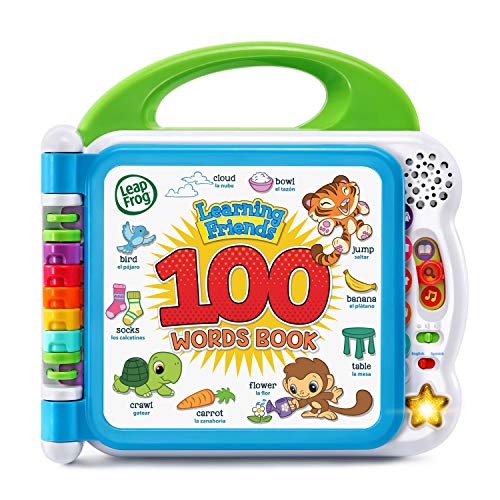
LeapFrog Learning Friends 100 Words Book
One hundred words spread across twelve picture categories, each spoken aloud when pressed. English and Spanish modes double vocabulary exposure without adding a single button. Treat it as a first vocabulary toy rather than a reading system, and expect it to be outgrown near four.
Pros
- Chunky pages survive toddler handling
- Bilingual audio at no extra content cost
- Slim enough for a changing bag
Cons
- Outgrown once real decoding starts
- Volume adjustment is limited

VTech Touch and Learn Activity Desk Deluxe
A touch sensitive desktop reads interchangeable activity pages covering letters, sounds and numbers. Flip the surface upright and it becomes an easel for drawing letter shapes by hand, tying motor practice to sound. Floor space is the real cost, because this stays out in the room rather than going in a drawer.
Pros
- Letters and early writing practice on one surface
- Easel mode extends use past reading
- Expansion pages continue the curriculum
Cons
- Occupies permanent floor space
- Extra activity pages are sold separately
Compared at a glance
| # | Model | Age range | Best for | Score | Price |
|---|---|---|---|---|---|
| 1 | LeapFrog LeapStart 3D Interactive Learning System | 2 to 7 years | Best overall | 9.4 | Check price |
| 2 | Osmo Little Genius Starter Kit for iPad | 3 to 5 years | Best for physical letter building | 9.2 | Check price |
| 3 | Educational Insights Hot Dots Jr. Let’s Master Kindergarten Reading Set | 4 to 6 years | Best for independent practice | 9.0 | Check price |
| 4 | Toniebox Starter Set | 3 years and up | Best screen-free storytelling | 8.8 | Check price |
| 5 | Learning Resources Pop for Sight Words Game | 5 years and up | Best for sight word practice | 8.6 | Check price |
| 6 | LeapFrog Learning Friends 100 Words Book | 18 months to 4 years | Best budget | 8.3 | Check price |
| 7 | VTech Touch and Learn Activity Desk Deluxe | 2 to 5 years | Best for preschool letter formation | 8.0 | Check price |
How to choose
What to look for in a reading toy Start by asking which single skill a toy teaches, because packaging rarely says plainly. Letter recognition, phonics blending, sight words and listening comprehension sit at separate stages, and strength in one does little for another. Check whether content expands: LeapStart and the VTech desk keep going with new pages, while the Hot Dots set has a finish line. Independence matters just as much. A toy needing an adult for every round gets played on Saturday and forgotten by Wednesday.
Which reading toy suits which age Between 18 months and three, children need vocabulary and print awareness, which the LeapFrog 100 Words Book and the Toniebox both supply. Three to five year olds work on letter shapes and their sounds, territory covered by Osmo Little Genius and the VTech Activity Desk. From five onward the job becomes blending sounds and banking sight words, where Hot Dots Jr. and Pop for Sight Words belong. Buying a stage ahead backfires. Frustration makes children abandon a toy, and they often resist it months later when they are ready.
Best screen-free reading toys for tablet-free homes Plenty of families want reading practice without another tablet session. Hot Dots Jr. delivers right and wrong feedback through a pen on paper, while the Toniebox runs on physical figures with no display anywhere. Card games such as Pop for Sight Words add a social element no device matches, and they pull siblings in. Adaptivity is the tradeoff: screen based systems adjust difficulty automatically, whereas paper and cards stay put until a parent moves things on.
Helping a child who avoids reading Reluctance usually traces back to failing in front of someone. Self checking toys help because a wrong answer stays private, the strongest argument for Hot Dots Jr. with a child who has started dodging books. Frequency beats duration, so five minutes of cards most evenings outperforms an hour on Sunday. Audio stories keep vocabulary growing while decoding catches up, which makes a Toniebox a real tool rather than a consolation prize. Months of flat progress call for a teacher assessment, not another purchase.
Frequently asked questions
At what age do reading toys start working?
Vocabulary toys earn their place from around 18 months, where the LeapFrog 100 Words Book sits. Letter sound toys suit three and up. Blending and sight word practice usually lands between five and seven, running alongside school instruction.
Do reading toys actually teach phonics?
Better ones teach letter sounds and blending explicitly, which is what phonics means in practice. LeapStart book levels and Hot Dots Jr. sets follow that sequence. Toys that only name letters, never their sounds, stop short of phonics.
Which reading toy is best for a 3 year old?
Osmo Little Genius, because forming letters from silicone sticks matches how three year olds learn shapes. VTech Touch and Learn Activity Desk Deluxe is the alternative when you would rather keep tablets out of the house.
What works best for a 5 or 6 year old learning to read?
Two things at once: blending practice and sight word recall. Hot Dots Jr. covers the blending side with self checking pages, and Pop for Sight Words handles the words that refuse to sound out. Together they mirror what school is doing.
Are screen-free reading toys better than tablet-based ones?
Not automatically, though they end arguments about screen time and work anywhere. Hot Dots Jr. and the Toniebox both give genuine feedback with no display. Tablet systems still adapt difficulty more precisely as a child improves.
What is the difference between phonics and sight words?
Phonics teaches children to sound words out from letter patterns. Sight words break those patterns, said and one among them, and have to be recognised whole. Most children need both, so Pop for Sight Words complements a phonics toy instead of replacing it.
Osmo vs LeapStart: which suits a preschooler better?
Osmo wins for a three or four year old still learning letter shapes, since the pieces are physical. LeapStart stretches further, carrying the same child through to sentence reading at six or seven. Household iPad availability often settles it.
Can a reading toy replace reading together?
No. Shared books build comprehension, questions and sustained attention in ways no toy reproduces. Use these for practice between the stories you read side by side.
Do LeapStart books come with the system?
A sampler book is included, and full titles are bought separately by level. Plan on two or three books before the system earns its keep. Hot Dots Jr. works the opposite way, with every lesson supplied.
How long should a child use a reading toy each day?
Short and frequent wins. Ten to fifteen minutes on most days holds preschool attention, and school age children manage around twenty. Stop while your child still wants another round, because that is what brings them back tomorrow.
The verdict
LeapFrog LeapStart 3D Interactive Learning System is the strongest single purchase, carrying one child from letter sounds to early sentences on a device they operate alone. Accept that books arrive one pack at a time. Households keeping screens out should take the Hot Dots Jr. set instead, which gives the same private feedback on paper with every lesson supplied. Toddlers not ready for either build the listening vocabulary decoding depends on through the Toniebox.
Rachel Simmons
Rachel previously worked in child-product retail and brings a practical, detail-first eye to gear reviews, focusing on safety standards, ease of use and the fine print that matters most for new caregivers.


