Bulk Reading Toy Packs Sorted by Phonics Stage
Gamenote Classroom Magnetic Alphabet Letters Kit covers the most ground, with 234 pieces and a double sided board for small group rotations. Coogam Wooden Reading Blocks drill short vowel blending at a table. For preschoolers still matching sounds to shapes, Melissa and Doug See and Spell fits better.
Gamenote Classroom Magnetic Alphabet Letters Kit buys the widest coverage per box, packing 234 uppercase, lowercase and punctuation magnets plus a double sided board. Teachers running small group rotations and parents with two or more children get the most from that volume. Magnets this small rule it out for toddlers who still mouth pieces.
Piece count is a poor guide here, since a huge set can skip the stage a child is actually on. Letter recognition, initial sounds, CVC blending and sight words are four separate jobs, and most kits handle one of them well. We compared the stage each kit targets, piece counts, storage design, material durability and how many children can share one set. Aggregated parent and teacher feedback filled in what survives a full school year.
Our top picks

Gamenote Classroom Magnetic Alphabet Letters Kit
Foam backed magnets cover uppercase, lowercase and punctuation across 234 pieces, enough for four children to build words at the same time. One face of the board carries writing lines, the other works as plain dry erase. A divided box keeps cases apart, so tidying does not swallow the end of a lesson.
Pros
- Piece count supports a full small group rotation
- Board handles lined writing and dry erase modelling
- Divided box separates uppercase from lowercase
Cons
- Small magnets are a choking hazard under three
- Foam edges fray under heavy daily handling
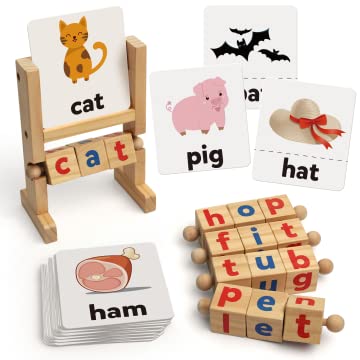
Coogam Wooden Reading Blocks Short Vowel Rods Spelling Game
Blocks spin on fixed rods, so a child swaps one letter and turns cat into cot into cut. Sound substitution is exactly how short vowel blending gets taught, which puts this ahead of a plain spelling toy. Beech blocks take drops that laminated cards would not survive.
Pros
- Rotating rods teach sound substitution directly
- Beech blocks survive years of classroom handling
- Self correcting layout lets a child work alone
Cons
- Short vowels only, with no digraphs or blends
- One child per rod set at a time
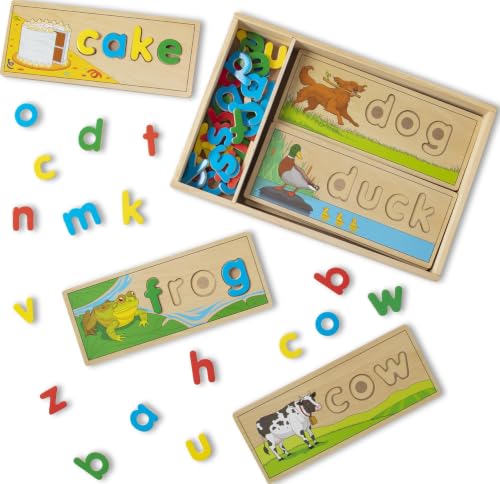
Melissa and Doug See and Spell Learning Toy
Eight double sided boards pair a picture with letter shaped slots below it, so a pre reader matches shape to sound. Sixty four chunky wooden letters suit hands still building a pincer grip. Put a wrong letter in a slot and it simply will not sit flush, which corrects the child without an adult stepping in.
Pros
- Picture cues work before reading begins
- Chunky letters suit developing fine motor control
- Slot shapes correct mistakes instantly
Cons
- Sixteen fixed words are outgrown inside a year
- No route onward into longer or irregular words

Think Tank Scholar Sight Words Flash Cards
All 220 Dolch sight words arrive laminated, joined by 95 picture nouns and sorted from pre kindergarten through third grade. Words such as said and could resist sounding out, so sheer repetition volume is the point of a deck this size. Level dividers and a storage box stop the grade sets from mixing.
Pros
- Complete Dolch list rather than a sample deck
- Grade dividers follow classroom sequencing
- Lamination survives constant shuffling
Cons
- An adult has to run the drill
- Card corners soften over a school year

Learning Resources Alphabet Acorns Activity Set
Twenty six plastic acorns twist apart, showing a letter on the cap and a matching picture inside. Twisting builds grip strength while the matching drills initial sound recognition. Piece size is what separates this set from the magnets and cards elsewhere on the list.
Pros
- Large pieces suit the youngest learners
- Twist action develops hand strength
- Colour coded halves make sorting self correcting
Cons
- Stops at initial sounds with no word building
- Twenty six acorns limit sharing across a group

Educational Insights Hot Dots Jr Lets Master Reading Set
Touching an answer dot makes the pen light up and speak, so no adult needs to sit alongside. Cards climb from letter sounds through to simple sentences across the set. Battery powered feedback is the whole appeal, and it is also the part most likely to give out.
Pros
- Children work through cards unsupervised
- Audio answers suit pre readers
- Progression runs from sounds into sentences
Cons
- Pen depends on batteries and can stop responding
- Only one child can use the pen at a time

Junior Learning Rainbow Phonics Reading Rods
Interlocking rods carry letters, digraphs and blends, colour coded so vowels and consonants stay visually distinct. Snapping them together shows a child where one sound ends and the next begins. Coverage runs past CVC words into digraphs, which the Coogam blocks never reach.
Pros
- Extends beyond short vowels into digraphs and blends
- Colour coding reinforces vowel and consonant roles
- Rods lock firmly enough to pass around a table
Cons
- Adults must explain the colour system first
- Loose rods scatter without a sorted tray
Compared at a glance
| # | Model | Pieces | Best for | Score | Price |
|---|---|---|---|---|---|
| 1 | Gamenote Classroom Magnetic Alphabet Letters Kit | 234 magnetic letters and symbols | Best overall | 9.4 | Check price |
| 2 | Coogam Wooden Reading Blocks Short Vowel Rods Spelling Game | Beech wood blocks on rods | Best for CVC word building | 9.2 | Check price |
| 3 | Melissa and Doug See and Spell Learning Toy | 64 wooden letters, 8 boards | Best for preschoolers | 9.0 | Check price |
| 4 | Think Tank Scholar Sight Words Flash Cards | 220 Dolch sight words plus 95 nouns | Best value bulk pack | 8.8 | Check price |
| 5 | Learning Resources Alphabet Acorns Activity Set | 26 two part acorns | Best for toddlers | 8.5 | Check price |
| 6 | Educational Insights Hot Dots Jr Lets Master Reading Set | Answer cards plus talking pen | Best for independent practice | 8.3 | Check price |
| 7 | Junior Learning Rainbow Phonics Reading Rods | Interlocking phonics rods | Best for classroom groups | 8.0 | Check price |
How to pick the right one
What to look for in a bulk reading pack Start with the phonics stage, not the piece count. Letter recognition, initial sounds, CVC blending and sight words come in that order, and a set aimed at the wrong rung gets abandoned in a week. Storage decides whether it keeps getting used, because a divided box saves five minutes at the end of every session. Material matters most in a classroom, where wood and laminated card outlast foam and thin plastic.
Matching a set to your child’s reading stage Two and three year olds need large pieces and initial sounds, which is where Learning Resources Alphabet Acorns lands. Children of four and five moving into blending do better with Coogam rotating blocks or Melissa and Doug See and Spell. Once simple words come easily, the bottleneck shifts to sight words that break the rules, and the Think Tank Scholar Dolch deck targets exactly those. Junior Learning Reading Rods carry confident readers into digraphs and blends. Buying a stage ahead wastes money; buying a stage behind wastes attention.
Home use vs classroom rotations One child at home rarely needs 234 magnetic letters, and a single Coogam rod set covers more useful ground for less outlay. Classrooms invert that, because four children need four working sets or one very large one. Gamenote’s kit and the Reading Rods both split across a table, while Hot Dots Jr stays strictly one child at a time. Count the simultaneous users you need before you count pieces.
Safety, durability and storage Magnets and small rods are choking hazards under three, which is why the Acorns set has a place on this list. Wood takes being dropped, stepped on and wiped down, and that is why Melissa and Doug boards last through years of nursery use. Laminated cards give about a school year of shuffling before corners soften. Keep the original divided box whatever you buy, since loose pieces in a toy bin are the fastest way for a good set to stop being used.
Questions worth asking
What age are bulk reading toys suitable for?
Most sets here target three to eight year olds. Learning Resources Alphabet Acorns is the safest choice at the youngest end, while Junior Learning Reading Rods suit children already blending simple words.
Are magnetic letters or wooden blocks better for learning to read?
Magnets give volume and the freedom to spell any word. Wooden blocks such as the Coogam rods narrow practice to one skill, short vowel substitution, and handle rougher treatment.
Which bulk reading set works best in a classroom?
Gamenote’s 234 piece magnetic kit, because the count supports several children at once and the board suits whole group modelling. Reading Rods make the better second set for older groups.
How do sight word cards differ from phonics toys?
Sight words like said and could break normal spelling patterns and get learned by recognition. Phonics toys train decoding instead. Most readers need both, so the Think Tank Scholar deck sits alongside the blending sets here.
Do these reading sets follow a specific phonics programme?
None is tied to a single scheme. Think Tank Scholar uses the Dolch list that most schools reference, and Junior Learning codes sounds by type in a way that lines up with common synthetic phonics teaching.
Can a bulk reading pack replace reading books?
No. These kits build the decoding skills that make books readable, though children still need real text to apply them. Ten to fifteen minutes before a shared book works better than using them instead of one.
Which reading toy works without an adult sitting alongside?
Educational Insights Hot Dots Jr, since the pen answers with light and sound on every card. Coogam’s rotating blocks also self correct once a child knows the target word.
Are small magnetic letters safe for toddlers?
They are not. Magnets and small letters count as choking hazards under three. Pick the Alphabet Acorns set or the chunky Melissa and Doug letters for that age.
Is a bulk reading pack worth it for one child?
Often not. A single learner rarely uses 234 magnets, and one Coogam rod set or the See and Spell boards cover more of what they need. Bulk pays off with siblings or a class group.
Final word
Gamenote’s 234 piece magnetic kit is the bulk pack to buy for a classroom or a household with several children, since both the piece count and the double sided board scale with the group. One child learning to blend at home is better served by Coogam Wooden Reading Blocks, which drill short vowel substitution far more directly. Families with an under three should skip magnetic sets altogether and start with Learning Resources Alphabet Acorns.
Rachel Simmons
Rachel previously worked in child-product retail and brings a practical, detail-first eye to gear reviews, focusing on safety standards, ease of use and the fine print that matters most for new caregivers.


