Travel Puzzle Sets That Do Not Lose Their Pieces
SmartGames IQ Puzzler Pro leads here, since every piece seats into a moulded grid and the case snaps shut over an unfinished challenge. Children under six do better with Melissa and Doug Take-Along Magnetic Jigsaw Puzzles. Adults wanting a quiet pocket challenge should pack a Bepuzzled Hanayama Cast Puzzle.
SmartGames IQ Puzzler Pro is the set to pack first. Pieces press into a moulded grid, so nothing rolls under three rows of seats. Its challenges start at age seven, which rules out younger travellers. For that group, Melissa and Doug Take-Along Magnetic Jigsaw Puzzles hold roughly nine pieces magnetically instead.
Travel rewrites what a puzzle needs to be, because tray tables are small and a dropped piece is gone for good. We compared case dimensions, retention method, published age ranges and challenge counts. Parent reports on how long each set held attention broke the ties.
The best picks, ranked
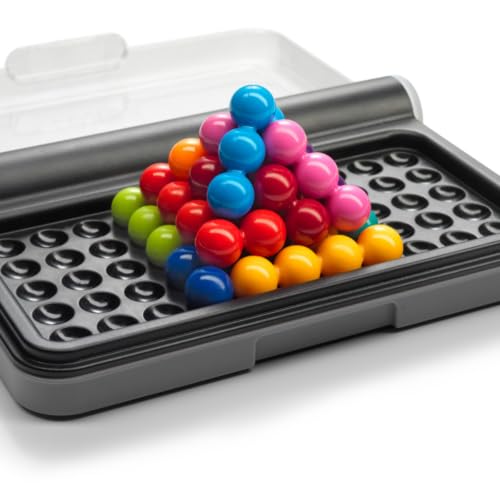
SmartGames IQ Puzzler Pro
Twelve coloured pieces press into a grid inside a hinged case, and the lid closes over them for storage. Around 120 challenges run across three formats: flat 2D, pyramid and a face on variant. Single player design suits a child in a window seat with nobody to partner with.
Pros
- Grid keeps pieces seated during turbulence
- Difficulty climbs from starter to expert
- Case is about the size of a paperback
Cons
- Too abstract below roughly age six
- Solutions booklet invites peeking

ThinkFun Rush Hour Traffic Jam Brain Game
Plastic cars slide across a gridded board until the red car reaches the exit. Forty challenge cards climb from beginner to expert, and a drawstring bag holds the lot. Raised board edges stop vehicles sliding off a tray table, and adults get drawn in as readily as children.
Pros
- Challenge ladder stays useful for years
- Raised edges hold vehicles on the board
- Rules explain in under a minute
Cons
- Loose cars still slide during turbulence
- Board is wider than the smallest travel cases

Melissa and Doug Take-Along Magnetic Jigsaw Puzzles
Two magnetic jigsaws live inside a wooden case shaped like a book. Pieces cling to the board rather than sliding off a moving lap. Each puzzle runs around nine pieces, which fits three and four year olds, and the latched case doubles as the play surface.
Pros
- Magnets survive bumps and braking
- Case doubles as the play board
- Wood shrugs off repeated drops
Cons
- Outgrown around age five
- Heavier than cardboard travel puzzles
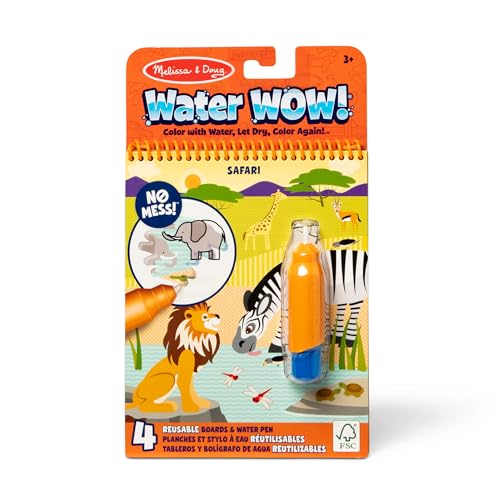
Melissa and Doug Water Wow Reusable Water Reveal Activity Pads
A chunky pen fills with plain water, and colour appears wherever the child paints. Pages fade back to white within minutes, so four scenes last a whole trip. Nothing here stains a car seat or a restaurant tablecloth.
Pros
- No ink, paint or crayons to spill
- Pages reset once dry for repeat use
- Slim enough for a seat back pocket
Cons
- Pen leaks if the cap comes off
- Not a problem solving puzzle

Bepuzzled Hanayama Cast Puzzle
Interlocking cast metal pieces separate through a specific sequence of rotations, never by force. Hanayama rates each design one to six, so you can match a puzzle to one flight or several. Solid metal means nothing bends or tears loose in a bag.
Pros
- Indestructible inside a carry on bag
- Difficulty rating matches your patience
- Assembled, it has no loose pieces
Cons
- Metal parts can prompt a manual bag check
- Level five and six frustrate many buyers
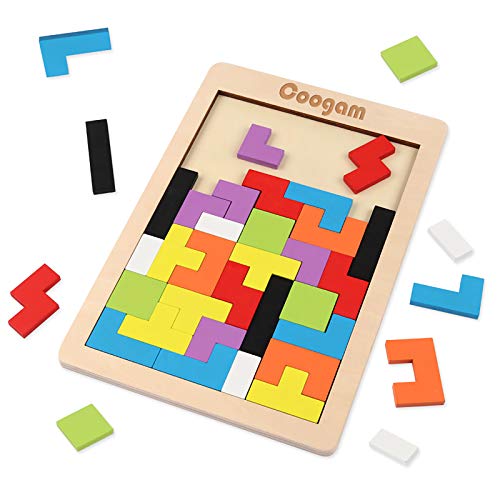
Coogam Wooden Blocks Puzzle Brain Teaser
Wooden shapes fit a shallow tray in dozens of valid arrangements. Two people can reach the same tray, which makes it a family table puzzle rather than a solo one. A cloth drawstring pouch keeps the blocks together once the tray goes back in a bag.
Pros
- Wood and tray survive spills and drops
- Works for adults and children together
- Tray contains the workspace on a table
Cons
- Small blocks are a choking hazard for toddlers
- Pieces scatter if the pouch goes unused

Rubik’s Cube 3×3 by Spin Master
One object, nothing to drop, and it works standing in a boarding queue. Spin Master cubes turn more smoothly than older versions, which matters when learning algorithms. Interest hinges entirely on willingness to memorise sequences.
Pros
- Nothing to lose or scatter
- Playable with no table at all
- Free beginner tutorials are everywhere
Cons
- Abandoned fast without the patience to learn
- Stickered versions peel with heavy use
Before you buy
What makes a puzzle set genuinely travel friendly Piece retention comes first, because a piece dropped mid flight is gone. Grids, magnets and recessed trays each solve that differently. Size matters next: an economy tray table offers roughly 12 by 9 inches of usable space. Self contained storage helps too, since the case then doubles as the bag. For a child sitting alone at a window seat, single player design beats raw challenge count.
Matching the puzzle to the age of the traveller Under five, magnetic jigsaws and water reveal pads work because they need no reading and forgive constant interruption. Six to nine is the sweet spot for sliding logic puzzles such as Rush Hour. Ten and up handles the harder IQ Puzzler Pro challenges and the lower Hanayama ratings. Buying above the stated age range is the common mistake here. A frustrated child abandons the set inside one leg of the journey.
Best picks for flights, cars and restaurant waits Flights reward lap friendly puzzles, since tray tables stow for takeoff and landing. Motion changes things in cars and trains, where magnets or a recessed grid earn their place. Restaurant waits run short and unpredictable, so a Rubik’s Cube or a cast metal puzzle beats anything needing setup. Noise deserves a thought as well, because sliding plastic cars clatter more than wooden blocks on a napkin.
Packing, security and keeping pieces accounted for Count pieces before and after each session, since one missing block can retire a set permanently. A small zip pouch for strays saves the whole purchase. Cast metal puzzles travel fine in carry on baggage, though they sometimes draw a manual check, so pack them within reach. Rotating two or three small sets beats packing one large one, because novelty carries most of the attention span.
Side by side
| # | Model | Age range | Best for | Score | Price |
|---|---|---|---|---|---|
| 1 | SmartGames IQ Puzzler Pro | 7 years and up | Best overall | 9.4 | Check price |
| 2 | ThinkFun Rush Hour Traffic Jam Brain Game | 8 years and up | Best for logic fans aged eight and up | 9.2 | Check price |
| 3 | Melissa and Doug Take-Along Magnetic Jigsaw Puzzles | 3 years and up | Best for toddlers and preschoolers | 9.0 | Check price |
| 4 | Melissa and Doug Water Wow Reusable Water Reveal Activity Pads | 3 years and up | Best mess free option | 8.8 | Check price |
| 5 | Bepuzzled Hanayama Cast Puzzle | 12 years and up | Best for adults | 8.6 | Check price |
| 6 | Coogam Wooden Blocks Puzzle Brain Teaser | 3 years and up with supervision | Best budget wooden set | 8.3 | Check price |
| 7 | Rubik’s Cube 3×3 by Spin Master | 8 years and up | Best pocket classic | 8.0 | Check price |
Common questions
What is the best travel puzzle for a long flight?
SmartGames IQ Puzzler Pro, since the grid holds pieces and the case shuts over an unfinished layout. Around 120 challenges cover several hours of play. Adults after something quieter can pack a Hanayama Cast Puzzle instead.
Which travel puzzles suit toddlers under four?
Magnetic jigsaws and water reveal pads. Melissa and Doug Take-Along puzzles keep roughly nine pieces stuck to the board, and Water Wow needs only tap water. Small wooden blocks are a choking risk at this age.
Can you take puzzle boxes and metal puzzles on a plane?
Yes, all of these travel in carry on baggage. Cast metal puzzles occasionally trigger a manual bag search, so pack them near the top. Screening officers always have the final say.
How do you stop puzzle pieces getting lost while travelling?
Pick sets that hold pieces by design: grids, magnets or recessed trays. Play over a lap tray or a cloth so strays land close. Counting pieces back in at the end of each session catches losses while they are still findable.
Are wooden or plastic travel puzzles better?
Wood feels better in the hand and survives drops, but it weighs more and its pieces scatter. Moulded plastic grids hold pieces securely and pack lighter. For carry on luggage, plastic grid cases usually win.
What is a good travel puzzle for two children to share?
Tangram style sets such as the Coogam wooden blocks, because both children can reach the same tray. Rush Hour supports turn taking but is really a one player game. Two separate solo sets often cause fewer arguments than one shared set.
How long do travel puzzle sets hold a child’s attention?
Fifteen to forty minutes a session is typical, and longer when difficulty steps up gradually. Sets with challenge ladders, like IQ Puzzler Pro and Rush Hour, last years rather than one trip. Rotating two sets keeps novelty going on long journeys.
Is a Rubik’s Cube worth packing for travel?
For someone willing to learn a method, yes, since it needs no table and has nothing to drop. Casual travellers tend to abandon it within an hour. Pair it with a printed beginner method if it is a gift.
Which travel puzzles work without a table?
Hanayama Cast Puzzles and a Rubik’s Cube both work in one hand. Water Wow pads also function on a lap with a hard backing underneath. Anything with loose cards or sliding vehicles really wants a flat surface.
Do travel puzzle sets work for adults too?
Yes, and two picks here are aimed at them. Hanayama rates its cast puzzles up to level six, which defeats most people on a first attempt. Rush Hour expert cards also hold up for adults, despite the age eight label.
The verdict
Pack SmartGames IQ Puzzler Pro first, since the grid holds every piece and the challenge ladder stretches across a whole trip. Travelling with a three or four year old changes the answer to Melissa and Doug Take-Along Magnetic Jigsaw Puzzles, where magnets do the same job for smaller hands. Adults who only want something quiet in a pocket should skip both and take a Bepuzzled Hanayama Cast Puzzle.
Rachel Simmons
Rachel previously worked in child-product retail and brings a practical, detail-first eye to gear reviews, focusing on safety standards, ease of use and the fine print that matters most for new caregivers.


