Puzzle boards, mats and savers worth the table space
Jumbl Puzzle Board Rack leads, pairing a felt surface for 1500 pieces with six sorting drawers below. Lavievert Jigsaw Puzzle Roll Up Mat wins where the dining table has to clear each evening. To frame a finished build, Puzzle Presto Peel and Stick skips drying time entirely.
Jumbl Puzzle Board Rack earns first place by fixing the two things that stall a long build: no permanent surface, and nowhere to keep sorted pieces. Felt grips the pieces, and six drawers separate edges, colour groups and the box lid. Weight and footprint rule it out for a small flat.
Accessories here do four different jobs: hold the build, park it mid-build, sort the pieces, and preserve the finished picture. Mixing those up wastes money, since a roll mat still needs a table under it. We compared piece capacities, mat dimensions, drawer counts and adhesive coverage, then weighed owner reports on sections shifting during a roll.
What we recommend

Jumbl Puzzle Board Rack
Felt spans enough area for a 1500 piece build, with six sliding drawers directly underneath. Each drawer lid doubles as a sorting tray, so edges and colour groups survive between sessions. Wood construction adds weight, which is why the surface stays put when you press a stubborn piece home.
Pros
- Drawers hold sorted pieces across several days
- Felt stops pieces sliding under hand pressure
- Rigid enough to carry an unfinished build
Cons
- Wood frame is heavy to lift alone
- Drawer stack raises the working height

Lavievert Jigsaw Puzzle Roll Up Mat
Felt mat plus an inflatable tube turns a part-built puzzle into a roll that stands upright in a wardrobe. Roughly 46 by 26 inches of surface covers puzzles to 1500 pieces. Straps and a carry bag come in the box, so the roll can travel to a relative’s house intact.
Pros
- Frees the dining table without breaking the build
- Stores upright in a narrow gap
- Straps and bag make the roll portable
Cons
- Mat is flexible, so a table is still required
- Rolling too fast separates loose sections

Becko Puzzle Board with Drawers and Cover
A fitted lid is the reason to pick this board over a bare one, since it stops a cat crossing the table overnight. Below the cover sit felt and pull-out drawers in the familiar arrangement. Clearance under the lid is limited, so sorted pieces belong in the drawers rather than piled on the surface.
Pros
- Lid shields the build from pets and spills
- Drawers hide sorted pieces between sessions
- Carries between rooms with the cover fitted
Cons
- Low lid clearance over loose piles
- Needs more shelf depth than an open board

Gamenote Puzzle Sorting Trays
Eight interlocking trays break a 2000 piece dump into colour, edge and pattern groups. Stacked, they take one tray footprint instead of eight, leaving the rest of the table for assembly. These add sorting to a board or mat rather than replacing either.
Pros
- Cuts searching time on 1000 piece builds and up
- Column stack keeps the table clear
- Works alongside any board or mat
Cons
- Light plastic slides on a bare tabletop
- Open trays spill when knocked

Puzzle Presto! Peel and Stick Puzzle Saver
Adhesive sheets press onto the reverse of a finished puzzle, leaving the printed face with no coating at all. Nothing has to dry, so a puzzle finished after dinner can go into a frame the same night. Placement is final once a sheet contacts the back, so align it before pressing down.
Pros
- Matte prints keep their original finish
- Framing can happen immediately
- Backed puzzle stays flexible to handle
Cons
- Sheets cannot be lifted and repositioned
- One pack runs short on a 2000 piece build

Ravensburger Puzzle Conserver Permanent
Liquid conserver spreads across the face of a finished puzzle and soaks into the seams before drying clear. One bottle stretches to around two 1000 piece puzzles. Expect a faint sheen afterwards, which buys a bond strong enough to hang the picture on a wall.
Pros
- Bond holds a finished puzzle vertical
- Supplied spreader gives even coverage
- Enough liquid for more than one puzzle
Cons
- Adds a light sheen to matte artwork
- Needs full drying time before framing
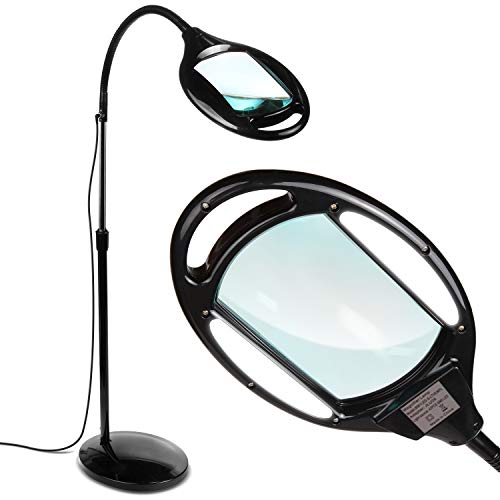
Brightech LightView Pro Magnifying Floor Lamp
Glass lens on a gooseneck arm hovers over the work area, ringed by LEDs that cancel hand shadows. Subtle colour shifts in a 2000 piece sky section become readable. Floor standing means no clamp competing for the table edge, though the weighted base needs clear floor beside the chair.
Pros
- Ring LED removes shadow from the work area
- Magnifies faint colour and pattern differences
- Occupies floor space, not table space
Cons
- Base needs clear floor next to the chair
- Lens covers a small area at a time
What to look for
What puzzle accessories actually help Four jobs matter: a stable surface, somewhere to park an unfinished build, a way to sort pieces, and a method for saving the result. Surface and storage cause most of the frustration. Felt stops pieces drifting when you lean on the table, while drawers or trays end the hunt through a face-down pile. Lighting comes last, and only really pays off on dark, low-contrast art.
Puzzle boards vs roll-up mats Boards bring a rigid surface and usually sorting drawers with it. Mats bring storage instead, rolling a build into a tube that stands in a wardrobe. If the table stays free, buy the board. Where dinner happens on the same table, choose the mat and accept that you still work on the tabletop underneath it.
Sizing for 1000, 1500 and 2000 piece puzzles A standard 1000 piece puzzle finishes near 27 by 20 inches, and 1500 pieces reaches closer to 32 by 24. Buy a surface with margin beyond those figures, because loose pieces need somewhere to sit. Mats rated to 1500 pieces cover most commercial boxes. At 2000 pieces, measure the board first and plan to sort into stacked trays off the surface.
Saving and framing a finished puzzle Peel and stick sheets bond from the back and leave the printed face alone, which suits matte art prints. Liquid conserver bonds through the front and holds better for hanging, at the cost of a slight sheen. Work flat either way. Skip both if the puzzle is going back in its box, since adhesive ends any chance of rebuilding it.
How they stack up
| # | Model | Capacity | Best for | Score | Price |
|---|---|---|---|---|---|
| 1 | Jumbl Puzzle Board Rack | Up to 1500 pieces | Best overall | 9.4 | Check price |
| 2 | Lavievert Jigsaw Puzzle Roll Up Mat | Up to 1500 pieces | Best for storing a puzzle in progress | 9.2 | Check price |
| 3 | Becko Puzzle Board with Drawers and Cover | Commonly 1000 to 1500 pieces | Best for homes with pets or children | 9.0 | Check price |
| 4 | Gamenote Puzzle Sorting Trays | 8 trays | Best for sorting large puzzles | 8.8 | Check price |
| 5 | Puzzle Presto! Peel and Stick Puzzle Saver | Backing adhesive sheets | Best for framing a finished puzzle | 8.6 | Check price |
| 6 | Ravensburger Puzzle Conserver Permanent | Liquid puzzle conserver | Best puzzle glue | 8.3 | Check price |
| 7 | Brightech LightView Pro Magnifying Floor Lamp | LED ring around the lens | Best for small pieces and low light | 8.0 | Check price |
Good to know
How do you store an unfinished puzzle?
Roll it. A felt mat with an inflatable tube, such as the Lavievert, keeps joined sections intact while clearing the table. Roll from one end at a steady pace and cinch the straps so the tube cannot loosen in a cupboard.
Do puzzle roll-up mats damage a puzzle?
Careful rolling does not. Pieces separate at weak joins when the roll is made in one quick motion, which is why owners work slowly and press sections flat as the tube turns.
Puzzle glue or peel and stick: which is better?
Sheets leave the image untouched and need no drying, so matte prints keep their finish. Liquid conserver bonds through the seams for a firmer hold when the puzzle will hang. Choose by appearance or strength, not by price.
What size board do you need for a 1000 piece puzzle?
Around 27 by 20 inches for the assembled image, plus margin for loose pieces. A board rated to 1500 pieces, like the Jumbl, gives comfortable working room on a 1000 piece build.
Are puzzle sorting trays worth buying?
Above 500 pieces, yes. Grouping by edge, colour and pattern removes most repeated searching, and stackable trays such as the Gamenote set deliver that without claiming the whole table.
Can you frame a puzzle without glue?
Yes. Slide the finished build onto a rigid backing board, then press it into a snug frame. Keep it horizontal during the move, and expect no resistance to a knock once hung.
What lighting works best for jigsaw puzzles?
Even light directly above the work area, with nothing casting a hand shadow. A ring-lit magnifier such as the Brightech lamp helps most on dark sections and subtle gradients.
Can you move a puzzle board with a puzzle on it?
Rigid boards travel fine if kept level. The Becko is the safer carry of the two here, since its lid holds pieces down while the board shifts between rooms.
Which puzzle accessories suit a small apartment?
A roll-up mat plus stacking trays. Both collapse into a cupboard, whereas a drawer board claims permanent table space and will not tuck away between sessions.
Do you glue the front or the back of a puzzle?
Both methods exist. Ravensburger conserver goes on the front and seeps into the seams; Puzzle Presto sheets bond to the back only. Back-only application keeps the artwork completely uncoated.
Our take
Start with the Jumbl Puzzle Board Rack. Felt plus six sorting drawers changes how a multi-day build runs, and it stays rigid enough to shift between rooms. Households that need the dining table back every evening should take the Lavievert roll-up mat and work on the tabletop. Add Puzzle Presto Peel and Stick only when a finished puzzle is heading into a frame, since adhesive is wasted on any puzzle you plan to rebuild.
Rachel Simmons
Rachel previously worked in child-product retail and brings a practical, detail-first eye to gear reviews, focusing on safety standards, ease of use and the fine print that matters most for new caregivers.


