Which Programmable Thermostat Fits Your Wiring?
ecobee Smart Thermostat Premium wins overall, since a SmartSensor and Power Extender Kit ship in the box. Google Nest Learning Thermostat writes the schedule for you after roughly a week. Honeywell Home RTH9585WF keeps full seven day programming on a wide color touchscreen for hands on planners.
ecobee Smart Thermostat Premium suits a house where one bedroom never matches the hallway reading. Its bundled SmartSensor averages rooms, and the Power Extender Kit powers the unit where no common wire exists. Renters who only want a nightly setback will pay for features they never open.
Compatibility, not branding, decides what you can actually install. We compared published wiring requirements, schedule structures, sensor options and voice platforms across current listings. Recurring owner feedback about install snags and Wi-Fi dropouts settled the close calls.
The best picks, ranked

ecobee Smart Thermostat Premium
One SmartSensor comes in the box, letting the system read a bedroom rather than a drafty hallway. Alexa runs on board through a built in speaker and microphone, so no extra puck sits on a shelf. Its Power Extender Kit borrows power at the furnace board and clears the single biggest upgrade blocker in older houses.
Pros
- Bundled sensor evens out hot and cold rooms
- Works with Alexa, Google Home and Apple Home
- Wiring kit avoids pulling new cable to the furnace
Cons
- Glass front shows fingerprints
- More capability than a simple nightly setback needs

Google Nest Learning Thermostat (3rd Gen)
Nest watches manual adjustments for about a week, then assembles a schedule from that pattern. Occupancy sensing pulls the setpoint back once rooms stay empty. Seven finishes let the dial sit quietly on a hallway wall instead of announcing itself.
Pros
- Produces a usable schedule with no menu work
- Farsight display wakes as you walk past
- Nest Temperature Sensors can be added later
Cons
- Manual schedule edits sit deep in the menus
- Some two wire systems still need a common wire
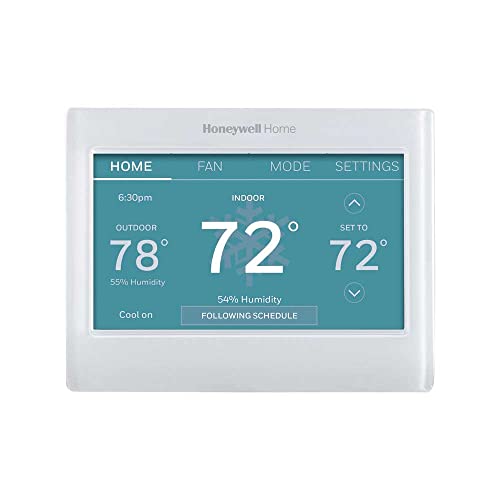
Honeywell Home RTH9585WF Wi-Fi Smart Color Thermostat
Four editable periods per day across seven days put the schedule entirely in your hands. Backlight color adjusts to match the wall behind it, which is rare at this level. Wi-Fi adds filter reminders and remote changes through the Honeywell Home app, though a common wire is expected at install.
Pros
- Large digits stay readable across a room
- Every schedule slot is editable by hand
- Filter and extreme temperature alerts included
Cons
- Common wire required for most installations
- Housing looks utilitarian beside a Nest dial

Amazon Smart Thermostat
Honeywell Home built this one for Amazon, trading the touchscreen for a plain LED readout. Alexa Hunches can drop the heat once the house goes quiet, using activity the Alexa app already tracks. ENERGY STAR certification covers the efficiency basics for households already inside that ecosystem.
Pros
- Quickest setup for existing Alexa households
- ENERGY STAR certified efficiency
- Flat uncluttered face suits a narrow hallway
Cons
- No Apple Home or Google Home support
- No remote room sensor option at all

Emerson Sensi Touch Smart Thermostat ST75
Most 24 volt forced air and heat pump systems run Sensi Touch without a common wire, which opens up pre 1990 houses. Schedule edits happen on the wall through a color touchscreen rather than only in an app. Geofencing shifts the setpoint once phones leave the neighborhood.
Pros
- Widest wiring flexibility of these picks
- App walks you through the install terminal by terminal
- Geofencing and remote access included
Cons
- Screen response lags behind rivals
- Plain styling next to a Nest dial

ecobee3 lite Smart Thermostat
Same touchscreen and app as the Premium, minus the microphone, speaker and bundled sensor. Room sensors remain supported, so a cold back bedroom can be addressed later rather than never. Single zone apartments rarely need anything past the base unit.
Pros
- Cheapest route into the ecobee app
- Sensors can be added when a room needs one
- Slim profile suits small hallways
Cons
- No microphone or speaker on board
- Nothing in the box for uneven rooms
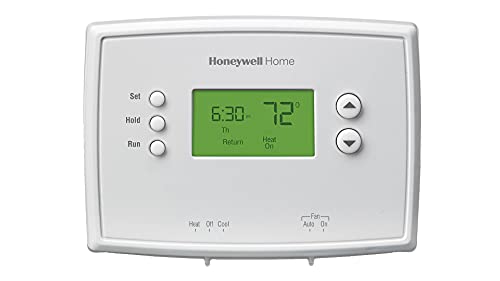
Honeywell Home RTH2300B 5-2 Day Programmable Thermostat
No app, no account, no router outage to troubleshoot at midnight. Two AA batteries drive a 5-2 day schedule with four periods behind a backlit display. Gas, oil and electric systems all work, which makes it the default for cabins, workshops and rental units.
Pros
- Setup ends after four time slots
- Keeps running when the network does not
- Large buttons suit older users
Cons
- No remote access, alerts or voice control
- Weekday and weekend blocks only
The lineup, side by side
| # | Model | Schedule | Best for | Score | Price |
|---|---|---|---|---|---|
| 1 | ecobee Smart Thermostat Premium | Custom comfort settings by time and day | Best overall | 9.4 | Check price |
| 2 | Google Nest Learning Thermostat (3rd Gen) | Round color LCD, about two inches | Best for automatic schedules | 9.2 | Check price |
| 3 | Honeywell Home RTH9585WF Wi-Fi Smart Color Thermostat | 7 day programmable, four periods per day | Best value | 9.0 | Check price |
| 4 | Amazon Smart Thermostat | LED segment readout | Best budget smart pick | 8.8 | Check price |
| 5 | Emerson Sensi Touch Smart Thermostat ST75 | Color touchscreen | Best for tricky wiring | 8.6 | Check price |
| 6 | ecobee3 lite Smart Thermostat | Touchscreen with full app control | Best for apartments | 8.3 | Check price |
| 7 | Honeywell Home RTH2300B 5-2 Day Programmable Thermostat | 5-2 day programmable, four periods | Best without Wi-Fi | 8.0 | Check price |
How to pick the right one
What to look for in a programmable thermostat Start at the wall plate. Most connected models want a common wire for constant 24 volt power, and plenty of older two wire systems never had one. Schedule type comes next: 5-2 day, full seven day, or learned from your behaviour. Sensor support decides whether one cold bedroom stays cold all winter. Equipment matters too, because heat pumps with backup heat need multi stage control.
Smart thermostats vs basic programmables Wi-Fi buys remote control, filter alerts and geofencing. It also brings an account, firmware updates and a dependency on your router staying up. A battery unit such as the RTH2300B carries none of that, and no way to warm the house before you reach the driveway. Pay for the app only if you will genuinely open it.
Older homes with no common wire Two picks solve this directly. ecobee supplies a Power Extender Kit that pulls power at the furnace control board. Emerson Sensi Touch ST75 drops the requirement outright on many 24 volt systems. Pulling fresh cable remains the third route, and that usually means booking an HVAC tech for an hour.
Uneven rooms, apartments and rental units Remote sensors fix the house where upstairs bakes while the basement freezes. ecobee Premium ships with one and supports several more; ecobee3 lite and Nest both accept sensors bought separately. Studio and one bedroom apartments almost never need them, since a single zone reads consistently. Landlords should skip accounts entirely, because tenants change and logins do not transfer cleanly.
Common questions
Do programmable thermostats actually save energy?
Savings come from the setback, not the hardware. ENERGY STAR guidance ties reductions to lowering heat while you sleep or leave. Left at one fixed temperature, a programmable model saves nothing.
What is a C wire and do I need one?
A common wire delivers constant 24 volt power for a screen and radio. Most smart thermostats require it. Adapters such as the ecobee Power Extender Kit work around a missing wire without new cable.
Which programmable thermostat works with a heat pump?
Check the listing for multi stage and auxiliary heat support. ecobee Premium, Nest Learning and Sensi Touch ST75 all handle heat pumps with backup heat once wired correctly.
Nest vs ecobee: which one should you buy?
Uneven room temperatures point to ecobee, since a sensor comes included. Prefer a dial that writes the schedule itself? Nest fits better.
Can you install a programmable thermostat yourself?
Many owners do. Photograph the old terminal block, label every wire, and kill the breaker before pulling the plate. Call a professional if you find line voltage or proprietary equipment wiring.
Is a Wi-Fi thermostat worth it in a rental property?
Rarely. Tenants change, accounts transfer badly, and every support call lands on you. A battery powered 5-2 day model needs no network and no login.
How far should you set back the temperature at night?
Seven to ten degrees for roughly eight hours matches common ENERGY STAR guidance. Heat pump owners should use smaller setbacks, because deep recovery triggers costly backup heat.
Do smart thermostats work without internet?
Yes. Schedules run locally on every pick here. Remote adjustment, alerts and voice commands pause until the connection returns.
What is the best programmable thermostat for an apartment?
ecobee3 lite covers a single zone without the extras. Where no Wi-Fi account is wanted at all, the battery powered RTH2300B does the same job on two AA cells.
The verdict
ecobee Smart Thermostat Premium earns the top spot because the bundled SmartSensor and Power Extender Kit clear the two problems that stall most upgrades. Houses with straightforward wiring and no interest in apps should fit the Honeywell Home RTH9585WF and keep every schedule slot under manual control. Cabins, workshops and rentals stay simpler with the battery powered RTH2300B.
Marcus Chen
Marcus covered consumer electronics for enthusiast tech publications for six years before joining ChoiceCrest. He specializes in translating manufacturer spec sheets into plain-language buying advice, with a focus on audio, computing accessories and smart-home gear.
