Which Professional Science Kits Are Worth Buying?
Thames and Kosmos Chem C3000 runs 333 experiments through real borosilicate glassware, making it the deepest chemistry set on general sale. Elenco Snap Circuits Pro SC-500 covers electronics with no soldering iron involved. Biology needs optics, which the AmScope M150C-I supplies from 40x to 1000x.
Thames and Kosmos Chem C3000 belongs in any home lab run by a teenager who has outgrown colour changing novelties. Borosilicate glassware, an alcohol burner and a 192 page manual carry 333 experiments, electrochemistry and qualitative analysis included. Supervision is the trade, since several reagents call for goggles and open ventilation.
Professional here means depth and working components, not a laboratory certificate. Plenty of boxes advertise 200 experiments and deliver 200 spins on baking soda. We compared how the manuals are written, whether parts function as instruments or props, the spread of concepts covered, and what owners report about missing pieces and reagent shelf life.
What matters most
What separates a professional science kit from a toy Component quality answers this fastest. Borosilicate glass, achromatic lenses and functioning parts let a kit do real work, while moulded props only stage a demonstration. Manual depth is the second test. Good writing explains why a reaction happens and what to watch when it fails, which is where the learning actually sits. Treat experiment counts above 300 with care, since many are variations on one procedure.
How to choose a kit by subject Chemistry rewards a dedicated box, because reagents and glassware cannot be improvised safely at home. Electronics splits two ways: Snap Circuits Pro SC-500 teaches concepts without wiring risk, while the Arduino Starter Kit K000007 teaches breadboarding and code. Biology depends on optics, so budget for the AmScope M150C-I before buying slide based sets. Physics costs least to run, since levers and gears need no consumables at all.
Best science kits by age and experience Ages 8 to 11 do well with Snap Circuits Pro and the Physics Workshop, both of which fail harmlessly. From about 12, genetics work and microscopy become realistic with an adult nearby. Chem C3000 carries its 14 and up rating for a reason, given reagents that require goggles and ventilation. Adults returning to science can enter at either end, depending on how much they remember.
Safety, supervision and setting up a home lab Advanced chemistry wants a hard surface and moving air, not a carpeted bedroom. Keep reagents in their original containers with labels intact, away from heat and direct sun. An alcohol burner needs a fire safe base and a lid to smother the flame. Electronics and mechanics carry far less risk, though any soldering iron picked up later deserves the same respect as a hot pan.
The best picks, ranked

Thames and Kosmos Chem C3000 Chemistry Set
Acids and bases, redox, electrochemistry and qualitative analysis all appear across 333 experiments. Borosilicate test tubes, a stand and a working alcohol burner replace the moulded plastic of toy sets. Its 192 page manual reads like a first year textbook, which is why 14 is the floor age.
Pros
- Reaches introductory university topics
- Glassware survives repeated direct heating
- Manual explains mechanisms, not just steps
Cons
- Goggles, ventilation and supervision are mandatory
- Heavy use exhausts several reagents

Elenco Snap Circuits Pro SC-500
Snap together blocks build 500 projects, climbing from a simple series circuit to AM radios and burglar alarms. Every part carries its schematic symbol on top, so learners drift from coloured blocks toward reading diagrams. Mistakes stay cheap here, because a reversed component simply fails to work.
Pros
- Printed symbols teach diagram reading early
- No solder, stripped wire or hot tools
- Project list scales from trivial to demanding
Cons
- Snap format skips real wiring practice
- Storage tray overflows once parts spread out

AmScope M150C-I Compound Microscope
Achromatic objectives and a metal frame move this into instrument territory, covering 40x through 1000x. Separate coarse and fine knobs bring cell structures into focus that single knob scopes never resolve. Prepared slides arrive in the box, so a first session can start the same evening.
Pros
- Optics resolve genuine cell detail
- Fine focus keeps 1000x usable
- Metal body stays still while focusing
Cons
- Slide preparation supplies are sold separately
- Lighting and staining take practice

Thames and Kosmos Biology Genetics and DNA Kit
Precipitation pulls visible DNA from strawberries and cheek cells, following the logic of a real laboratory protocol. Model components cover chromosomes, protein synthesis and inheritance patterns. Mendelian genetics gets proper treatment in the manual, making this a useful partner to a high school biology course.
Pros
- DNA extraction works with kitchen additions
- Punnett square practice is built into the manual
- Tracks a standard school biology syllabus
Cons
- Fewer repeatable runs than a chemistry set
- Best follow up work needs a microscope
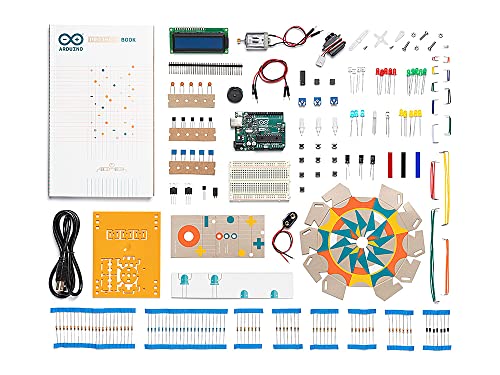
Arduino Starter Kit K000007
Fifteen guided builds run from a blinking LED to a motorised instrument, teaching wiring and C code together. An official Arduino Uno sits at the centre, so projects continue long after the 170 page book ends. Breadboard work is real, and a misplaced jumper teaches something rather than nothing.
Pros
- Board keeps working past the printed projects
- Real breadboard wiring rather than snap blocks
- Free community libraries cover the next steps
Cons
- Steepest learning curve on this list
- A computer and software install are required

Thames and Kosmos Physics Workshop
Sixty five models cover levers, pulleys, gear ratios, inclined planes and energy transfer. Parts reassemble, so one construction set produces every build in the book. Mechanical advantage turns into something a learner can feel, which equations on a page rarely manage.
Pros
- Abstract mechanics become working machines
- One parts set covers all 65 builds
- Bridges neatly into secondary school physics
Cons
- Plastic parts feel lighter than the chemistry gear
- Small pieces test patience during assembly

National Geographic Mega Science Kit
Four fields share one box: chemistry reactions, earth science with real specimens, a volcano build and crystal growing. Breadth is the purpose, so it works best as a way to find out which branch holds a learner’s attention. Depth trails every single subject kit here, and consumables run down fast.
Pros
- Four subjects arrive in a single purchase
- Rocks, gemstones and fossils are genuine specimens
- Reveals where a learner’s interest sits
Cons
- Shallower than any dedicated kit on this list
- Consumables are used up quickly
How they stack up
| # | Model | Experiments | Best for | Score | Price |
|---|---|---|---|---|---|
| 1 | Thames and Kosmos Chem C3000 Chemistry Set | 333 | Best overall | 9.4 | Check price |
| 2 | Elenco Snap Circuits Pro SC-500 | 500 | Best for electronics | 9.2 | Check price |
| 3 | AmScope M150C-I Compound Microscope | 40x to 1000x | Best for microscopy | 9.0 | Check price |
| 4 | Thames and Kosmos Biology Genetics and DNA Kit | DNA extraction, inheritance, protein synthesis | Best for biology | 8.7 | Check price |
| 5 | Arduino Starter Kit K000007 | Official Arduino Uno | Best for programming | 8.5 | Check price |
| 6 | Thames and Kosmos Physics Workshop | 65 working machines | Best for mechanics | 8.2 | Check price |
| 7 | National Geographic Mega Science Kit | Chemistry, earth science, crystal growing, geology | Best variety | 8.0 | Check price |
Frequently asked questions
What is the best chemistry set for a teenager?
Thames and Kosmos Chem C3000, rated 14 and up. Its 333 experiments and borosilicate glassware reach electrochemistry and qualitative analysis, ground that lighter sets leave out completely.
Are professional science kits safe to use at home?
Yes, with supervision and simple precautions. Chemistry calls for goggles, airflow and a non flammable surface. Electronics and physics kits pose far less risk and suit unsupervised work by older children.
Which science kit is best for learning electronics?
Start at Elenco Snap Circuits Pro SC-500 for concepts without wiring risk. Move up to the Arduino Starter Kit K000007 once the learner wants real breadboard work and code.
Do you need a microscope for a biology kit?
Anything past DNA extraction needs one. AmScope M150C-I reaches 1000x on achromatic optics, enough to resolve cell structures that toy scopes smear into blur.
How long do science kit chemicals last?
Dry reagents keep for years when sealed, dry and out of sunlight. Prepared solutions fade much faster. Thames and Kosmos sells refill packs, so restocking a used kit usually beats replacing it.
Snap Circuits vs Arduino: which should a beginner start with?
Pick Snap Circuits for learners under about 12 or anyone new to circuits. Choose Arduino once basic circuits make sense and the next step is writing code that controls them.
Are advanced science kits worth it for adults?
Often, yes. Hobbyists and home educators use the Chem C3000 and the AmScope M150C-I regularly, and the Arduino kit is a standard entry route for adult makers.
Which professional science kit teaches the most physics?
Thames and Kosmos Physics Workshop, with 65 machines covering levers, pulleys, gear ratios and inclined planes. Its 64 page manual sets out the principle behind each build.
What should you buy for a child who likes every subject?
National Geographic Mega Science Kit spans four fields in one box, which surfaces a real preference quickly. Follow it with a dedicated kit once that preference is obvious.
The verdict
Home chemistry points to one answer: Thames and Kosmos Chem C3000, since nothing else on general sale matches its glassware, reagent range and manual. Learners pulled toward circuits get more from Elenco Snap Circuits Pro SC-500 first, then the Arduino Starter Kit K000007 as coding starts to matter. Buy the AmScope M150C-I separately if biology is the target, because no kit substitutes for real optics.
Rachel Simmons
Rachel previously worked in child-product retail and brings a practical, detail-first eye to gear reviews, focusing on safety standards, ease of use and the fine print that matters most for new caregivers.


