Professional Mechanical Pencils for Precision Work
The Pentel GraphGear 1000 is our top pick for professionals who need a precise, durable drafting pencil. Its metal body and retractable tip make it ideal for everyday carry and precise line work. However, it is heavier than some alternatives, which may not suit everyone for long writing sessions.
A professional mechanical pencil is more than a writing tool. It is an instrument of precision, comfort, and reliability. Whether you are an architect, engineer, artist, or executive, the right pencil can enhance your work and reduce hand fatigue.
In this roundup, we compared seven top rated mechanical pencils that are currently sold on Amazon. We looked at specifications, user feedback, and each model’s strengths and weaknesses to help you choose the best one for your professional needs.
What matters most
The best picks, ranked

Pentel GraphGear 1000
The Pentel GraphGear 1000 is a favorite among professionals for its solid metal construction and retractable tip. It offers a comfortable, knurled grip and a lead hardness indicator. Owners report that it feels substantial and well balanced, making it ideal for detailed work.
Pros
- Durable metal body
- Retractable tip protects pocket
- Comfortable knurled grip
Cons
- Heavier than plastic models
- Grip may be too aggressive for some

Rotring 600
The Rotring 600 is an iconic drafting pencil with a full metal body and a fixed sleeve that offers excellent visibility. Its hexagonal shape prevents rolling, and the knurled grip is comfortable for precise control. It is a tool built to last, favored by architects and illustrators.
Pros
- Excellent build quality
- Precise lead advancement
- Knurled grip for control
Cons
- Fixed sleeve can bend if dropped
- Heavier and more expensive

Uni Kuru Toga Roulette
The Uni Kuru Toga Roulette features a unique lead rotation mechanism that keeps the lead sharp for consistent lines. It has a metal body with a textured grip and is popular among writers who want a pencil that maintains a fine point without manual rotation. Users appreciate the smooth writing experience.
Pros
- Self sharpening lead
- Comfortable grip
- Durable metal body
Cons
- Lead rotation can feel different
- Tip is not retractable
Zebra M-701
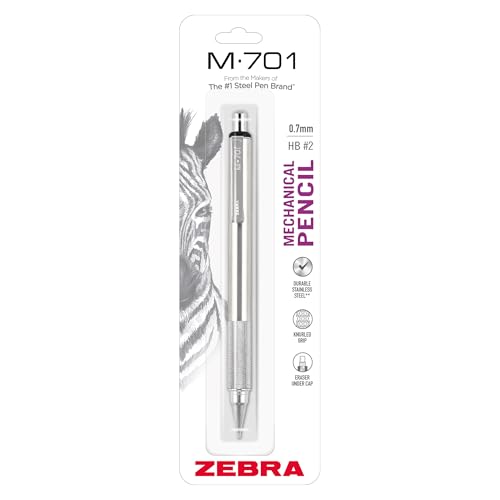
The Zebra M-701 is a sturdy mechanical pencil with a stainless steel barrel and a retractable tip. It is designed for durability, making it a reliable choice for those who carry a pencil in their pocket. The knurled grip provides a secure hold, and the clip is strong.
Pros
- Rugged steel body
- Retractable tip protects pocket
- Affordable price
Cons
- Grip may be slippery for some
- Lead advancement can be stiff

Pentel Orenz Nero
The Pentel Orenz Nero is a premium pencil with an auto lead advance system and a sliding sleeve that protects the lead. It is ideal for fine, consistent lines and is popular among artists and technical drawers. The body is lightweight yet durable, and the grip is comfortable.
Pros
- Auto lead advance prevents breakage
- Very fine lead sizes available
- Comfortable grip
Cons
- More expensive
- Auto advance may take getting used to

Staedtler Mars 780
The Staedtler Mars 780 is a classic technical pencil that comes with a lead pointer, making it a complete set for drafting. It has a metal body and a knurled grip, and it uses thicker leads (2.0 mm) that can be sharpened to a fine point. It is a favorite among architects and engineers.
Pros
- Includes lead pointer
- Sturdy construction
- Ideal for technical drawing
Cons
- Requires separate lead sharpening
- Heavier and longer

Tombow Mono Graph
The Tombow Mono Graph is known for its comfortable grip and a unique shake to advance lead feature. It also has a twisting eraser that can be extended, which is convenient for quick corrections. The body is lightweight, making it suitable for long writing sessions.
Pros
- Shake to advance is convenient
- Comfortable, soft grip
- Large twist eraser
Cons
- Plastic body less durable
- Clip can be fragile
Compared at a glance
| # | Model | Lead Size | Best for | Score | Price |
|---|---|---|---|---|---|
| 1 | Pentel GraphGear 1000 | 0.5 mm or 0.7 mm | Precision drafting and everyday professional use | 9.4 | Check price |
| 2 | Rotring 600 | 0.5 mm, 0.7 mm, or 2.0 mm | Heavy duty drafting and technical drawing | 9.2 | Check price |
| 3 | Uni Kuru Toga Roulette | 0.5 mm | Everyday writing with self sharpening lead | 9.0 | Check price |
| 4 | Zebra M-701 | 0.5 mm or 0.7 mm | Everyday carry with a retractable tip | 8.8 | Check price |
| 5 | Pentel Orenz Nero | 0.2 mm, 0.3 mm, or 0.5 mm | Fine line precision without lead breakage | 8.7 | Check price |
| 6 | Staedtler Mars 780 | 2.0 mm | Technical drawing with a lead pointer | 8.5 | Check price |
| 7 | Tombow Mono Graph | 0.5 mm | Comfortable writing with a unique eraser | 8.3 | Check price |
Common questions
What is the best lead size for professional use?
0.5 mm is the most common and versatile, suitable for writing and drafting. For fine detailed work, 0.3 mm offers more precision but is fragile. For sketching or shading, 0.7 mm or 2.0 mm are better choices.
Are metal mechanical pencils better than plastic ones?
Metal pencils tend to be more durable and have a premium feel. They are often heavier, which can be a con for some. Plastic pencils are lighter and less expensive but may not last as long.
What does a retractable tip do?
A retractable tip allows the lead sleeve to be pulled back into the body, protecting it from damage when the pencil is not in use. It prevents bending and breakage, making the pencil safe for pocket carry.
How do I refill lead in a mechanical pencil?
Usually, you remove the cap or eraser to access a chamber. Insert the lead refill into the chamber, then replace the cap. Some pencils have a twist mechanism to expose the opening. Always ensure you use the correct lead size.
Can I use a mechanical pencil for drawing and sketching?
Yes, many artists use mechanical pencils for precise line work and technical drawing. Thicker leads like 0.7 mm or 2.0 mm are better for shading and sketching, while finer leads are good for details.
What is the difference between a drafting pencil and a regular mechanical pencil?
Drafting pencils often have a longer lead sleeve (typically 4 mm) that allows for accurate line placement when using a ruler or template. They usually have a knurled grip for better control and a stronger clip. Regular pencils may have shorter sleeves and are more general purpose.
How do I maintain my mechanical pencil?
Keep the pencil clean and avoid dropping it to prevent damage to the tip or mechanism. Replace the eraser when it is worn. If the lead advances unevenly, check for jams and clear them carefully.
Are expensive mechanical pencils worth the investment?
For professionals who use a pencil daily, a higher quality pencil offers better durability, comfort, and precision. They often come with warranties and are built to last. However, cheaper models can be sufficient for occasional use.
The bottom line
For most professionals, the Pentel GraphGear 1000 is the best choice due to its balance of durability, precision, and comfort. If you are a drafter who needs a fixed sleeve and heavy duty build, the Rotring 600 is worth the higher cost. For everyday writing, the Uni Kuru Toga Roulette is a comfortable and innovative option.
Marcus Chen
Marcus covered consumer electronics for enthusiast tech publications for six years before joining ChoiceCrest. He specializes in translating manufacturer spec sheets into plain-language buying advice, with a focus on audio, computing accessories and smart-home gear.