Golf Rangefinders Precise Enough for Tournament Play
Bushnell’s Pro X3 delivers the fastest, most consistent flag locks for competitive rounds. Precision Pro’s NX10 matches much of that accuracy for less outlay. Bushnell’s Tour V6 Shift adds a visible slope switch for players who compete under USGA or R&A rules. All three read greens the way serious golfers expect.
Bushnell’s Pro X3 is the strongest all-around pick for players who compete regularly. It pairs 7x magnification with sub-second locks out to roughly 450 yards on a flag. Its price does sit above casual weekend rangefinders.
Slope compensation helps on hilly courses, yet it disqualifies a scored round in USGA and R&A events unless it switches off. Many buyers miss that detail before their first sanctioned round. We compared published specs, flag-lock range, slope-switch design and patterns in owner feedback to rank these seven.
The best picks, ranked

Bushnell Pro X3
Bushnell’s Pro X3 locks flags in under a second using PinSeeker with JOLT vibration confirmation. E.S.P.2 processing keeps the display steady on windy tee boxes. Slope readings switch off instantly for tournament rounds.
Pros
- Sub-second flag lock with JOLT vibration
- 7x magnification holds steady at long range
- Slope switch keeps rounds tournament legal
Cons
- Costs more than most rivals on this list
- Slope mode must be checked before each round

Precision Pro NX10
The NX10 pairs a 6x lens with pulse vibration confirmation for a positive lock every time. Slope Switch technology adjusts for elevation, then disables in one step for sanctioned rounds. A lifetime battery replacement policy backs the unit.
Pros
- Vibration lock confirmation on every read
- Slope switch disables for legal tournament use
- Lower cost than tour-branded competitors
Cons
- Shorter maximum flag range than the Pro X3
- Lens is smaller than premium 7x models

Bushnell Tour V6 Shift
Tour V6 Shift uses Bushnell’s Slope Switch Technology to toggle elevation compensation with a visible on-device indicator. Players always know their current mode before hitting a shot. Visual JOLT and IPX7 waterproofing hold up through wet, humid rounds.
Pros
- Clear on-device indicator shows slope status
- IPX7 rating survives rain and dew
- Compact body fits standard cart bag pockets
Cons
- No GPS course data like hybrid models
- Runs on a CR2 battery not included long term
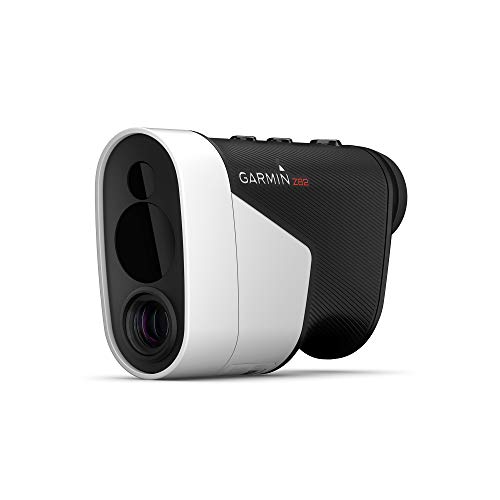
Garmin Approach Z82
The Approach Z82 combines a laser rangefinder with preloaded maps for over 41000 golf courses. PlaysLike distance factors in elevation automatically. A touchscreen overlay shows hazards without pulling out a phone.
Pros
- Preloaded GPS maps remove guesswork on hazards
- PlaysLike distance adjusts for elevation automatically
- Touchscreen doubles as a simple course viewer
Cons
- Heavier than single-purpose laser units
- Battery drains faster with the GPS screen active
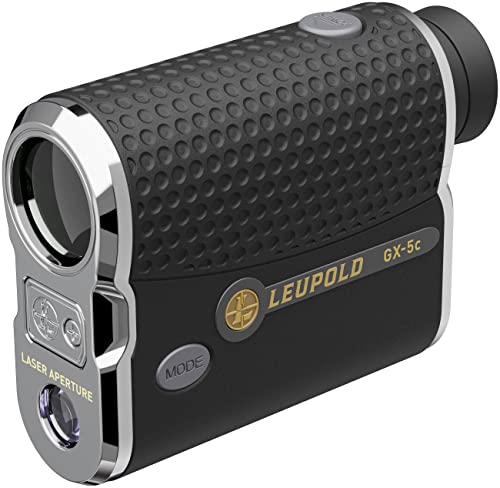
Leupold GX-5i3
Leupold’s GX-5i3 applies DNA, its Digitally eNhanced Accuracy processing, to deliver a true golf range that accounts for slope in real time. Prism Lock confirms the flag with a steady vibration. The housing resists fogging in cold, damp weather.
Pros
- Longest published laser range on this list
- DNA processing refines slope-adjusted yardage
- Prism Lock reduces false reads on trees
Cons
- Premium pricing versus mid-tier competitors
- Menu and settings have a steeper learning curve

Nikon Coolshot PROII Stabilized
Nikon’s Coolshot PROII Stabilized uses internal stabilization to cancel hand shake, which matters most at maximum range. First Target Priority II favors the flag over background trees. A compact grip suits one-handed use from a cart.
Pros
- Stabilization steadies reads at long distance
- First Target Priority favors flag over trees
- Compact grip works well one-handed
Cons
- No slope function for elevation adjustment
- Shorter tree-range spec than tour-level rivals

TecTecTec VPRO500
The VPRO500 skips slope compensation entirely, which keeps it legal for every sanctioned round without a switch. A 6x lens and continuous scan mode track moving targets like carts. The lightweight body suits golfers who carry rather than ride.
Pros
- Tournament legal without a slope switch
- Continuous scan tracks moving targets
- Lightest body of the seven rangefinders here
Cons
- No slope data for casual practice rounds
- Lacks vibration confirmation on flag lock
What to look for
What Separates a Professional Rangefinder From a Basic One Tour-level units lock a flag in under a second, even against trees or a crowded background. Magnification between 6x and 7x keeps distant pins visible without a shaky image. Accuracy within a yard matters more on approach shots than on tee shots. Vibration or JOLT confirmation tells a golfer the read is real, not a bounce off a cart or bunker rake.
Slope Switch and Tournament Legality Slope compensation adds or subtracts yardage based on elevation change, which helps club selection on hilly courses. USGA and R&A rules ban slope-adjusted distances during sanctioned play unless the feature disables. Models like the Tour V6 Shift and NX10 include a visible switch so a player can confirm legal mode before teeing off. A rangefinder without slope, like the VPRO500, sidesteps the issue by never offering it.
Choosing Range and Magnification for Your Course Public courses with tight tree lines favor a wider field of view around 6x magnification. Open courses with long par fives benefit from 7x lenses and a published range past 1000 yards, even though most shots never approach that distance. Flag-lock range, typically 400 to 800 yards, matters more day to day than the maximum tree range printed on the box. Hilly layouts add another factor: how quickly the unit reads slope without a lag.
Stabilization, Battery Life and Everyday Reliability Hand shake becomes noticeable past 300 yards, which is why stabilization on units like the Coolshot PROII Stabilized helps at maximum range. Most professional rangefinders run on a single CR2 battery that lasts a full season of regular rounds. Water resistance rated IPX7 or better protects against dew-soaked mornings and sudden rain. GPS hybrid models like the Approach Z82 trade some battery life for preloaded course maps.
How they compare
| # | Model | Magnification | Best for | Score | Price |
|---|---|---|---|---|---|
| 1 | Bushnell Pro X3 | 7x | Best overall | 9.4 | Check price |
| 2 | Precision Pro NX10 | 6x | Best value | 9.2 | Check price |
| 3 | Bushnell Tour V6 Shift | 6x | Best for tournament and legal-slope-lock play | 8.9 | Check price |
| 4 | Garmin Approach Z82 | 6x | Best for GPS-mapped course data | 8.6 | Check price |
| 5 | Leupold GX-5i3 | 7x | Best for slope-adjusted play | 8.4 | Check price |
| 6 | Nikon Coolshot PROII Stabilized | 6x | Best for long-distance flag-lock | 8.2 | Check price |
| 7 | TecTecTec VPRO500 | 6x | Best budget | 8.0 | Check price |
Common questions
Are golf rangefinders with slope legal for tournament play?
Only if the slope function can be switched off. USGA and R&A rules disqualify a scored round if slope-adjusted distance stays active during competition.
What is the difference between a golf rangefinder and a GPS watch?
A laser rangefinder measures the exact distance to a specific target like a flag. A GPS watch shows distances to preset points on a hole using satellite data, without needing a clear line of sight.
How accurate are laser rangefinders for golf?
Most tour-level models publish accuracy within plus or minus 1 yard. That tolerance holds up to roughly 400 yards on a reflective target like a flag stick.
Do golf rangefinders need slope compensation to be useful?
No. Slope helps on hilly courses by adjusting yardage for elevation, but flat courses see little benefit. Players who compete under USGA rules often prefer a switchable or slope-free model.
Can a slope rangefinder be used casually then switched off for tournaments?
Yes, models like the Tour V6 Shift and NX10 include a physical or menu-based toggle. Checking the mode before a scored round avoids an accidental disqualification.
What magnification is best for a golf rangefinder?
6x suits most courses and keeps the image steady in hand. 7x helps on open layouts with long sightlines but can amplify hand shake without stabilization.
How far can a professional golf rangefinder read a flag?
Flag-lock range typically runs 400 to 600 yards on tour-level units. Maximum range to reflective objects like trees can extend past 1000 yards, though that distance rarely applies mid-round.
Is a laser rangefinder better than GPS for golf?
Laser units give a precise distance to one chosen target, which suits players who want exact yardage to the pin. GPS or hybrid devices like the Approach Z82 add hazard and layout data without needing to aim at anything.
Which golf rangefinder is best for tournament play?
Bushnell’s Tour V6 Shift and the Precision Pro NX10 both switch off slope with a visible indicator, keeping a scored round legal. The Pro X3 works too, provided its slope mode is checked off first.
Bushnell Pro X3 vs Precision Pro NX10: which should you buy?
The Pro X3 locks flags faster and reaches slightly farther thanks to 7x magnification. The NX10 gives up little accuracy for meaningfully less outlay, which suits golfers who compete less often.
The bottom line
Bushnell’s Pro X3 earns the top spot for players who need fast, repeatable locks under real course pressure, backed by JOLT vibration confirmation and a 7x lens that holds steady on distant flags. Golfers on a tighter budget get nearly the same locking speed from the Precision Pro NX10 for meaningfully less outlay. Anyone competing under USGA or R&A rules should reach for the Bushnell Tour V6 Shift instead, since its visible slope switch keeps a round tournament legal without swapping devices.
Derek Holt
Derek has a background coaching recreational and amateur athletes and has worked the sales floor at specialty fitness retailers. He focuses on equipment durability, ergonomics and realistic use cases rather than marketing claims.