Professional Brake Bleeder Kits for Mechanics
For professional mechanics, the Motiv Power Bleeder 0100 is our top pick. It uses compressed air or a hand pump to pressurize the brake system, allowing one-person bleeding without a helper. Its main advantage is speed and consistency across multiple vehicles. The main limitation is the need for an air compressor or manual pumping effort.
Bleeding brakes is a routine job in any auto shop. Manual two-person methods waste time and risk air bubbles. Professional mechanics need reliable tools that deliver consistent results every time.
We compared the most popular brake bleeder kits on Amazon. We looked at pressure bleeders, vacuum pumps, and gravity kits. Our goal is to help you choose the right tool for your shop’s workflow and budget.
The top picks, ranked

Motiv Power Bleeder 0100
The Motiv Power Bleeder uses compressed air or a manual pump to pressurize the brake system. It comes with a universal adapter that fits most vehicles. Mechanics praise its speed and reliability. The steel body is powder coated for durability. It requires a separate adapter for some European cars.
Pros
- Durable steel construction
- Fast bleeding operation
- Works with air compressor
Cons
- Adapter not included for all models
- Can be over-pressurized if not careful

Mityvac MV6835
The Mityvac MV6835 is a professional-grade vacuum pump that can also pressurize. It includes a fluid reservoir and various adapters. It is ideal for bleeding brakes and also for testing vacuum systems. Owners report it is rugged and accurate. It requires manual operation, so arm fatigue can be a factor for long jobs.
Pros
- Dual vacuum and pressure functions
- Comes with many adapters
- Accurate gauge
Cons
- Manual pumping can be tiring
- Reservoir is small

Performance Tool W80579
The Performance Tool W80579 is a simple hand-held vacuum pump. It is affordable and works well for occasional use. It includes a bleeder kit with hoses and a catch bottle. Mechanics say it is good for quick jobs but not as fast as pressure bleeders. The plastic body feels less durable.
Pros
- Low cost
- Easy to use
- Portable
Cons
- Plastic construction
- Slower than pressure bleeders
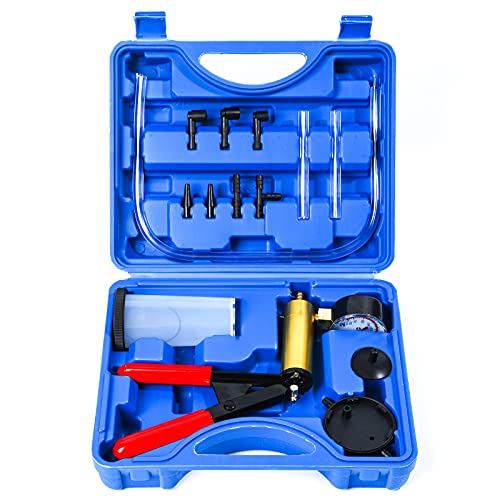
AstroPRO Brake Bleeder and Vacuum Pump Kit
The AstroPRO kit includes a vacuum pump and a full set of adapters for domestic and import vehicles. It also has a fluid catch bottle and tubing. This kit is popular among mechanics who work on various car brands. The pump is made of metal for durability. It is a manual vacuum pump, so it requires physical effort.
Pros
- Extensive adapter set
- Metal pump body
- Great for versatile use
Cons
- Manual operation
- No pressure function
Powerbuilt Brake Bleeder and Vacuum Pump Kit
The Powerbuilt kit is a heavy-duty vacuum pump with a large reservoir. It includes a brake bleeder adapter and hose. It is built to withstand shop use. Owners report it works well but the gauge can be fragile. It is manual, so bleeding a whole system can take time.
Pros
- Sturdy construction
- Large reservoir
- Good value
Cons
- Gauge may be inaccurate
- Manual effort required

Lisle 24680 Smart Bleed
The Lisle Smart Bleed is a one-person brake bleeder that uses a small reservoir and a check valve. It works with the vehicle’s own brake pedal. You attach it to the bleeder screw, open the valve, and pump the brake pedal. It is simple and effective for many cars. It does not work on all systems and can be messy.
Pros
- No external pump needed
- Inexpensive
- Works on most vehicles
Cons
- Not for ABS systems
- Can be messy

HOTO Brake Bleeder Kit
The HOTO Brake Bleeder Kit is a digital handheld vacuum pump. It has a digital pressure gauge and is battery powered. It is compact and easy to use. However, some mechanics report that battery life is limited. It is best for quick jobs and mobile service.
Pros
- Digital readout
- Compact and portable
- Battery operated
Cons
- Battery life may be short
- Not as powerful as manual pumps
Side by side
| # | Model | Type | Best for | Score | Price |
|---|---|---|---|---|---|
| 1 | Motiv Power Bleeder 0100 | Pressure bleeder | Fast, one-person bleeding on multiple vehicles | 9.4 | Check price |
| 2 | Mityvac MV6835 | Vacuum pump with pressure capability | Versatile vacuum and pressure operations | 9.2 | Check price |
| 3 | Performance Tool W80579 | Vacuum pump | Budget-friendly basic vacuum bleeding | 8.6 | Check price |
| 4 | AstroPRO Brake Bleeder and Vacuum Pump Kit | Vacuum pump kit | Comprehensive kit with many adapters | 8.9 | Check price |
| 5 | Powerbuilt Brake Bleeder and Vacuum Pump Kit | Vacuum pump | Mechanics needing a durable all-in-one tool | 8.7 | Check price |
| 6 | Lisle 24680 Smart Bleed | Gravity/pedal pressure | Simple one-person bleeding without a pump | 8.4 | Check price |
| 7 | HOTO Brake Bleeder Kit | Digital vacuum pump | Mechanics who want a modern, electronic option | 8.2 | Check price |
How to choose
Common questions
How often should brake fluid be flushed?
Most manufacturers recommend every 2 years or 30,000 miles. But it depends on driving conditions and fluid type. Brake fluid absorbs moisture over time, reducing its boiling point. Professional mechanics often test fluid with a tester to determine condition.
Can I use a vacuum bleeder on ABS brakes?
Yes, you can use a vacuum pump to bleed the calipers and wheel cylinders. However, you may need to cycle the ABS solenoid valves. Some ABS systems have a separate bleeding procedure. Consult the vehicle’s service manual.
What is the difference between a pressure bleeder and a vacuum bleeder?
A pressure bleeder forces new fluid into the system from the master cylinder. A vacuum bleeder pulls fluid out from the bleeder screws. Pressure bleeders are often faster and avoid air locks. Vacuum bleeders are more portable and simpler.
Do I need a special adapter for European cars?
Many European cars use a different master cylinder cap thread. Some kits include adapters, but you may need to purchase an additional adapter. Check the product details for European car coverage.
Can I bleed brakes by myself with a one-person kit?
Yes, many kits are designed for one-person use. They use a valve that prevents air from being drawn back in. You can also use a pressure bleeder or a vacuum pump alone. The Lisle Smart Bleed is a simple pedal-operated tool.
What type of brake fluid should I use?
Check your vehicle’s owner manual. Most modern cars use DOT 3 or DOT 4. Some high-performance cars use DOT 5.1. Do not mix DOT 5 (silicone) with others. Use fresh fluid from a sealed container.
Why does my brake pedal feel spongy after bleeding?
There may still be air in the system. Re-bleed the brakes, starting from the wheel farthest from the master cylinder. Sometimes a faulty bleeder screw can let air in. Also, ensure the master cylinder does not run dry.
Are brake bleeder kits worth it for DIY mechanics?
If you plan to service your brakes regularly, a kit is a good investment. A basic vacuum pump is affordable and can save time. For occasional use, you can still use the traditional two-person method with a friend.
How do I avoid introducing air into the system?
Keep the master cylinder reservoir filled during bleeding. When using a pressure bleeder, ensure the adapters are sealed. When using a vacuum pump, keep the hose submerged in fluid to prevent air from entering the system.
Can brake fluid damage my car’s paint?
Yes, brake fluid can strip paint. Always protect painted surfaces with rags. Immediately clean any spills with soap and water. Be careful when filling the reservoir or connecting bleeders.
Our pick
For most professional mechanics, the Motiv Power Bleeder 0100 is the best choice because it offers the fastest, most reliable bleeding. If you need a versatile tool for multiple tasks and prefer manual operation, the Mityvac MV6835 is a solid alternative. For a budget option, the Performance Tool W80579 works for light use, but it is not built for heavy daily demands.
Tony Russo
Tony trained as an automotive technician and spent years in service and parts retail before moving into writing. He focuses on garage tools, car care products and accessories from a hands-on maintenance perspective.
