Brain Teasers That Beat Experienced Puzzle Solvers
Hanayama Huzzle Cast Enigma leads, a level 6 disentanglement whose three cast pieces give no feedback until they release. ThinkFun Gravity Maze suits graded work with 60 single solution challenges. SmartGames IQ Puzzler Pro packs 120 problems into a case about the size of a phone.
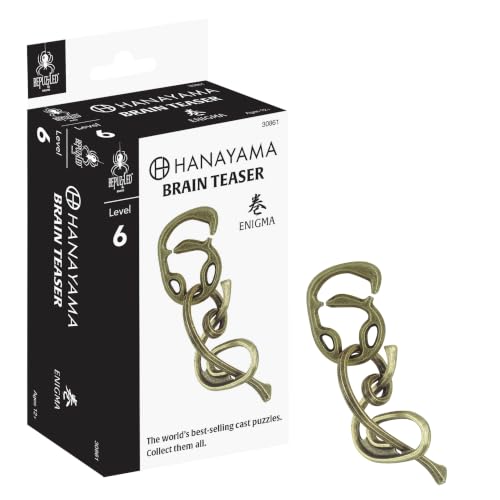
Hanayama Huzzle Cast Enigma fits anyone who wants a puzzle that refuses to yield. Three cast metal pieces separate along a path most solvers stumble into rather than deduce, and Hanayama rates it 6 on its own six level scale. Repeat solves come quickly once that sequence sticks, so treat it as a one time conquest.
Difficulty labels mean little across brands, since one maker’s level 5 can outlast another’s level 6. We compared published ratings, the mechanic behind each puzzle, build materials and the number of distinct challenges included. Solver reports on first solve time, and on whether a puzzle stays interesting afterwards, decided the order.
How to choose
What makes a brain teaser genuinely difficult Difficulty comes from feedback, not from part count. A puzzle that tells you nothing until it suddenly opens, like the Cast Enigma, defeats systematic searching. Single solution challenges, as used by Gravity Maze and Rush Hour, force deduction instead of fiddling. Solution space matters just as much. Anything you can brute force with patience will feel long rather than hard, which is why 12 piece packing sets plateau. Treat brand scales as local measurements too, since a level 6 from Hanayama says nothing about a level 6 elsewhere.
Types of brain teaser and what each one trains Cast metal disentanglement tests three dimensional visualisation and a willingness to try unlikely moves. Packing puzzles such as IQ Puzzler Pro and Kanoodle Genius train constraint satisfaction, the same reasoning behind scheduling and layout problems. Sequential movement sets, the Rush Hour family, reward planning several steps ahead against a fixed board. Twisty puzzles sit apart. A GAN 356 M rewards learned algorithms and execution speed far more than fresh deduction. Owning two different mechanics keeps a small collection from feeling repetitive after a month.
Which puzzle suits how you like to think Chess and logic grid players usually prefer Rush Hour and Gravity Maze, where rules are visible and the work is planning. Anyone who enjoys taking mechanisms apart gets more from Hanayama metal, since the pleasure lies in uncovering hidden geometry. Engineers and architects often gravitate to packing puzzles, because filling a defined volume maps onto familiar work. Buying for someone else gets much easier once you pick by this preference rather than by a printed difficulty number.
Replay value, gifts and shared office desks Metal disentanglement delivers a huge first solve and little after it, so it works better as a gift than as a purchase you expect to revisit. Card sets and puzzle books stretch further, although a determined solver can clear 40 Rush Hour cards across a weekend. Only the speed cube has effectively unlimited life, since the goal moves from solving to shaving seconds. For a shared desk, pick the Cast Chain over the Enigma. Its rotation sequence resists memorisation, so each visitor starts from scratch rather than repeating a trick they watched.
The shortlist, ranked
Hanayama Huzzle Cast Enigma
Three interlocking cast metal pieces travel a sequence offering no sign of progress until the moment it releases. Hanayama places it at the top of a six level scale, and practised solvers still report days of work. Solid metal shrugs off pockets, bags and frustrated handling by colleagues.
Pros
- Defeats solvers who clear most level 5 puzzles
- Cast metal shows little wear after heavy handling
- Small enough to live on a desk or in a pocket
Cons
- Repeat solves turn easy once the sequence sticks
- Reassembly is harder than taking it apart

ThinkFun Gravity Maze Marble Run Brain Game
Sixty challenge cards climb from beginner to expert, and later ones demand a whole tower planned before a marble drops. Every card has exactly one valid solution, so guessing leads nowhere. Clear plastic towers let you trace the marble path by eye, which keeps each failure instructive.
Pros
- Difficulty curve reaches well into adult territory
- Single solution cards reward planning over fiddling
- Transparent towers make a failed run readable
Cons
- Opening cards are trivial for an adult
- Board and towers need shelf space a metal puzzle does not
SmartGames IQ Puzzler Pro
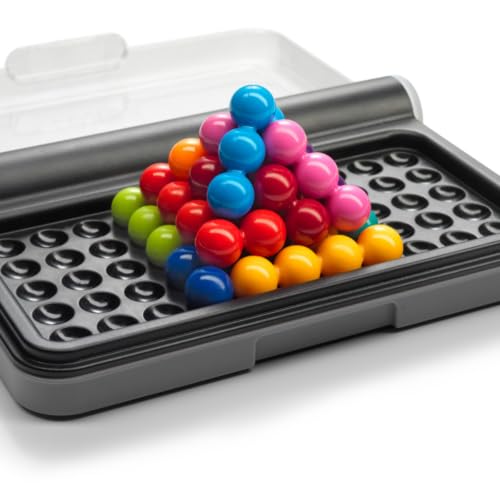
Twelve coloured pieces fill a flat grid, then stack into raised 3D pyramids, giving 120 problems from one tray. Later challenges start with most of the grid empty, turning gap filling into deduction. Everything folds into a case roughly the size of a phone, ready for a tray table.
Pros
- 120 distinct problems from a single set of pieces
- Flat tiling and 3D pyramid modes share one tray
- Hinged case keeps every piece contained in transit
Cons
- Small pieces vanish easily on a plane seat
- Hardest layouts still yield to brute force given time

GAN 356 M Magnetic Speed Cube
Positioning magnets pull each layer into alignment, so fast turns stop locking up mid solve. Tension and elasticity adjust with the supplied tool, letting the feel change as speed improves. Value sits in years of use, because the goal shifts from solving at all to solving faster.
Pros
- Stays useful for years rather than a single solve
- Magnets improve accuracy during fast turning
- Tension and elasticity tune to personal feel
Cons
- Progress depends on learned algorithms, not deduction
- Needs periodic lubrication to stay smooth

ThinkFun Rush Hour Traffic Jam Logic Game
Forty cards strand a red car behind blocking vehicles on a six by six grid. Expert layouts call for moves that appear to worsen the jam before it opens. Sliding block work trains planning several steps ahead, a separate skill from disentanglement.
Pros
- Expert cards force counterintuitive move orders
- Grid and vehicles set up in seconds
- Card deck makes difficulty easy to step up
Cons
- Forty challenges go quickly for a keen solver
- Layouts stay memorable, which limits repeat play

Hanayama Huzzle Cast Chain
Three cast links come apart through a rotation sequence that resists memorisation, so a second solve still takes work. Hanayama rates this level 6 as well, though most solvers find it a shade friendlier than the Enigma. That makes it the better shared desk puzzle, since visitors can struggle productively with it.
Pros
- Solution is harder to memorise than most metal puzzles
- Weight and finish suit a desk on display
- Approachable enough to hand to a colleague
Cons
- Easier than the Enigma despite the same rating
- Cast edges can mark a polished desk surface

Educational Insights Kanoodle Genius
Seven pieces and a booklet of more than 200 layouts give this the highest challenge count in the group. Flat and 3D pyramid puzzles both appear, and back pages supply only two or three starting pieces. Its flat case slides into a laptop bag pocket without adding bulk.
Pros
- Over 200 distinct layouts in one booklet
- Slim case travels better than a boxed set
- Difficulty climbs sharply through the back pages
Cons
- Seven pieces keep peak difficulty below IQ Puzzler Pro
- Booklet pages wear with constant use
How they stack up
| # | Model | Difficulty | Best for | Score | Price |
|---|---|---|---|---|---|
| 1 | Hanayama Huzzle Cast Enigma | Level 6 of 6 | Best overall | 9.4 | Check price |
| 2 | ThinkFun Gravity Maze Marble Run Brain Game | 60, graded to expert | Best for spatial reasoning | 9.2 | Check price |
| 3 | SmartGames IQ Puzzler Pro | 120 across 2D and 3D | Best portable puzzle | 9.0 | Check price |
| 4 | GAN 356 M Magnetic Speed Cube | 3×3 speed cube | Best twisty puzzle | 8.7 | Check price |
| 5 | ThinkFun Rush Hour Traffic Jam Logic Game | 40, beginner to expert | Best sequential move trainer | 8.5 | Check price |
| 6 | Hanayama Huzzle Cast Chain | Level 6 of 6 | Best for repeat solving | 8.2 | Check price |
| 7 | Educational Insights Kanoodle Genius | Over 200 | Best budget | 8.0 | Check price |
Frequently asked questions
What is the hardest brain teaser for adults?
Among widely sold puzzles, Hanayama level 6 pieces such as the Cast Enigma are the usual answer. They give almost no feedback during a solve, so systematic searching does not help.
How does the Hanayama difficulty rating work?
Hanayama grades its Huzzle range from level 1 to level 6, with 6 the hardest. Ratings are relative within the Hanayama line and do not translate to other brands.
Are brain teasers actually good for your brain?
They exercise working memory, spatial reasoning and persistence, and solvers report sharper focus during a session. Broad claims about preventing cognitive decline go past what puzzle makers can support.
Which brain teaser makes the best gift?
A Hanayama Cast puzzle presents well and needs no instructions, so it opens easily at a party. Someone who wants weeks of use is better served by ThinkFun Gravity Maze and its 60 graded cards.
Can you solve a cast metal puzzle by force?
No, and pulling hard will bend the pieces. Every Hanayama solution runs on alignment and rotation, so a move that needs pressure signals the wrong path.
IQ Puzzler Pro vs Kanoodle Genius: which is harder?
IQ Puzzler Pro peaks higher, with 12 pieces and 120 challenges that leave most of the grid blank. Kanoodle Genius trades that for over 200 layouts and a flatter case.
Is a speed cube really a brain teaser?
It starts as one and becomes a skill activity once the algorithms are learned. Choose a cube when you want something useful for years instead of a single memorable solve.
How long does a level 6 puzzle take to solve?
Solvers commonly report several hours to several days on level 6 cast metal. Logic card sets run minutes per challenge, with expert cards stretching considerably longer.
What is the best brain teaser for engineers?
Packing puzzles land closest to daily work, so IQ Puzzler Pro suits most engineers. Anyone who prefers mechanisms over layouts should take the Huzzle Cast Enigma instead.
Which brain teasers work on a shared office desk?
Pick something small, self contained and hard to memorise, which points at the Hanayama Cast Chain. Rush Hour also works, though its 40 cards get exhausted by a regular group.
Our take
Order the Hanayama Huzzle Cast Enigma when you want one object that beats you for days and then earns a spot on the desk. Anyone after weeks of graded work should take ThinkFun Gravity Maze instead, since 60 single solution challenges outlast a disentanglement you only crack once. Frequent travellers get more from SmartGames IQ Puzzler Pro, which carries 120 problems in a case that survives a backpack.
Rachel Simmons
Rachel previously worked in child-product retail and brings a practical, detail-first eye to gear reviews, focusing on safety standards, ease of use and the fine print that matters most for new caregivers.