Animal figures built for shelves, not toy bins
Schleich’s Wild Life African Elephant is the benchmark: hand-painted detail on solid PVC that survives a classroom floor. Display collectors gain presence from the larger CollectA Deluxe African Lion. Filling a sensory tray in one go takes the Safari Ltd Wild TOOB, which packs twelve miniatures into a single tube.
Schleich’s Wild Life African Elephant is where most buyers should start. Anatomy holds up to adult scrutiny, and a solid PVC body takes a drop on tile without cracking, which matters in a nursery or classroom. Shelf collectors will find it small: six inches leaves less surface for the detail a display piece can carry.
Professional grade means one thing to a modeller, another to a teacher and another to a parent, which is why this category confuses people. We compared sculpts against reference photographs, measured figure dimensions, and checked paint on undersides and inner legs where cheaper ranges stop. Material density and stated age labelling fed into the order too. Multi-figure listings were judged on whether detail survived the smaller scale.
The best picks, ranked
Schleich Wild Life African Elephant
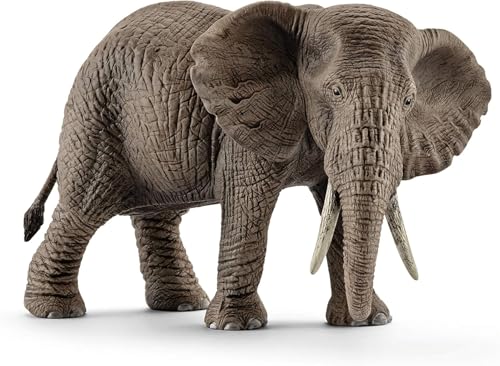
Skin folds, ear veining and foot pads get sculpted here rather than smoothed away. Solid PVC gives the body weight in the palm and keeps it from cracking when a child stands on it. At around six inches long, it scales correctly with the rest of the Wild Life range.
Pros
- Anatomy stands up to adult scrutiny
- Solid body takes weight without cracking
- Scales with other Wild Life figures
Cons
- Sold as a single figure, not a set
- Tusk tips can chip on hard floors

CollectA Deluxe African Lion
Deluxe pieces run larger than CollectA’s standard line, and the sculptor spends that room on individual mane strands and paw pads. Paint layers under the chin and along the flank, where budget figures stop at one flat coat. Eight inches nose to tail makes it a centrepiece rather than one animal in a herd.
Pros
- Extra size carries mane and paw detail
- Shading continues onto the underside
- Stands steady without a base
Cons
- Out of scale beside six inch figures
- Too large for a small world tray

Papo Wild Animal Kingdom Tiger
Stripe edges are the hardest thing to paint on a tiger, and Papo keeps them sharp instead of letting them bleed into the base coat. Facial sculpting gets rare attention: brow and muzzle carry real expression. Solid PVC at roughly seven inches long suits a display shelf and a play scene equally.
Pros
- Crisp stripe edges with no bleed
- Head sculpt reads expressive, not generic
- Dense body feels substantial in the hand
Cons
- Gloss finish flares under bright light
- Stocked less consistently than Schleich

Safari Ltd Wild TOOB
Twelve miniatures arrive in one tube, enough to fill a sensory bin without buying animals one at a time. Each runs roughly two to three inches, so sculpts simplify to broad shapes and a few painted markings. Safari Ltd lists the plastic as phthalate-free and lead-free, and the tube doubles as storage between sessions.
Pros
- Twelve animals from a single purchase
- Tube keeps the set together between uses
- Miniature scale suits dioramas and sensory bins
Cons
- Detail simplifies at this size
- Small parts rule it out for under threes

MOJO Grizzly Bear Figurine
Thick limbs and almost no thin protrusions keep MOJO figures intact in a sandpit. Fur is cut as deep grooves, so pigment survives in the recesses once handling wears the high points smooth. Around five inches long, it sits just under Schleich scale in a mixed display.
Pros
- Chunky limbs survive drops and sand
- Deep fur grooves hold paint longer
- Rinses clean under a tap
Cons
- Sculpt is blockier than Papo or CollectA
- Colours read flatter than premium lines

Terra by Battat Wild Animals Figurines Set
Several species in one box solves the classroom problem of a figure per child. Paint layering sits below collector standard, a fair trade when headcount matters more than finish. Washable PVC wipes down after messy activities, and figures between three and five inches suit small hands.
Pros
- Multiple species in a single box
- Surfaces wipe clean after messy play
- Sized well for sorting and counting tasks
Cons
- Paint detail below collector ranges
- Species mix varies between sets

Learning Resources Jumbo Jungle Animals
Oversizing is the safety feature: no thin tails, horns or ears exist to snap off. Hollow bodies keep weight low, so a toddler can carry two at once. Realism gives way to simplified shapes, which is the trade for putting figures in the youngest hands.
Pros
- Large shapes suit a toddler grip
- Nothing thin enough to break away
- Light to carry and simple to wash
Cons
- Stylised rather than anatomically accurate
- Hollow bodies feel light beside solid PVC
How they stack up
| # | Model | Size | Best for | Score | Price |
|---|---|---|---|---|---|
| 1 | Schleich Wild Life African Elephant | About 6 inches long | Best overall | 9.4 | Check price |
| 2 | CollectA Deluxe African Lion | About 8 inches nose to tail | Best for display collectors | 9.2 | Check price |
| 3 | Papo Wild Animal Kingdom Tiger | About 7 inches long | Best paintwork | 9.0 | Check price |
| 4 | Safari Ltd Wild TOOB | 12 miniature figures | Best value | 8.8 | Check price |
| 5 | MOJO Grizzly Bear Figurine | About 5 inches long | Best for rough play | 8.6 | Check price |
| 6 | Terra by Battat Wild Animals Figurines Set | Multi-figure set | Best for classroom sets | 8.3 | Check price |
| 7 | Learning Resources Jumbo Jungle Animals | 5 figures | Best for toddlers | 8.0 | Check price |
How to pick the right one
What makes an animal figure collector grade Three markers give a premium range away. Anatomy comes first: shoulder blade placement, muscle mass over the haunch and the taper of a tail are where cheap moulds collapse into a generic animal shape. Paint application is second, since ranges like Papo and Schleich cover undersides and inner legs that no viewer ever sees. Density decides the third, because solid PVC has weight in the palm while hollow bodies dent and rattle. Hand finishing explains a fourth clue worth knowing: two copies of the same sculpt will differ slightly in shading.
Scale and mixing brands on one shelf Combining ranges works only when you watch size. Schleich, Papo and MOJO sit in a similar bracket, so a zebra from one brand still looks plausible next to a lion from another. CollectA Deluxe runs deliberately larger and reads best as a standalone centrepiece rather than a herd member. Measure shelf headroom before ordering, since an eight inch lion needs clearance a six inch elephant does not. Grouping by habitat instead of by brand also hides small scale mismatches.
Best animal figures for classrooms and small world play Quantity and washability outrank sculpt perfection once a whole table needs a figure each. Multi-figure options such as the Safari Ltd Wild TOOB and the Terra by Battat set cover a group from one purchase. Repeated species help more than variety does, because sorting, counting and habitat matching all need duplicates. Keep a single premium piece aside as the reference model children compare against. Sensory bins with rice or sand favour MOJO and Terra figures, which take abrasion better than fine painted detail does.
Age ratings, materials and cleaning Read the stated age rather than assuming from size. Wild TOOB miniatures carry a three and up rating for choke hazards, while the Learning Resources Jumbo range exists specifically to remove small parts from the equation. Phthalate-free and lead-free labelling appears on Safari Ltd packaging and is worth checking on any figure a young child mouths. Warm soapy water and a soft brush clean textured fur and scales without stripping paint. Skip dishwashers and sunny windowsills, since heat warps thin limbs and light fades painted markings over a season.
Good to know
What makes an animal figure professional grade?
Accurate anatomy, hand-applied paint that reaches hidden surfaces, and solid PVC rather than hollow plastic. Packaging claims about realism tell you very little on their own.
Schleich vs Papo: which sculpts are better?
Schleich leads on consistent anatomy across a huge range. Papo paints finer edges, which shows most on patterned animals such as tigers and leopards.
Are realistic animal figures made to a consistent scale?
Only loosely, and only within a brand. Most ranges size figures so a mouse and an elephant share a shelf, while CollectA labels its Deluxe line larger on purpose.
Which animal figures work best in a classroom?
Sets win on headcount. A Safari Ltd Wild TOOB or the Terra by Battat set gives every child a figure, and both wipe clean after messy activities.
Are these figures really hand-painted?
Schleich, Papo, CollectA and MOJO all apply paint by hand over a moulded base. Small shading differences between two identical sculpts are the giveaway.
What age are realistic animal figures safe for?
Full size figures usually carry a three and up rating. Younger children need oversized pieces like the Learning Resources Jumbo Jungle Animals, which have no detachable parts.
How do you clean plastic animal figures?
Warm soapy water and a soft brush lift dust from fur grooves and scales. Avoid the dishwasher, because heat warps thin limbs and lifts paint.
Is CollectA Deluxe worth it over standard figures?
For a display shelf, yes: the larger sculpt carries mane strands and layered shading. For mixed play sets it is a poor fit, since it towers over six inch figures.
Do animal figures hold their value as collectibles?
Retired Schleich and Papo sculpts do attract interest on secondary markets. Current production pieces are worth buying because you want them, not as an investment.
Our pick
Buy the Schleich Wild Life African Elephant first, since its anatomy and hand-painted finish satisfy collectors while a solid PVC body survives a nursery floor. Anyone building a display shelf rather than a play box should put that budget into the CollectA Deluxe African Lion, which has eight inches of surface for detail a six inch figure cannot hold. Teachers stocking a sensory tray get far more from the twelve piece Safari Ltd Wild TOOB, on the condition that everyone handling it is past three.
Rachel Simmons
Rachel previously worked in child-product retail and brings a practical, detail-first eye to gear reviews, focusing on safety standards, ease of use and the fine print that matters most for new caregivers.