Winter Parkas Built for Real Cold, Not Just Looks
Canada Goose’s Expedition Parka is the strongest pick for genuinely extreme cold, using a fur-trimmed hood and heavy down fill rated for Arctic conditions. The North Face’s McMurdo Parka offers similar protection at a lighter weight, while Patagonia’s Downdrift Jacket suits buyers who want warmth without full expedition bulk.
Canada Goose’s Expedition Parka earns the top spot because it is rated for extreme cold rather than typical winter commuting, using a heavy down fill and a coyote fur ruff that blocks wind around the face. It suits buyers in genuinely harsh winter climates. Its main tradeoff is bulk and weight that make it impractical for milder regions or daily indoor-outdoor transitions.
We compared listed fill power, insulation weight and shell material across each coat’s specifications rather than testing them in actual winter conditions.
What we recommend

Canada Goose Expedition Parka
This parka uses a high fill-power down insulation rated for extreme cold, paired with a coyote fur ruff designed to block wind around the face in severe conditions. A long length covers the thighs for added protection that shorter jackets skip entirely. Its construction reflects Canada Goose’s origins in genuinely cold-weather outerwear rather than fashion-first design.
Pros
- Rated for genuinely extreme cold, not just typical winter commuting
- Fur ruff blocks wind around the face in severe conditions
- Long length adds thigh coverage most winter jackets skip
Cons
- Bulk and weight are impractical for milder climates
- Long length can restrict movement during active use
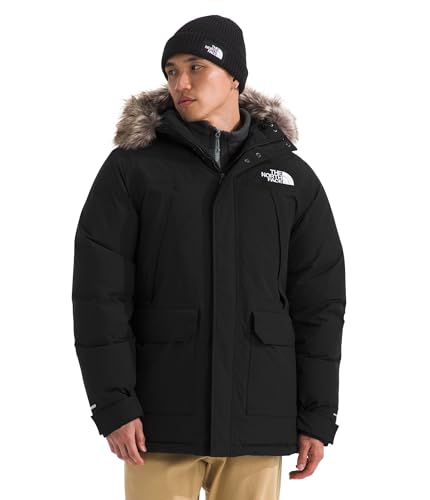
The North Face McMurdo Parka
Named after the Antarctic research station, this parka targets similarly severe cold as the Canada Goose Expedition Parka above but at a somewhat lighter overall weight. A removable fur-trimmed hood gives flexibility the fixed-hood Canada Goose style does not offer. Down insulation fills the body while a water-resistant shell protects against wet snow.
Pros
- Lighter overall weight than the Canada Goose Expedition Parka
- Removable hood adds flexibility for varying conditions
- Water-resistant shell handles wet snow better than a basic shell
Cons
- Still bulky compared with mid-weight winter jackets
- Removable hood is less wind-sealed than a fixed fur ruff
Patagonia Downdrift Jacket
This jacket skips the heavy expedition styling of the Canada Goose and North Face parkas above in favor of a slimmer, more everyday-wearable cut. Down insulation still provides real warmth, just distributed in a lighter overall package. Recycled shell fabric reflects Patagonia’s broader focus on more sustainable materials across its product line.
Pros
- Slimmer cut suits daily wear better than bulky expedition parkas
- Still provides real down warmth despite the lighter profile
- Recycled shell fabric aligns with more sustainable material sourcing
Cons
- Not rated for the extreme cold the Canada Goose parka handles
- Shorter length offers less thigh coverage than a full parka

Arc’teryx Therme Parka
Arc’teryx applies its technical outdoor gear construction standards to this parka, including sealed seams that block moisture better than standard stitching. Down insulation is distributed with mapped zones, adding more fill where the body loses heat fastest. A GORE-TEX shell adds weatherproofing that fashion-focused winter coats typically lack.
Pros
- Sealed seams block moisture better than standard stitched construction
- Mapped insulation adds fill where the body loses heat fastest
- GORE-TEX shell adds weatherproofing fashion coats typically lack
Cons
- Technical construction focus adds cost over simpler winter coats
- Styling leans more technical than fashion-forward
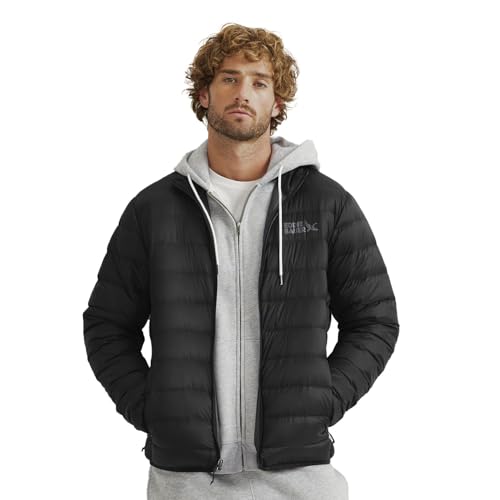
Eddie Bauer CirrusLite Down Jacket
This jacket trades the heavy insulation of a true expedition parka for a packable design that compresses down for travel or storage. Down fill still provides real warmth for layering under a heavier shell in extreme cold. Its lighter construction makes it a better fit for transitional cold rather than deep winter on its own.
Pros
- Packable design compresses easily for travel or storage
- Works well as a layering piece under a heavier shell
- Lighter weight suits transitional cold better than bulky parkas
Cons
- Not warm enough alone for the extreme cold the top parkas handle
- Lighter nylon shell offers less wind resistance than GORE-TEX

Columbia Heavenly Long Hooded Jacket
A longer length gives this jacket more thigh coverage than the Patagonia Downdrift or Eddie Bauer CirrusLite jackets, closer to the coverage of a full parka. Synthetic insulation replaces down, a tradeoff that performs reasonably well even if it gets damp. Columbia’s proprietary thermal reflective lining adds warmth without relying on down fill alone.
Pros
- Longer length adds thigh coverage closer to a full parka
- Synthetic insulation performs better than down when damp
- Thermal reflective lining adds warmth beyond the insulation alone
Cons
- Synthetic fill is bulkier than down for the same warmth level
- Not rated for the same extreme cold as the Canada Goose or Arc’teryx parkas

L.L.Bean Wallace Down Parka
This parka favors a more classic, less technical look than the Arc’teryx Therme Parka above, while still using real down insulation for genuine cold-weather warmth. A fixed hood with faux fur trim adds wind protection similar to the fur ruffs on pricier expedition parkas. L.L.Bean’s reputation for cold-weather New England clothing backs the construction quality.
Pros
- Classic styling suits buyers who want warmth without a technical look
- Faux fur trim adds wind protection similar to pricier fur-trimmed parkas
- Backed by a long-running brand reputation for cold-weather clothing
Cons
- Not rated for quite the same extreme cold as the top expedition parkas
- Fixed hood offers less flexibility than a removable design
What matters most
What separates premium winter wear from a standard winter coat Premium winter wear generally uses higher fill-power down, more technical shell fabric like GORE-TEX, or construction details like sealed seams and mapped insulation zones. Coats like the Canada Goose Expedition Parka and Arc’teryx Therme Parka are built and rated for genuinely extreme cold rather than typical winter commuting. That rating matters more than brand name alone when deciding if a coat suits a specific climate.
Down versus synthetic insulation Down insulation, used in the Canada Goose, North Face, Patagonia and Arc’teryx coats, offers the best warmth-to-weight ratio but loses some insulating power when wet. Synthetic insulation, like the fill in the Columbia Heavenly jacket, performs more consistently in damp conditions at the cost of added bulk. Buyers in consistently dry, cold climates generally benefit most from down, while wetter climates favor synthetic fill.
Expedition parkas versus everyday premium jackets Full expedition parkas, like the Canada Goose and North Face McMurdo, prioritize maximum warmth and coverage over everyday wearability. Jackets like the Patagonia Downdrift or Eddie Bauer CirrusLite trade some of that extreme-cold rating for a slimmer, more practical daily cut. Buyers should match the coat to how extreme their actual winter conditions get rather than defaulting to the heaviest option available.
Shell material and weather resistance A GORE-TEX shell, used on the Arc’teryx Therme Parka, adds meaningful weatherproofing that most fashion-focused winter coats skip. Standard water-resistant shells, like the one on the North Face McMurdo, handle light snow and rain but are not fully waterproof. Buyers in consistently wet winter climates should prioritize shell material as much as insulation type when comparing these coats.
How they compare
| # | Model | Insulation | Best for | Score | Price |
|---|---|---|---|---|---|
| 1 | Canada Goose Expedition Parka | High fill-power down | Best Overall | 9.3 | Check price |
| 2 | The North Face McMurdo Parka | Down fill | Best Lighter Expedition Alternative | 9.1 | Check price |
| 3 | Patagonia Downdrift Jacket | Down fill | Best Without Expedition Bulk | 8.9 | Check price |
| 4 | Arc’teryx Therme Parka | Mapped down fill | Best Technical Construction | 9.0 | Check price |
| 5 | Eddie Bauer CirrusLite Down Jacket | Packable down fill | Best Packable Option | 8.6 | Check price |
| 6 | Columbia Heavenly Long Hooded Jacket | Synthetic with thermal reflective lining | Best Value Premium Pick | 8.5 | Check price |
| 7 | L.L.Bean Wallace Down Parka | Down fill | Best Classic Styling | 8.7 | Check price |
Frequently asked questions
What is the warmest coat on this list for extreme cold?
The Canada Goose Expedition Parka and The North Face McMurdo Parka are both rated for the most severe cold conditions among these seven coats.
Is down or synthetic insulation better for winter coats?
Down, used in most coats on this list, offers better warmth for its weight, while synthetic insulation, like in the Columbia Heavenly jacket, holds up better when wet.
What does a GORE-TEX shell add to a winter parka?
A GORE-TEX shell, as used on the Arc’teryx Therme Parka, adds sealed weatherproofing beyond what a standard water-resistant shell provides.
Is a full-length expedition parka necessary for everyday winter wear?
Not usually. A slimmer jacket like the Patagonia Downdrift Jacket provides real warmth without the bulk of a full expedition parka.
Can a packable down jacket replace a full winter parka?
A packable option like the Eddie Bauer CirrusLite Down Jacket works well as a layering piece but is not warm enough alone for the extreme cold a full parka handles.
What makes the Arc’teryx Therme Parka different from a standard down parka?
It uses sealed seams and mapped insulation zones, construction details drawn from technical outdoor gear rather than fashion-focused winter coats.
Does a longer parka length actually add warmth?
Yes, a longer length, like the one on the Canada Goose Expedition Parka or Columbia Heavenly jacket, adds thigh coverage that shorter jackets leave exposed.
Is faux fur trim as effective as real fur for blocking wind?
Faux fur trim, as used on the L.L.Bean Wallace Down Parka, provides similar wind-blocking benefit around the face as the real fur ruffs on pricier expedition parkas.
Our pick
The Canada Goose Expedition Parka is the strongest pick for anyone facing genuinely extreme winter cold, given its heavy down fill and fur-trimmed wind protection. Buyers who want similar performance in a lighter package should choose The North Face McMurdo Parka instead. Anyone who mainly needs warmth for daily wear in moderately cold conditions should skip the full expedition parkas and go with the Patagonia Downdrift Jacket for its slimmer, more practical cut.
Priya Nathan
Priya spent years in apparel buying and merchandising for a multi-brand retailer before moving into editorial work. She focuses on fit, fabric and construction quality across everyday wear, activewear and accessories, reading past marketing copy to the details that affect how a garment actually wears and holds up.


