Which Premium Strategy Game Fits Your Group Best?
Brass: Birmingham suits most groups, a two to four player network builder that finishes inside two hours. Terraforming Mars goes deeper on engine building and scales to five players with a solo mode included. Spirit Island answers tables that would rather beat the board than each other.
Brass: Birmingham is the premium strategy game worth buying first. Two to four players lay canal and rail networks across the Midlands in roughly two hours, and tension comes from timing rather than dice. Absorbing the rules costs a full session, so a group that meets twice a year will get more out of something lighter.
Box art tells you nothing about whether a heavy game survives at two players or sags at five. We compared player counts, published play times, rules complexity, solo support, component materials and expansion lines. Owner reports on table time and on how each title holds up past ten plays shaped the order.
Before you buy
What makes a strategy game premium Components are the visible half: dual layer player boards, linen finished cards, metal coins, moulded inserts. Decision density is the half that keeps a game on the shelf, meaning how many real choices a turn forces. Replay variety does the rest, which is why a 250 card pool in Ark Nova or seventeen factions in Twilight Imperium carries so much weight. Judge any premium title by whether the tenth play still surprises you.
Matching rules weight to your group Rules weight predicts table time more reliably than the number printed on the box. Wingspan teaches in ten minutes and suits a group stepping up from party games. Brass: Birmingham and Ark Nova both need a full first session before the systems click. Twilight Imperium sits at the far end, where an hour disappears into setup and a teach. Buy one step above where your group sits now, not three.
Best premium strategy games for two players and solo nights Very few heavy games play equally well across their printed range. Brass: Birmingham is unusually strong at two because the map shrinks to match the count. Terraforming Mars slows at five, where turns stay short but pile up. On solo nights, Ark Nova and Terraforming Mars build the mode into the base rules with scoring targets and turn limits. Scythe and Wingspan ship Automa decks instead, and Brass is the outlier with no official solo game.
Cooperative versus competitive tables Competitive heavy games suit groups that enjoy direct tension and take losses well. Spirit Island fits mixed tables and anyone who dislikes being attacked, since the whole group wins or loses together. Watch for the alpha player problem in co-ops, where one veteran quietly plays everyone’s turn; dealing spirits with hidden information helps. If kingmaking arguments keep ending your competitive nights, try the cooperative route before buying another heavy euro.
The shortlist, ranked

Brass: Birmingham
Industries spread across the Industrial Revolution Midlands, first along canals and later by rail. Each card pins down where you may build, so the real decision is what to place there and when. Roxley’s edition ships heavy card stock, metal coins and a dual layer player board.
Pros
- Map contracts at two players, so duels stay tight
- Canal era debts and links pay off across the rail era
- Metal coins and dual layer boards lead the category
Cons
- First game runs slowly while the build rules settle
- Base box ships without an official solo mode

Terraforming Mars
Corporations push oxygen, temperature and ocean coverage upward while chasing private scoring goals. Over two hundred project cards mean openings rarely repeat between sessions. Solo play ships in the base box against a fixed 14 generation clock.
Pros
- Solo mode sets a 14 generation deadline to beat
- Card pool depth keeps early turns unfamiliar
- Corporation powers push each player down a different path
Cons
- Cardboard cubes and thin player boards feel basic
- Downtime stretches once a fifth player joins
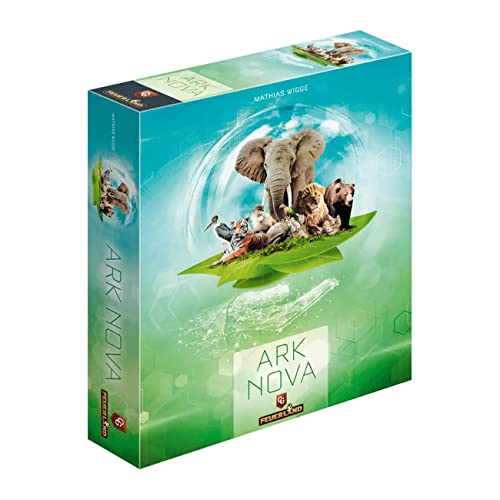
Ark Nova
Running a modern zoo means pushing appeal and conservation, two scores that travel toward each other until they meet. Animals, sponsors and projects all compete for a small pool of actions each turn. Sessions run long at four players, though the solo ladder is the strongest here.
Pros
- Solo scoring ladder gives a reason to replay weekly
- Converging score tracks create a genuine squeeze
- Card variety supports dozens of distinct zoos
Cons
- Longest average session of any title on this list
- Dense iconography takes several games to read at a glance

Scythe
Five factions expand across an alternate 1920s Europa with mechs, workers and resource production. Fights break out rarely, so efficiency and map position decide more games than combat does. Stonemaier’s production covers a thick mounted board, custom miniatures and a dual layer player mat.
Pros
- Asymmetric factions open with different movement rules
- Automa deck plays a credible solo opponent
- Two action turns keep waiting time short
Cons
- Artwork promises far more conflict than the rules deliver
- Faction and player mat pairings vary in strength

Spirit Island
Island spirits drive off colonial invaders, flipping the usual settlement theme on its head. Every spirit wields a separate power set, which turns table talk into a shared planning problem. Adversary decks raise difficulty in steps, so a group can keep losing on purpose for years.
Pros
- Adversary decks extend the challenge after easy wins
- Each spirit behaves like a different puzzle to solve
- Solo works by running one or two spirits at once
Cons
- Early games stall while power timing clicks
- One experienced player can quietly steer everyone’s turns

Twilight Imperium Fourth Edition
Up to six players fight, trade and legislate for a galaxy across a session that can swallow a weekend day. Negotiation during the agenda phase swings outcomes as often as fleet movement does. Box size alone assumes shelf space and a table nobody needs to clear for dinner.
Pros
- Seventeen factions make repeat galaxies feel unrelated
- Agenda phase turns politics into a real bargaining round
- Six player games hold together instead of bogging down
Cons
- Runtime rules out any weeknight slot
- Setup plus teardown costs close to an hour

Wingspan
Bird cards chain into small engines across three habitats, scored at the end of each of four rounds. Rules weight lands well below the rest of this list, which makes it the bridge for a group moving up from party games. Custom dice, a cardboard dice tower and textured egg tokens come in the base box.
Pros
- Teaches in roughly ten minutes from a cold start
- Automa solo deck comes included
- Fits inside a weeknight after dinner
Cons
- Shallower decisions than the heavy euros above it
- A lucky bird draw can decide a close finish
The lineup, side by side
| # | Model | Players | Best for | Score | Price |
|---|---|---|---|---|---|
| 1 | Brass: Birmingham | 2 to 4 | Best overall | 9.4 | Check price |
| 2 | Terraforming Mars | 1 to 5 | Best for engine builders | 9.2 | Check price |
| 3 | Ark Nova | 1 to 4 | Best for solo play | 9.0 | Check price |
| 4 | Scythe | 1 to 5 | Best for area control | 8.8 | Check price |
| 5 | Spirit Island | 1 to 4 | Best cooperative strategy | 8.6 | Check price |
| 6 | Twilight Imperium Fourth Edition | 3 to 6 | Best for an all day session | 8.3 | Check price |
| 7 | Wingspan | 1 to 5 | Best entry to premium strategy | 8.0 | Check price |
Common questions
What is the best premium strategy board game to start with?
Wingspan teaches in about ten minutes and still rewards forward planning. Groups already fluent in modern board games should start at Brass: Birmingham, which is heavier but pays back more over many plays.
Which premium strategy game is best for two players?
Brass: Birmingham, since the map contracts at two and every build stays contested. Ark Nova and Terraforming Mars also play cleanly at two, and both finish faster there than at their maximum counts.
Are heavy strategy games worth it?
Only if they hit the table repeatedly. A 250 card pool like Ark Nova’s or seventeen factions like Twilight Imperium’s yields dozens of different sessions. A heavy box played twice is poor value whatever it cost.
How long do premium strategy games take to play?
Most sit between 90 minutes and two and a half hours once everyone knows the rules. Wingspan wraps inside an hour. Twilight Imperium Fourth Edition breaks the pattern at four to eight hours plus setup.
Which premium strategy games have a good solo mode?
Ark Nova and Terraforming Mars build solo into the base rules. Scythe and Wingspan include Automa opponent decks. Spirit Island plays solo by running one or two spirits at once.
Brass: Birmingham vs Terraforming Mars: which should you buy?
Choose Brass for tighter decisions, shorter sessions and better two player balance. Choose Terraforming Mars for card variety, built in solo play and a fifth seat. Brass wins on components, Mars on sheer content volume.
Can kids play premium strategy games?
Publishers list 12 to 14 as the usual minimum, driven by rules load rather than theme. Wingspan lists 10 and up and is the realistic family pick. Younger players usually do better sharing a seat with an adult.
Do premium strategy games need expansions to stay interesting?
No. Each title here carries enough variety for many plays on its own, and expansions mostly add layers rather than patch holes. Spirit Island and Terraforming Mars have the deepest expansion lines when you eventually want more.
What is the best cooperative strategy game for a mixed group?
Spirit Island, because unique spirit powers give every player a job nobody else can do. Adversary decks then scale difficulty as the group improves. Deal spirits face down if one person tends to direct the table.
Which premium strategy game works for a group of six?
Twilight Imperium Fourth Edition is the only title here that seats six, and its politics phase improves at that count. Expect a full day, an hour of setup and a table you can leave standing. Nothing else on this list goes past five.
Our take
Brass: Birmingham earns the first slot on a premium shelf: it holds up at two players, finishes inside two hours, and its metal coins and dual layer boards justify the shelf space. Solo players should take Ark Nova instead, where the scoring ladder gives a reason to set up alone on a Tuesday. Groups that fall out over direct attacks will log far more plays with Spirit Island.
Rachel Simmons
Rachel previously worked in child-product retail and brings a practical, detail-first eye to gear reviews, focusing on safety standards, ease of use and the fine print that matters most for new caregivers.


