Science kits with real depth, ranked by age and subject
Thames and Kosmos Chem C3000 leads with 333 experiments and a 192 page manual written for ages 14 and up. Snap Circuits Extreme SC-750 takes electronics, offering 750 solder-free projects from age 8. Younger builders drawn to machines should start with Thames and Kosmos Physics Workshop.
Thames and Kosmos Chem C3000 suits a teenager already hooked on chemistry. Its 192 page manual runs from simple reactions through to qualitative analysis, so the work keeps getting harder. Glassware and an alcohol burner arrive in the box. Supervision is mandatory, which rules the kit out for a child working alone.
Premium kits fail in two predictable ways. Some burn through reagents in a single weekend. Others hand over good components with a leaflet that explains nothing. We compared experiment counts, manual page depth, which parts survive repeat use, stated age ratings and how much adult time each kit assumes. Owner feedback on how long a kit held a child’s attention broke the ties.
Our top picks

Thames and Kosmos Chem C3000 Chemistry Kit
Content runs from basic reactions through electrochemistry to qualitative analysis, a range no other home chemistry set matches. Sequencing across the 192 page manual builds concepts instead of jumping between party tricks. Glassware, an alcohol burner and a chemical set come included. Ground rules and a ventilated work surface need settling before session one.
Pros
- Covers ground equivalent to a high school syllabus
- Theory sits alongside the steps, not after them
- Glassware and burner stay useful for years
Cons
- Reagents run down and need reordering
- Open flame demands an adult and good ventilation

Elenco Snap Circuits Extreme SC-750
Colour-coded modules snap onto a plastic grid, removing soldering and stripped wire from the learning curve. Projects climb from a single lamp circuit up to AM radio and simple logic gates. Nothing in the box is consumed, so the same parts rebuild hundreds of times. Printed schematic symbols on each module carry straight across to breadboard work later.
Pros
- 750 projects outlast most attention spans
- Every component is reusable and replaceable
- Circuit symbols transfer to real electronics work
Cons
- Six AA batteries are not supplied
- Loose modules vanish without a storage tray

Thames and Kosmos Physics Workshop
Over 300 pieces assemble into 36 working models covering levers, gears, pulleys and inclined planes. Each build arrives with its mechanical principle explained, not just an assembly diagram. Difficulty rises steadily across the 64 page manual. Rebuilding costs nothing, since no part gets used up.
Pros
- Mechanics become visible and testable on a table
- Nothing to reorder or replace
- Builds progress from single levers to gear trains
Cons
- Tight fits sometimes need adult hands
- Plastic parts feel light beside metal construction sets
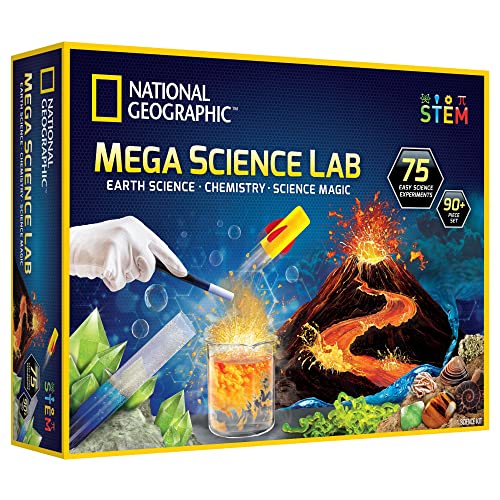
National Geographic Mega Science Lab
One box spans chemical reactions, crystal growing, a volcano build and a set of real rock and mineral specimens. Breadth is the whole point, which suits a child who has not settled on a favourite subject. Depth in any single area falls short of a dedicated kit. Instructions read clearly enough for a child to follow without translation.
Pros
- Works as a sampler before you commit to a deeper kit
- Specimens are genuine rocks, not printed cards
- Readable steps let a child work independently
Cons
- Several activities are single use
- Around 15 activities go by quickly

Thames and Kosmos Genetics and DNA Kit
Vegetable DNA becomes visible in a test tube using household reagents and the supplied pipettes. Later activities move into inheritance models and predicting traits across generations. Topics line up with what school biology covers from age 12. Some stages need refrigeration and waiting time, so a session spreads across a day.
Pros
- Extraction produces a result you can actually see
- Activities map onto school curriculum topics
- Model parts make inheritance patterns concrete
Cons
- Household items such as dish soap are not supplied
- Waiting between stages breaks the momentum
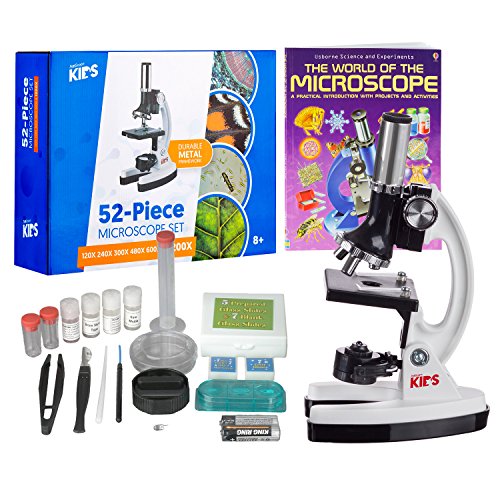
AmScope Beginner Microscope Kit
Glass optics and a metal frame put this well above plastic toy microscopes that blur within a week. Magnification starts at 120x and steps up for pond water, plant cells and fabric fibres. Prepared slides come included alongside blanks for homemade specimens. Making your own slides is where the long-term interest actually lives.
Pros
- Glass lenses resolve genuinely sharp detail
- Blank slides encourage ongoing specimen collecting
- Metal frame tolerates knocks on a busy desk
Cons
- First focusing attempts frustrate beginners
- Top magnification settings demand strong lighting

Sphero BOLT Programmable Robot Ball
A sealed robotic ball follows programs written in a block-based app, then in JavaScript once confidence grows. An 8 by 8 LED matrix displays animations and live sensor readings. Gyroscope, accelerometer and light sensor turn written code into motion you can measure. Everything routes through the app, so a tablet or phone is mandatory rather than optional.
Pros
- One device covers blocks through written JavaScript
- Sensor data links coding lessons to physics
- Sealed shell handles outdoor and wet play
Cons
- Does nothing without a compatible tablet or phone
- Charge level limits how long one session runs
The lineup, side by side
| # | Model | Experiments | Best for | Score | Price |
|---|---|---|---|---|---|
| 1 | Thames and Kosmos Chem C3000 Chemistry Kit | 333 | Best overall | 9.4 | Check price |
| 2 | Elenco Snap Circuits Extreme SC-750 | 750 | Best for electronics | 9.2 | Check price |
| 3 | Thames and Kosmos Physics Workshop | 36 working builds | Best value | 8.9 | Check price |
| 4 | National Geographic Mega Science Lab | Chemistry, geology, crystal growing | Best for exploring several subjects | 8.6 | Check price |
| 5 | Thames and Kosmos Genetics and DNA Kit | Over 30 activities | Best for teens studying biology | 8.4 | Check price |
| 6 | AmScope Beginner Microscope Kit | Stepped optical settings from 120x | Best for observation and specimens | 8.2 | Check price |
| 7 | Sphero BOLT Programmable Robot Ball | Block coding and JavaScript | Best for coding and robotics | 8.0 | Check price |
What matters most
What makes a science kit worth the shelf space Ignore the experiment count on the lid. Three things actually predict how long a kit lasts: a manual that explains the principle behind each activity, components that survive being rebuilt, and a clear ladder from easy to difficult. Chem C3000 and Snap Circuits Extreme both deliver all three. Novelty sets bundle a dozen single-use activities with a leaflet of steps, which buys one enjoyable afternoon and then a box in the cupboard. Page count in the manual is a better signal than anything printed on the front.
Matching the kit to your child’s age and subject Age ratings describe safety and reading level, not ability. Chem C3000 lists 14 and up because of the alcohol burner and reactive chemicals. Snap Circuits, the Physics Workshop and Sphero BOLT all open at 8, which fits a primary school child with light supervision. Genetics and DNA sits at 12, roughly when inheritance appears in school biology. Where interest is still unformed, the National Geographic Mega Science Lab works as a sampler first. Children who already ask how devices work will get more from electronics than from a chemistry set, whatever the reviews say.
Reusable kits vs consumable ones This decides cost over several years, not just the first month. Snap Circuits, the Physics Workshop and the AmScope microscope contain almost nothing that gets used up. Chemistry and crystal-growing kits consume reagents, and refills need ordering separately. Neither model is wrong. A family buying one substantial gift usually gets more from a reusable kit, then adds consumable sets later as top-ups. Watch for small-part loss too, since a reusable kit missing half its modules stops being reusable.
How much adult time each kit really needs Answer this honestly before ordering. Chemistry with a live flame needs an adult in the room and a surface that tolerates spills. Microscope work needs help through the first focusing session, then children manage alone. Snap Circuits, the Physics Workshop and Sphero BOLT all run largely unsupervised once the first build is done. If nobody has time to sit alongside, a reusable engineering or coding kit will see far more use than a chemistry set, however good that chemistry set is. Buying for the household you have beats buying for the one you imagine.
Good to know
What age is right for a serious chemistry set?
Chem C3000 carries a 14 and up rating because it includes an alcohol burner, glassware and reactive chemicals. Younger children curious about chemistry do better with the C1000 level or the National Geographic Mega Science Lab, neither of which involves an open flame.
Are science kits worth it, or do kids lose interest?
Interest usually dies when a kit runs out of things to do. Reusable sets with a long project ladder, such as Snap Circuits Extreme and its 750 projects, hold attention far longer than consumable boxes. Picking a subject the child already asks about matters more than the brand on the lid.
Which science kit is best for learning electronics?
Elenco Snap Circuits Extreme SC-750. Snap-together modules remove soldering as a barrier, projects build from a simple lamp to radio circuits, and the printed schematic symbols mean the skills carry over to breadboards later.
Do premium science kits need batteries or extra supplies?
Several do. Snap Circuits takes six AA batteries, Sphero BOLT recharges on its base but needs a tablet or phone to run, and the Genetics and DNA kit asks for household items such as dish soap and rubbing alcohol. Chemistry sets eventually need reagent refills.
Snap Circuits vs Physics Workshop: which should you buy first?
Switches, lights and gadgets point to Snap Circuits. Blocks, ramps and questions about how machines move point to the Physics Workshop. Both start at age 8 and both are fully reusable, so the second one never feels redundant later.
Is an optical microscope better than a digital one for kids?
For learning, yes. An optical instrument like the AmScope kit teaches focusing, slide preparation and careful specimen handling. Digital toy models put an image on a screen but usually rely on plastic lenses, and soft pictures discourage children fast.
What is the best science kit for a child who likes computers?
Sphero BOLT. Drag-and-drop blocks come first, the same programs then appear in JavaScript when the child is ready, and the gyroscope and light sensor let a coding lesson double as a physics experiment.
How much supervision do premium science kits need?
It varies sharply by subject. Chemistry involving a burner needs an adult present throughout. Microscope work needs help only during the first session. Snap Circuits, the Physics Workshop and Sphero BOLT run unsupervised after setup, which matters when family time is short.
Can one kit cover several subjects at once?
The National Geographic Mega Science Lab does, spanning chemistry, crystal growing and geology in one box. Trade-off is depth, since around 15 activities cannot match 333 chemistry experiments. Use it to find out what sticks, then buy the specialist kit.
What is a good science kit for a 12 year old?
Thames and Kosmos Genetics and DNA Kit fits that age exactly and links to school biology topics. For a 12 year old more interested in building than biology, Snap Circuits Extreme still has plenty of headroom, since its later projects reach radio and logic circuits.
Our pick
Thames and Kosmos Chem C3000 earns its place for a teenager who has already shown real interest in chemistry, because the manual and glassware support years of progressively harder work. Families who want a kit used without an adult sitting alongside should pick Snap Circuits Extreme SC-750 instead, since nothing gets consumed and 750 projects outlast most attention spans. Where the interest is still unformed, start with the National Geographic Mega Science Lab and buy the deeper kit once the child tells you which subject stuck.
Rachel Simmons
Rachel previously worked in child-product retail and brings a practical, detail-first eye to gear reviews, focusing on safety standards, ease of use and the fine print that matters most for new caregivers.


