Leather, Poly, or Padded: Which Horse Halter Fits Your Barn?
The Weaver Leather Working Tack Halter takes top spot, built from harness leather with sizing from weanling to draft. The Professional’s Choice Sports Medicine Contoured Halter fits sensitive-skin horses best, and the Tough 1 Deluxe Poly Halter covers foals through warmbloods at a lower cost.
Harness leather and a safety break point put the Weaver Leather Working Tack Halter ahead of the rest for barns running daily turnout, though the leather needs regular conditioning to avoid cracking.
Leather, poly, rope, and padded nylon each solve a different problem, which makes side-by-side shopping confusing. We compared hardware type, lining material, size ranges, and owner reports on durability to rank these seven.
How to choose
Leather, Poly, or Nylon: Picking a Halter Material Breaking under extreme force gives leather halters like the Weaver Working Tack and Intrepid International models a safety margin nylon can’t match. Poly rope halters swap hardware for diamond-braided cord and knotted pressure points, a favorite for groundwork training. Padded nylon, seen on the Shires Blenheim, resists moisture better than leather but rarely breaks away on its own. Price generally tracks material, with leather running highest and poly rope or plain nylon running lowest.
Padding for Sensitive-Skin and Show Horses Contoured padding, like the neoprene lining on the Professional’s Choice Sports Medicine halter, suits sensitive-skin horses and those recently clipped. Pressure spreads across the poll instead of concentrating along a thin strap. Perri’s raised padded leather delivers similar cushioning but adds bulk under a bridle. Show barns often favor padded leather for its polished look in halter classes.
Hardware and Durability in Wet Turnout Muddy, wet turnout wears down hardware faster than stall or arena use ever does. Chrome-plated fittings, found on the Shires Blenheim and Tough 1 Deluxe Poly, resist rust better than bare steel. Poly webbing dries faster than nylon and sheds water, which cuts down on mildew smell. Leather halters need conditioning after repeated soaking to keep stitched seams from drying out.
Sizing by Breed Type and Breakaway Safety Foal and weanling sizing extends up through cob, horse, warmblood, and draft on the widest lines, including Tough 1 and Weaver’s working tack. Ponies and cobs need a shorter noseband and cheekpiece than a full-size horse halter provides. None of these seven include a true breakaway crown piece, so add a leather crown insert or breakaway snap separately for turnout safety. Matching size to breed type prevents rubbing at the poll and jaw.
The top picks, ranked

Weaver Leather Working Tack Leather Horse Halter
Nickel-plated hardware pairs with harness leather on this long-running working-tack line from Weaver. Sizing spans weanling through draft horse, covering most barn rosters. Leather gives it a safety margin nylon lacks, since the material can break under sudden force instead of holding a horse fast.
Pros
- Classic leather breaks under extreme force for added safety
- Multiple size options fit weanlings through draft horses
- Nickel-plated hardware resists rust in wash-rack use
Cons
- Requires periodic conditioning to prevent cracking
- Costs more than nylon or poly alternatives

Professional’s Choice Sports Medicine Contoured Halter
A contoured, padded crown borrows the same design logic as Professional’s Choice sports-medicine boots. Neoprene lining across the poll and noseband cuts pressure points on horses with thin or clipped coats. Stainless steel hardware handles wash-rack rinses and turnout without rusting.
Pros
- Contoured crown spreads pressure across poll and nose
- Neoprene lining reduces rubbing on clipped or sensitive coats
- Stainless hardware resists corrosion in wet conditions
Cons
- Bulkier fit than a plain nylon halter
- Neoprene retains moisture and needs regular rinsing

Perri’s Leather Raised Padded Halter
Foam padding lines the noseband and crown under raised leather construction here, closer to English bridle work than a basic halter. Barns wanting matching leather goods for the aisle get that look from Perri’s. Brass-plated buckles hold their shape but need occasional polishing to stay sharp.
Pros
- Raised leather edges resist rolling and softening over time
- Padded lining reduces pressure on the nose and poll
- Brass-plated hardware matches English tack for shows
Cons
- Padding adds bulk under a bridle or halter-bridle combo
- Limited to three size options versus wider leather lines

Shires Blenheim Padded Headcollar
Padded nylon webbing with fleece across the noseband and crown targets everyday turnout rather than the show ring. Four sizes cover pony through extra-full, a wider spread than most padded options. Chrome-plated fittings shrug off wash-rack moisture better than bare steel hardware.
Pros
- Fleece padding cushions poll and nose for turnout wear
- Four size options cover pony through extra-full horse
- Chrome fittings resist rust better than plain steel
Cons
- Fleece lining mats and needs regular brushing
- Nylon webbing can fray at stitched edges over time

Intrepid International Leather Halter
Double-stitched seams and nickel-plated hardware keep this straightforward leather halter functional without a premium price tag. Four sizes, weanling through horse, fit most boarding barn rosters. Lighter-weight leather than harness-grade options keeps cost down while stitching quality stays intact.
Pros
- Double stitching adds strength at the highest-stress points
- Priced below most name-brand leather halters
- Nickel hardware resists tarnishing in humid barns
Cons
- Leather is thinner than premium harness-leather halters
- Fewer size options than Weaver’s working tack line
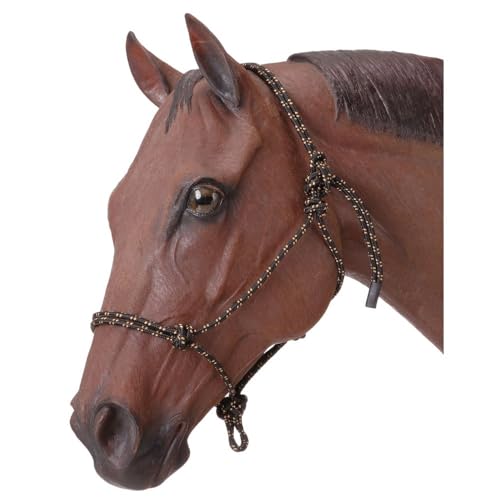
Tough 1 Deluxe Poly Halter
Foal through warmblood sizing gives this poly halter more range than anything else in the lineup. Poly webbing sheds moisture and resists mildew better than standard nylon during wet turnout. A fleece trim along the noseband softens the edge without adding leather cost.
Pros
- Widest size range covers foals through warmbloods
- Poly webbing resists mildew better than plain nylon
- Fleece trim on the noseband softens the edge for turnout
Cons
- Fixed hardware doesn’t break away under pressure
- Chrome plating can wear thin after years of pasture use

Weaver Leather Rope Halter
Diamond-braided poly with knotted pressure points replaces buckles and hardware entirely on this rope halter. Trainers reach for this style during groundwork and lead-line cues instead of turnout. Weighing under 8 ounces, it’s the lightest halter here, though it isn’t built for extended turnout wear.
Pros
- Knotted noseband gives clearer pressure-release cues for groundwork
- No metal hardware means nothing to rust or break loose
- Lightweight design is easy to pack for trailering
Cons
- Knots can pinch if left on unattended in turnout
- Limited to three sizes versus buckle-style halters
Side by side
| # | Model | Material | Best for | Score | Price |
|---|---|---|---|---|---|
| 1 | Weaver Leather Working Tack Leather Horse Halter | Full-grain harness leather | Best overall | 9.4 | Check price |
| 2 | Professional’s Choice Sports Medicine Contoured Halter | Contoured neoprene padding | Best for sensitive-skin horses | 9.1 | Check price |
| 3 | Perri’s Leather Raised Padded Halter | Raised leather with padded lining | Best padded leather | 8.9 | Check price |
| 4 | Shires Blenheim Padded Headcollar | Padded nylon webbing | Best padded nylon for everyday turnout | 8.6 | Check price |
| 5 | Intrepid International Leather Halter | Leather | Best value leather | 8.4 | Check price |
| 6 | Tough 1 Deluxe Poly Halter | Poly rope-style webbing | Best budget | 8.2 | Check price |
| 7 | Weaver Leather Rope Halter | Diamond-braided poly rope | Best for training and groundwork | 8.0 | Check price |
Questions worth asking
What is the best halter for a horse with sensitive skin?
The Professional’s Choice Sports Medicine Contoured Halter works well here, since its neoprene lining spreads pressure across the poll instead of a thin strap digging in.
Is leather or nylon better for a horse halter?
Leather, like the Weaver Working Tack or Intrepid International halters, can break under sudden force for added safety, while padded nylon such as the Shires Blenheim resists moisture better but rarely breaks away.
How do I size a halter for a pony or cob?
Look for lines offering pony or cob sizing specifically, such as the Tough 1 Deluxe Poly or Shires Blenheim, since a full horse-size noseband and cheekpiece will hang loose on a smaller head.
Can a rope halter be left on during turnout?
Owners generally avoid it. The Weaver Leather Rope Halter’s knotted noseband is designed for groundwork and handling, not unattended turnout, since the knots can pinch if a horse gets caught on something.
What is a breakaway halter and do I need one?
A breakaway halter includes a crown piece or snap designed to give way if a horse gets caught while turned out. None of the seven halters here include that feature by default, so add one separately for pasture turnout.
Which halter is best for everyday turnout durability?
The Shires Blenheim Padded Headcollar and Tough 1 Deluxe Poly Halter both use chrome-plated hardware and moisture-resistant webbing suited to daily wet and muddy conditions.
How often should I replace a horse halter?
Owners report checking stitching and hardware every few months, replacing leather once conditioning no longer stops cracking and replacing nylon once webbing frays at the stitched edges.
What size halter fits a warmblood or draft horse?
The Weaver Leather Working Tack line sizes up to draft, and the Tough 1 Deluxe Poly Halter includes a dedicated warmblood size, so check the listing’s size chart against your horse’s head measurements before ordering.
Poly versus leather halter, which lasts longer in wet turnout?
Poly webbing sheds water and resists mildew better than leather, which needs regular conditioning after repeated soaking to keep the stitching from drying out.
Is a padded halter worth it for daily wear?
Padded halters like the Shires Blenheim and Professional’s Choice reduce rubbing at the poll and nose, which matters most for horses in daily turnout or with thin, clipped coats.
The verdict
Barns wanting harness-leather durability with a safety break point should choose the Weaver Leather Working Tack Halter, which sizes from weanling to draft. Owners of clipped or sensitive-skin horses should pick the Professional’s Choice Sports Medicine Contoured Halter instead, since its neoprene lining cuts pressure at the poll. Budget-focused barns outfitting several horses can rely on the Tough 1 Deluxe Poly Halter without sacrificing size range.
Olivia Hartley
Olivia spent several years working at an animal shelter and a pet-supply retailer before joining the editorial team. She researches pet gear with an emphasis on safety, comfort and the fine print that owners often miss.