Which Premium Dice Games Actually Get Replayed
Dice Throne Season One ReRolled leads for its six asymmetric heroes, engraved dice and trays that reset the box in a minute. Sagrada fits mixed ages, with rules that teach in about five minutes. Roll for the Galaxy suits groups wanting a real strategy engine.
Dice Throne Season One ReRolled earns first place for anyone buying a single premium dice box. Six heroes arrive with separate dice, decks and ability boards, and a duel wraps in roughly twenty minutes. Fitted trays hold setup and packdown under a minute. Combat maths pitches it at teens and adults, so a table with young children needs something lighter.
Premium can mean weighty components, deep design or both, and the two rarely arrive in equal measure. We compared dice materials and customisation, insert quality, stated player counts, play times and rules complexity across current listings. Owner feedback on rulebook clarity, tray fit and how often a title returns to the table shaped the order.
The shortlist, ranked

Dice Throne Season One ReRolled
Each of the six heroes carries its own dice set, deck and ability board, so a Barbarian turn looks nothing like a Moon Elf turn. Engraved dice and fitted trays let the box open and close in about a minute. Yahtzee style rerolls sit under a layer of card play, which keeps decisions on the table rather than in the dice.
Pros
- Six heroes play by different rules in one box
- Fitted trays hold setup under a minute
- Works as a duel or a six player brawl
Cons
- Ability text takes a full game to absorb
- Multiplayer modes eliminate players early
Sagrada
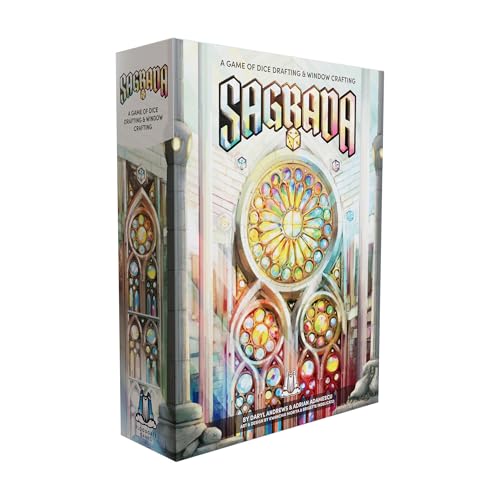
Ninety translucent dice in five colours stand in for stained glass panes, drafted one at a time into a window frame. Adjacency restrictions turn simple placement into a tight spatial puzzle. One page of rules makes this the easiest title here to put in front of a family.
Pros
- Teaches in about five minutes
- Solo mode ships in the base box
- Five dice colours stay readable across a table
Cons
- Stops at four players without expansions
- Cloth dice bag feels basic beside the dice

King of Tokyo
Monsters brawl over Tokyo using six chunky custom dice and up to three rerolls a turn. Thick boards, cardboard standees and a deck of mutation cards give the box more weight than its rules demand. Six players still finish inside half an hour, because turns pass quickly.
Pros
- Explains in under five minutes
- Six players finish in about thirty minutes
- Power cards reshuffle the strategy each game
Cons
- Luck outweighs planning for some groups
- Knocked out players wait out the round

Roll Player
Drafting dice into attribute rows builds a character sheet instead of playing out an adventure. Seventy three dice, character boards and a market deck fill a deep box. Anyone who has rolled stats for a tabletop campaign reads the premise instantly.
Pros
- Premise lands immediately with roleplay fans
- Drafting choices stay tight every round
- Solo variant included in the box
Cons
- Sessions run up to ninety minutes
- Iconography needs the reference sheet at first

Roll for the Galaxy
Coloured dice act as workers assigned to explore, develop, settle, produce or ship. Everyone commits at once, so five players take barely longer than two. Symbol heavy faction tiles slow the first game, after which the engine building clicks into place.
Pros
- Simultaneous turns cut downtime to almost nothing
- Faction tile pairs change the opening every game
- Dice pool drives genuine engine building
Cons
- Dense iconography blocks newcomers
- Wrong fit for a casual family table

Dice Forge
Faces pop out of the dice and get swapped during play, so your dice improve as the game runs. No other box here rebuilds its own components that way. Moulded trays, a temple board and dozens of face tokens back up the premium label.
Pros
- Swappable dice faces are unmatched in this list
- Moulded trays keep the face tokens sorted
- Finishes inside a weeknight evening
Cons
- Face tokens loosen after heavy play
- Card variety runs thinner than rivals

Rolling Realms
Eleven mini games, each borrowed from another Stonemaier title, play out across three rounds using two dice and dry erase cards. No board ships in the box, which is why it slips into a jacket pocket. Strategy runs lighter than the table hogging titles, and that is the trade on a train.
Pros
- Packs into a coat pocket for trips
- Different mini games appear each round
- Scales from solo play to six players
Cons
- Lightest strategy in this roundup
- Dry erase markers dry out and need replacing
Side by side
| # | Model | Players | Best for | Score | Price |
|---|---|---|---|---|---|
| 1 | Dice Throne Season One ReRolled | 2 to 6 | Best overall | 9.4 | Check price |
| 2 | Sagrada | 1 to 4 | Best for mixed ages | 9.2 | Check price |
| 3 | King of Tokyo | 2 to 6 | Best for family game night | 9.0 | Check price |
| 4 | Roll Player | 1 to 4 | Best for RPG fans | 8.8 | Check price |
| 5 | Roll for the Galaxy | 2 to 5 | Best strategic depth | 8.5 | Check price |
| 6 | Dice Forge | 2 to 4 | Best components | 8.3 | Check price |
| 7 | Rolling Realms | 1 to 6 | Best for travel | 8.0 | Check price |
How to pick the right one
What makes a dice game premium Three things separate these boxes from a cup of plain d6s. Custom dice come first, whether engraved like Dice Throne or translucent like Sagrada’s ninety panes. Insert quality comes second, because a game that eats five minutes in setup gets played less. Design depth finishes the list: rerolls, drafting or worker placement that convert randomness into a choice. A heavy box missing that third element is just an expensive filler.
Luck or strategy: where your group sits Dice games spread across a wide spectrum. King of Tokyo leans hard into push your luck, which is exactly why it plays fast and fits mixed ages. Roll for the Galaxy sits at the far end, treating dice as workers inside an engine you plan. Sagrada and Roll Player land between, letting you draft the die you want from a shared pool. Settle this question before comparing components, since no insert fixes a mismatch here.
Best premium dice games for two players and for six Player count trims the shortlist fast. Dice Throne was built as a duel, and head to head is its sharpest form. Sagrada, Roll Player and Dice Forge all cap at four, which rules them out for a full table. King of Tokyo and Rolling Realms both seat six, while Roll for the Galaxy handles five with almost no extra time because turns resolve together. Buy for the group you usually get, not the group you hope for.
For families, teens and travel Short rules and visible progress keep younger players in. King of Tokyo teaches in five minutes and rewards bold play, making it the easiest sell at a family table. Teens already into tabletop roleplay tend to click with Roll Player, since building a character sheet is familiar ground. For holidays, Rolling Realms swaps a board for dry erase cards and eleven mini games. Skip symbol dense titles like Roll for the Galaxy as a first purchase for a casual household.
Common questions
What is the best premium dice game overall?
Dice Throne Season One ReRolled. Six asymmetric heroes, engraved dice and fitted trays give it both component quality and a reason to come back off the shelf.
Which dice game is best for two players?
Dice Throne, designed around head to head duels that run about twenty minutes. Sagrada also plays well at two, with a quieter and more puzzle like session.
Are dice games just luck?
Not these. Sagrada and Roll Player draft from a shared pool, and Roll for the Galaxy assigns dice as workers inside a planned engine. King of Tokyo is the most luck driven of the seven.
What dice game works for a family with young children?
King of Tokyo, since it explains in five minutes, plays in thirty and seats six. Dice Throne fits older children who are comfortable reading ability cards.
Sagrada vs Dice Forge: which is the better buy?
Sagrada is the tighter puzzle, with faster rules and a solo mode. Dice Forge behaves more like a toy, letting you rebuild dice mid game. Pick Sagrada for repeat strategy, Dice Forge for novelty.
Is Roll for the Galaxy hard to learn?
First game, yes, because faction tiles use dense iconography. Once the symbols land, simultaneous turns make it one of the quicker strategy games at 45 minutes.
Which premium dice game travels best?
Rolling Realms. Eleven dry erase cards and two dice replace the board entirely, and the whole game supports up to six players from a coat pocket.
How many players do premium dice games support?
Counts vary more than the boxes suggest. Dice Throne, King of Tokyo and Rolling Realms reach six. Sagrada, Roll Player and Dice Forge stop at four, and Roll for the Galaxy takes five.
Do premium dice games keep getting replayed?
Titles with asymmetric content or shifting setups last longest. Dice Throne and Roll for the Galaxy change shape each session, while push your luck games lean on the group for variety rather than the box.
Our pick
Dice Throne Season One ReRolled is the box to buy first, because six asymmetric heroes give it variety that component quality alone never delivers. Households with young children will get more table time from King of Tokyo, which teaches in five minutes and seats six. Groups who want dice to feel like a strategy puzzle rather than a gamble should take Roll for the Galaxy instead.
Rachel Simmons
Rachel previously worked in child-product retail and brings a practical, detail-first eye to gear reviews, focusing on safety standards, ease of use and the fine print that matters most for new caregivers.