Premium Building Tables Worth the Playroom Space
Guidecraft Deluxe Build and Play Table leads on construction, pairing a hardwood frame with a top that reverses between two brick scales. Nilo NL2 Play Table suits a permanent playroom, since birch plywood outlasts the building phase. KidKraft 2-in-1 Activity Table is wide enough for two children building face to face.
Guidecraft Deluxe Build and Play Table fits most families. Hardwood keeps the frame square when a child leans on one corner, and the top flips between studs and a flat play surface. Four bins pull out from either side, so two kids reach pieces without reaching across. Height runs out around age seven, which older builders will notice.
Play tables look alike and age very differently. Particle board sags where elbows land, and a top locked to one stud scale strands a collection as piece sizes change. We compared top material and brick compatibility, storage volume and layout, seated height, frame construction, and what owners report about wobble and assembly time.
How to pick the right one
What to look for in a building table Surface compatibility decides most of it. Some tops fit standard bricks, some fit the chunkier starter scale, and reversible tops handle both. Frame material comes next, since hardwood and plywood resist the racking that turns a cheap table wobbly inside a year. Storage should slide out rather than lift off, because a lid is the step children skip. Height looks like a footnote on the listing and turns out to set how many years the table gets used.
How to match table height to your child’s age Measure floor to elbow with the child seated in their own chair, then aim for a top just below that line. Two year olds land around 15 to 18 inches. Preschool and early primary children fit tops in the low twenties. Build above shoulder height and the table gets abandoned fast, whatever sits on it. Pair the table with a chair from the same range where you can, since a mismatched seat undoes the measurement.
Storage that keeps a collection sorted One deep bin of mixed bricks is how a collection quietly stops being used. Four smaller bins let a child sort by colour or piece type, which shortens the gap between sitting down and building. Clear fronts beat opaque tubs for the same reason. Deep drawers hold more volume but bury the useful pieces at the bottom. A well under the top keeps a half finished model standing between sessions, which matters more day to day than raw capacity.
Building tables for classrooms and shared use Group settings flip the priorities. Open surface beats storage when a class shares one central tub, and laminate survives several wipe downs a day. Reinforced legs earn their weight where a table gets dragged rather than carried. ECR4Kids is built for that brief, while Guidecraft and Melissa and Doug are shaped around one or two children at home. Two siblings usually do better with a wide double sided table such as the KidKraft than with a classroom footprint in a bedroom.
Our top picks
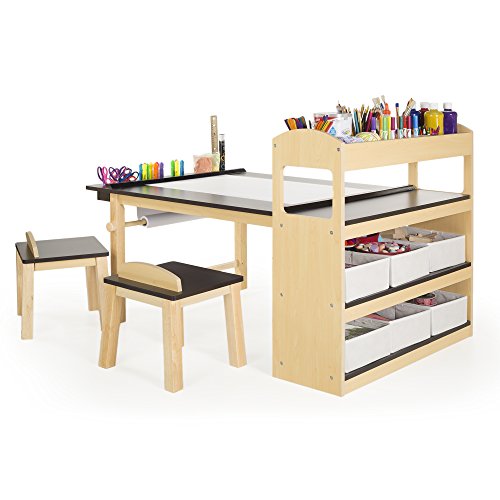
Guidecraft Deluxe Build and Play Table
Hardwood frames barely rack when a child leans on a corner, which is the practical gap between this and moulded plastic. Its top reverses between a studded building face and a flat play surface. Four bins slide out from either side, so pieces stay reachable from both seats.
Pros
- Hardwood frame stays square under leaning kids
- Top reverses for building and other play
- Bins open from both sides of the table
Cons
- Weight makes it awkward to shift between rooms
- Height runs short for older school age children

Nilo NL2 Play Table
Birch plywood and a laminate top put this closer to furniture than to toy, and Nilo builds them in the United States. Legs unbolt, so the top slides flat behind a door between seasons. Storage here is open space rather than bins, so tubs live below or drawers come as an add on.
Pros
- Plywood build outlasts the building phase
- Legs unbolt for flat off season storage
- Flat top carries puzzles, art and homework
Cons
- No integrated bins in the base configuration
- Base plates are bought separately

KidKraft 2-in-1 Activity Table with Board
One board carries brick studs on one face and a flat surface on the other, covering builds and train track on the same table. Width leaves room for two children facing each other without elbows meeting. A shallow well under the board hides a half finished model, with bins at each end for loose pieces.
Pros
- Wide enough for two builders at once
- Board flips between studs and flat play
- Under board well protects a build in progress
Cons
- Engineered wood chips along exposed edges
- Assembly involves a long screw count
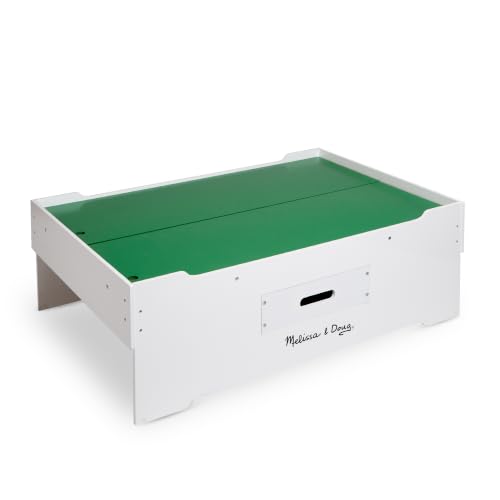
Melissa and Doug Wooden Multi-Activity Table
Seat height lands where two and three year olds can actually reach, which taller play tables never manage. Its top reverses between brick studs and a smooth surface for drawing. Three bins slide underneath, sized for the chunky starter bricks this age group uses.
Pros
- Low height fits toddlers on a small stool
- Bins sized for large starter bricks
- Reversible top stretches its useful years
Cons
- Outgrown by roughly age five
- Studs favour large bricks over standard ones
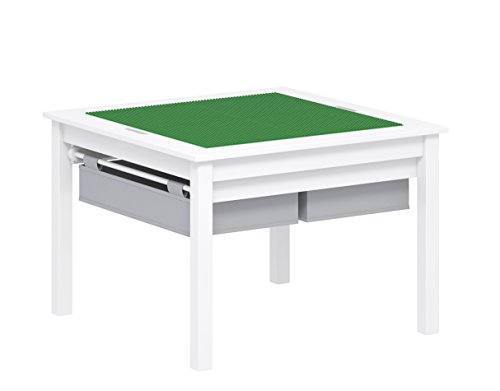
UTEX 2-in-1 Kids Construction Play Table
Plastic keeps weight low enough for one adult to carry it between rooms. Flip the top and the stud scale changes, which suits a household running a toddler and an older builder at once. Two drawers pull out below, and the surface wipes clean after paint or dough.
Pros
- Light enough to move room to room
- Covers both brick scales on one top
- Wipe clean surface handles messy play
Cons
- Plastic legs flex under a leaning child
- Two drawers fill fast with a real collection

Costzon Kids Activity Table with Storage
Footprint stays small enough for a bedroom corner where a full sized play table will not go. Lift out panels give studs on one face and a flat top on the other, with four corner bins for sorted pieces. Height suits preschool and early primary children on a small chair.
Pros
- Fits a bedroom corner without taking the room
- Four bins allow sorting by colour or piece type
- Panels lift out for cleaning underneath
Cons
- Small surface limits ambitious builds
- Corner bins hold less than drawer designs

ECR4Kids Brick Play Table
Laminate and reinforced legs answer a room where the table gets shoved across tile every day. Four or more children work around the open surface at once, which is the whole point of the layout. Home buyers trade storage for that space, because loose pieces have nowhere to live.
Pros
- Frame handles daily classroom traffic
- Open surface suits collaborative builds
- Laminate takes repeated wiping down
Cons
- Almost no integrated storage for loose pieces
- Footprint overwhelms a home playroom
The lineup, side by side
| # | Model | Frame | Best for | Score | Price |
|---|---|---|---|---|---|
| 1 | Guidecraft Deluxe Build and Play Table | Hardwood | Best overall | 9.4 | Check price |
| 2 | Nilo NL2 Play Table | Birch plywood with laminate top | Best premium hardwood | 9.2 | Check price |
| 3 | KidKraft 2-in-1 Activity Table with Board | Reversible board, studded and flat | Best for two builders | 9.0 | Check price |
| 4 | Melissa and Doug Wooden Multi-Activity Table | Reversible, studded and smooth | Best for toddlers | 8.8 | Check price |
| 5 | UTEX 2-in-1 Kids Construction Play Table | Double sided, two brick scales | Best value | 8.6 | Check price |
| 6 | Costzon Kids Activity Table with Storage | Reversible lift out panels | Best for small rooms | 8.3 | Check price |
| 7 | ECR4Kids Brick Play Table | Laminate with brick base plates | Best for classrooms | 8.0 | Check price |
Questions worth asking
Are brick building tables worth it for one child?
For a child who builds most weeks, yes. A dedicated surface keeps pieces off the floor and lets a model stay standing between sessions, which is what brings kids back to it.
What height should a kids building table be?
Just below the child’s seated elbow height. That lands around 15 to 18 inches for toddlers and in the low twenties for preschool and early primary ages.
Do building tables fit both standard and large bricks?
Reversible tops usually cover both, with one stud scale per face. Single sided tops fit one scale only, which matters in a household with mixed ages.
Which building table is best for two children?
KidKraft’s 2-in-1 Activity Table, because the surface is wide enough to build facing each other. Classroom designs such as the ECR4Kids seat four or more.
Wood or plastic building table: which lasts longer?
Wood resists wobble and survives years of leaning. Plastic weighs less and wipes clean faster after dough or paint, so it wins when the table moves between rooms.
How long does a child use a building table?
Three to four years is typical before height becomes the limit. Tables with a flat reversible face carry on longer as puzzle, art and homework surfaces.
Do you need base plates as well as the table?
Only where the top is flat. Nilo’s design expects add on base plates, while Guidecraft, KidKraft and UTEX build the studs into the top itself.
How long does a building table take to assemble?
Most run 30 to 60 minutes with the supplied hardware. Engineered wood models carry the most screws, and owners report that sorting the hardware first saves real time.
Can a building table be used for anything else?
Flat sided tops take puzzles, train track, drawing and snacks. That second use is the main reason a reversible top outlives a studs only surface.
The verdict
Buy the Guidecraft Deluxe Build and Play Table for one or two children at home. Hardwood, a reversible top and bins that open from both sides cover the years when building happens daily. Families fitting out a permanent playroom should take the Nilo NL2 instead, since plywood and a flat laminate top stay useful long after the bricks get packed away. Under three, neither is the right height, and the lower Melissa and Doug table is the one that fits.
Rachel Simmons
Rachel previously worked in child-product retail and brings a practical, detail-first eye to gear reviews, focusing on safety standards, ease of use and the fine print that matters most for new caregivers.


