Precision Bench Grinders That Keep Their Cool
The RIKON 8-Inch Low Speed Grinder leads for precision work. Its 1725 RPM speed and 1/2 HP motor reduce heat buildup, protecting tool temper. Owners report smooth operation, but the 1 inch wide wheels limit some shaping tasks.
A precision bench grinder is a workshop essential for sharpening chisels, plane blades, and lathe tools. The right model delivers consistent edges without overheating the steel.
We researched current models from Jet, RIKON, WEN, and others. Our focus is on low vibration, accurate tool rests, and speed control to protect your tools.
Our top picks

RIKON 8-Inch Low Speed Bench Grinder
This 1725 RPM grinder runs at half the speed of standard models, dramatically reducing heat. Its 1/2 HP motor delivers steady torque. Owners praise its quiet operation and smooth finish.
Pros
- Low speed prevents tool overheating
- Very low vibration for accurate work
- Solid cast iron base
Cons
- Large footprint
- No built-in light

JET JBG-8A 8-Inch Bench Grinder
With a 1 HP motor and 3600 RPM, this grinder handles aggressive material removal. Its cast iron base and adjustable tool rests offer stability. Users note that it runs true with minimal wobble.
Pros
- High torque for large jobs
- Dual adjustable tool rests
- Built-in work light
Cons
- Fast speed may overheat small tools
- Very heavy
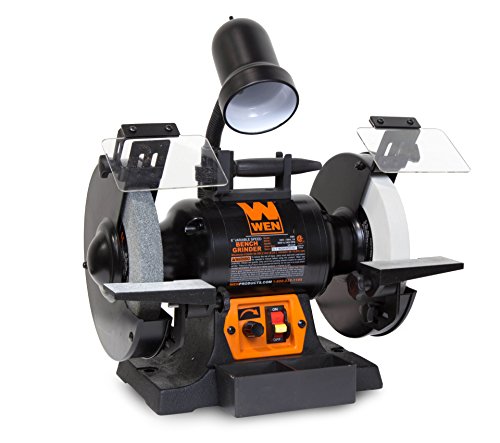
WEN 4288 8-Inch Variable Speed Grinder
This grinder offers speeds from 2000 to 3400 RPM, letting you match wheel speed to the task. Its 5.5 amp motor and LED lights aid visibility. Owners appreciate the digital readout.
Pros
- Adjustable speed for different materials
- Lights up work area
- Compact and lighter
Cons
- Some vibration at high speed
- Tool rests need frequent adjustment

Baldor 522 8-Inch Industrial Grinder
Built for continuous use, this grinder features a 1/2 HP motor and 3450 RPM. Its cast iron construction and sealed bearings promise years of service. Users report extremely low vibration.
Pros
- Industrial grade durability
- Smooth and quiet running
- Precision balanced wheels
Cons
- Price is higher than hobby models
- No variable speed

Metabo DS 200 8-Inch Bench Grinder
A space saving design with a 4.1 amp motor and 2950 RPM. It includes a flexible work light and adjustable spark deflectors. Owners like its sturdy steel base.
Pros
- Small footprint
- Easy to adjust tool rests
- Integrated light
Cons
- Less power for heavy grinding
- Wheels are not included with some models
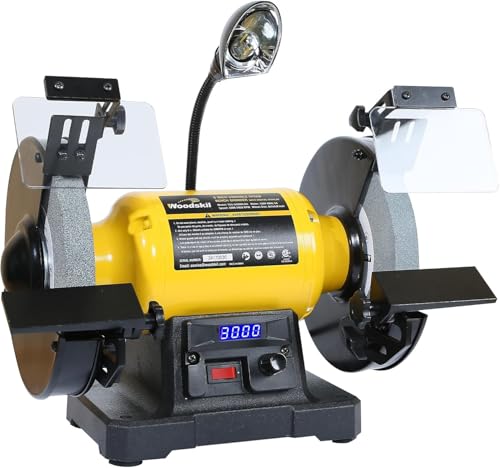
DELTA 23-197 8-Inch Variable Speed Grinder
This grinder features a variable speed dial, a large eye shield, and a work light. Its 5 amp motor provides sufficient power. Users find the slow speed useful for fine edges.
Pros
- Variable speed for fine work
- Clear eye shield
- Stable cast iron base
Cons
- Tool rests are thin
- No digital readout

DEWALT DW756 6-Inch Bench Grinder
A compact 6 inch grinder with a 5.8 amp motor and 3450 RPM. It offers a simple design with adjustable tool rests and spark guards. Users report adequate power for home use.
Pros
- Affordable price point
- Compact and easy to mount
- Decent power for size
Cons
- Smaller wheels limit work area
- Vibration noticeable at high speed
How to choose
The lineup, side by side
| # | Model | Wheel Size | Best for | Score | Price |
|---|---|---|---|---|---|
| 1 | RIKON 8-Inch Low Speed Bench Grinder | 8 inches | Heat sensitive tool steel | 9.4 | Check price |
| 2 | JET JBG-8A 8-Inch Bench Grinder | 8 inches | Heavy duty grinding | 9.1 | Check price |
| 3 | WEN 4288 8-Inch Variable Speed Grinder | 8 inches | Versatile speed control | 9.0 | Check price |
| 4 | Baldor 522 8-Inch Industrial Grinder | 8 inches | Professional shop longevity | 8.9 | Check price |
| 5 | Metabo DS 200 8-Inch Bench Grinder | 8 inches | Compact precision | 8.7 | Check price |
| 6 | DELTA 23-197 8-Inch Variable Speed Grinder | 8 inches | Sharpening with visual feedback | 8.6 | Check price |
| 7 | DEWALT DW756 6-Inch Bench Grinder | 6 inches | Small shop basic tasks | 8.0 | Check price |
Good to know
What is the ideal speed for a bench grinder?
For general grinding, 3450 RPM is common. For sharpening and precise work, a slower speed like 1750 RPM is better. Variable speed grinders offer the most flexibility.
Can I use a bench grinder to sharpen drill bits?
Yes, with a proper jig. Many grinders work well for drill bits, but you need a steady hand or a sharpening guide. Precision grinders with adjustable tool rests help.
What is the difference between 6 inch and 8 inch grinders?
8 inch grinders provide a larger work surface and generally more power. They are more stable and easier to use for larger tools. 6 inch models are more compact and often more affordable.
How often should I dress the grinding wheels?
You should dress the wheels when they become glazed or out of round. A common frequency is after every few hours of heavy use, or when you notice a loss of cutting action.
Why does my grinding wheel vibrate?
Vibration often comes from an out of balance wheel or a loose mounting. Make sure the wheel is properly dressed and the flanges are tightened evenly. Check the arbor for wear.
Is a higher amp rating always better?
Higher amps generally mean more power, but it also means more heat generation. For precision work, you might prefer lower power with slower speed to avoid burning the tool.
Can I use a bench grinder for sharpening carbide tools?
Standard aluminum oxide wheels are not ideal for carbide. You would need a diamond wheel. Not all grinders accept diamond wheels, so check the arbor size and specifications.
What safety gear should I use with a bench grinder?
Always wear safety glasses or a face shield. Ear protection is also recommended. Avoid loose clothing and gloves that could get caught. Keep the tool rest adjusted close to the wheel.
How do I keep the tool rest at the right distance?
Set the tool rest about 1/16 inch from the wheel. This prevents the workpiece from being pulled in and gives you a stable platform. Check and adjust the gap as the wheel wears.
What is the best way to prevent overheating when sharpening?
Use light pressure and keep the tool moving. Dip the steel in water regularly if you are grinding freehand. A slow speed grinder or variable speed set low will greatly reduce heat.
Our take
For most woodworkers and metalworkers who need precision, the RIKON 8-Inch Low Speed Grinder is the top choice. Its slow speed protects tool edges and its cast iron construction minimizes vibration. If you need higher power for occasional heavy grinding, the JET JBG-8A is a strong alternative, but be prepared to manage heat carefully. For maximum versatility at a moderate budget, the WEN 4288 variable speed offers excellent control.
Jake Monroe
Jake worked as a residential contractor for over a decade before shifting to full-time writing. He evaluates power tools, hand tools and workshop gear through the lens of someone who has actually used them on job sites, not just read the box.