Power Steering Fluids Compared for Compatibility and Wear
Prestone AS261 tops this list for broad manufacturer compatibility stated right on the label. Lucas Oil 10442 suits a pump that groans at parking speed, since its conditioners target hardened seals. Honda and Acura owners should choose Honda Genuine 08206-9002, the only fluid the factory actually recommends.
Prestone AS261 wins the top spot because it lists every specification it meets instead of hiding behind the word universal. A whining or groaning pump points toward Lucas Oil 10442, whose conditioner package softens hardened seals that cause that noise. Honda and Acura systems reject nearly everything except Honda Genuine 08206-9002, and that narrow tolerance shapes several picks below.
Bottles on the shelf look interchangeable, but the chemistry inside them is not. Ford, GM, and Chrysler often specify automatic transmission fluid instead of dedicated power steering fluid. Most European racks demand a green synthetic built to the Pentosin CHF 11S standard. We compared claimed specifications, base oil type, seal conditioner content, cold weather flow, and what owners report about noise after a fluid exchange.
What matters most
What power steering fluid does your car actually need? Specification varies more than most shoppers expect, so check before buying anything. Many Ford, GM, and Chrysler vehicles call for automatic transmission fluid instead of dedicated PSF. Most Japanese vehicles outside Honda take a standard power steering fluid. Honda and Acura require their own formulation exclusively. Volkswagen, Audi, BMW, and Mercedes typically specify a green synthetic built to the Pentosin CHF 11S standard. Putting the wrong chemistry into any of these systems gets expensive fast. Owner manuals list the requirement, and many reservoir caps print it too.
What happens if you use the wrong power steering fluid? Elastomer seals inside a rack and pump react differently to different fluid chemistries. Wrong fluid can swell seals until they bind or shrink them until they leak, and neither problem appears immediately. Owners typically notice a startup squeal first, then stiff steering when cold, then a persistent leak, then eventually a rack replacement. Automatic transmission fluid poured into a system built for dedicated PSF is the most common mistake. Honda systems tolerate substitution the least of any brand on this list.
Should you flush the system or just top it up? Topping a low reservoir back to the fill mark takes about five minutes. A proper exchange removes old fluid with a syringe or turkey baster, refills, then cycles the wheel lock to lock with the engine running. Repeating that three or four times clears most of the old fluid without disconnecting a line. Dark brown fluid with a burnt smell justifies an exchange regardless of mileage.
How do you diagnose power steering noise before buying fluid? A whine that rises with engine speed usually signals low fluid or trapped air, and bleeding by turning lock to lock often clears it. A groan mainly at parking speed points to aged fluid or hardening seals, which a conditioner formula can soften. Grinding or metallic noise means mechanical failure inside the pump, and no bottle fixes that. Foam visible in the reservoir means air is entering somewhere, often at a low pressure hose clamp, so trace the leak instead of refilling repeatedly.
The best picks, ranked
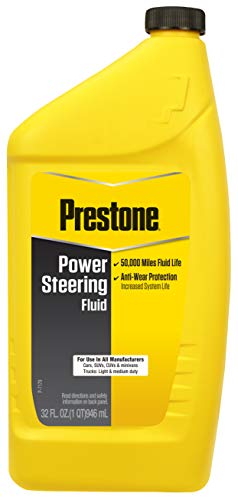
Prestone AS261 Power Steering Fluid
Prestone AS261 covers most domestic and many Asian steering systems from a single bottle. The label prints the exact specifications it meets rather than leaning on the word universal. Seal conditioners and anti foam additives keep assist steady through repeated lock to lock turns.
Pros
- Specifications are printed clearly on the label
- Seal conditioners included in every bottle
- Stocked at most auto parts stores for quick top ups
Cons
- Excludes Honda and most European systems
- Conventional base flows less freely than synthetics in cold weather

Lucas Oil 10442 Power Steering Fluid with Conditioners
Lucas Oil 10442 concentrates on conditioners that soften seals hardened by age, the usual source of a low speed groan. Owners report quieter operation after a full exchange rather than a simple top up. It cannot repair a mechanically worn pump, so treat it as seal therapy, not a cure for internal wear.
Pros
- Conditioner package targets aged, hardened seals
- Owners report less pump groan after a full exchange
- Blends safely with conventional fluid already in the reservoir
Cons
- Does not address a mechanically worn pump
- Feels thicker during very cold starts
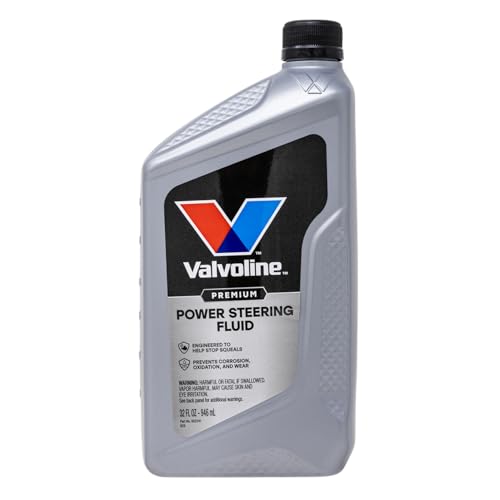
Valvoline Full Synthetic Power Steering Fluid
Valvoline’s synthetic base pumps more freely on a cold morning, exactly when a worn system sounds loudest. Sustained towing or stop and go traffic generates heat that this formula resists better than conventional fluid. Anti wear additives round out coverage across a wide range of applications.
Pros
- Flows noticeably better during cold starts
- Resists thermal breakdown in hot running systems
- Mixes safely with conventional fluid of the same specification
Cons
- Priced higher than conventional alternatives
- Still not a substitute for Honda or Pentosin specifications
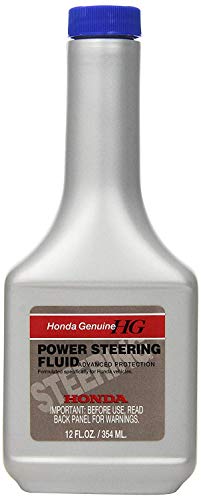
Honda 08206-9002 Genuine Power Steering Fluid
Honda steering systems famously reject fluid built for other brands. Squealing, stiff steering, and eventual rack damage follow when owners substitute universal fluid or ATF, according to owner reports. This bottle matches the factory formulation exactly, removing that risk. Buy several bottles for a proper turkey baster exchange across multiple cycles.
Pros
- The formulation Honda specifies for its own systems
- Eliminates the squeal caused by incompatible fluid
- Removes guesswork around compatibility
Cons
- Priced higher per bottle than universal fluids
- Offers no benefit in non Honda systems

Royal Purple Max EZ Power Steering Fluid
Royal Purple pairs a synthetic base with a conditioner package suited to vehicles past a hundred thousand miles. Seals age faster than pumps, and this blend targets exactly that gap. Owners report the clearest difference on cold mornings, according to listing feedback. Compatibility still needs checking, as with any premium aftermarket fluid.
Pros
- Synthetic base paired with a seal conditioner package
- Suits older systems that are noisy but mechanically sound
- Stable under high temperature operation
Cons
- Priced at a premium for an incremental benefit
- Compatibility list is narrower than mainstream brands

Red Line 30404 Power Steering Fluid
Red Line targets track days, autocross, and heavy towing, where sustained heat pushes conventional fluid toward foaming. Its synthetic base holds viscosity under that load instead of losing assist. A daily commuter rarely needs this level of protection, and the price reflects the intended use.
Pros
- Holds viscosity under sustained heat
- Resists foaming through repeated hard steering inputs
- Well regarded among motorsport applications
Cons
- Overspecified and pricier than daily driving requires
- Harder to find than mainstream brands

STP Power Steering Fluid
Topping a healthy reservoir back to the cold fill line does not require a premium fluid. STP delivers basic conditioners and anti foam protection at a low cost. Stock is easy to find at almost any auto parts counter. Check the label against your manual, since it still excludes Honda and most European systems.
Pros
- Inexpensive enough to keep a spare bottle in the trunk
- Available almost anywhere for emergency top ups
- Adequate for healthy conventional systems
Cons
- Additive package is more basic than rivals offer
- Not suitable for Honda or European specifications
The lineup, side by side
| # | Model | Type | Best for | Score | Price |
|---|---|---|---|---|---|
| 1 | Prestone AS261 Power Steering Fluid | Conventional power steering fluid | Best overall | 9.4 | Check price |
| 2 | Lucas Oil 10442 Power Steering Fluid with Conditioners | Power steering fluid with conditioners | Best for a noisy pump | 9.2 | Check price |
| 3 | Valvoline Full Synthetic Power Steering Fluid | Full synthetic | Best synthetic | 9.0 | Check price |
| 4 | Honda 08206-9002 Genuine Power Steering Fluid | Honda specific formulation | Best for Honda and Acura | 8.8 | Check price |
| 5 | Royal Purple Max EZ Power Steering Fluid | Synthetic fluid with seal conditioners | Best for high mileage systems | 8.6 | Check price |
| 6 | Red Line 30404 Power Steering Fluid | Synthetic performance fluid | Best for performance use | 8.3 | Check price |
| 7 | STP Power Steering Fluid | Conventional power steering fluid | Best budget | 8.0 | Check price |
Common questions
What’s the difference between ATF and power steering fluid?
Automatic transmission fluid carries friction modifiers designed for clutch packs, not steering seals. Dedicated power steering fluid skips those modifiers and instead prioritizes anti foam and anti wear protection. Some vehicles, mainly Ford, GM, and Chrysler models, actually specify ATF for their racks. Everyone else should check the manual before assuming the two are interchangeable.
Is universal power steering fluid safe for any car?
No. Universal fluid covers common domestic and Asian systems, not every vehicle built. Honda, Acura, and most European systems that call for Pentosin CHF 11S sit outside that coverage. Using a universal fluid in either is a documented cause of noise and eventual seal damage.
Why does Honda require its own power steering fluid?
Honda engineers its seals and pump internals around a proprietary fluid chemistry. Universal fluid or ATF reacts differently with those seals, according to owner reports of squealing and stiff steering. Damage tends to progress from noise to leaks to a failed rack over time. Factory fluid removes that risk entirely, which is why no substitute is recommended.
What are the symptoms of using the wrong power steering fluid?
A squeal on startup usually appears first as seals begin reacting to the mismatch. Stiff steering when cold follows next, especially in colder climates. A persistent leak develops as seals swell or shrink out of shape. Left unresolved, that sequence commonly ends in a rack replacement.
How often should power steering fluid be changed?
Many manufacturers label the system fill for life, so no interval ever appears on a maintenance schedule. Independent shops commonly suggest every fifty to a hundred thousand miles regardless. Dark, burnt smelling fluid justifies a change sooner than any mileage number. Towing, traffic, and hot climates all accelerate that timeline.
Why is my power steering whining after I added fluid?
Trapped air is the most likely cause, not a bad bottle of fluid. Turning the wheel slowly lock to lock with the engine idling usually bleeds it out. Check the level again once the noise settles and top up if needed. Foam still visible in the reservoir points to air entering through a hose clamp or reservoir seal.
What color should power steering fluid be?
Color depends entirely on the type specified for your vehicle. Conventional fluid runs amber or clear, ATF used in steering systems runs red, and many European synthetics run green. What matters more is how that color changes over time. Dark brown or black fluid with a burnt smell has degraded and needs replacing regardless of its original shade.
How much fluid does a full power steering flush need?
A syringe exchange over three or four cycles typically uses one to two quarts. Each cycle only replaces whatever the reservoir currently holds. Disconnecting the return line for a full flush uses more, commonly two to three quarts. Buying one extra bottle beats running short halfway through the job.
Our take
Prestone AS261 remains the sensible default for most domestic and Asian vehicles, since it states exactly what it meets instead of hiding behind the word universal. A pump groaning at parking speed calls for Lucas Oil 10442 instead, given a few hundred miles for its conditioners to work into hardened seals. Honda and Acura owners should skip both and buy Honda Genuine fluid, because the alternative risks a full rack replacement.
Tony Russo
Tony trained as an automotive technician and spent years in service and parts retail before moving into writing. He focuses on garage tools, car care products and accessories from a hands-on maintenance perspective.