How to Match a Power Amplifier to Your Speakers
Crown’s XLS 1502 leads for balanced power and a rack-friendly 2U size. QSC’s GX5 suits larger PA setups that need extra headroom. Fosi Audio’s ZA3 covers budget desktop systems with Bluetooth built in. Match wattage to speaker impedance before choosing any of the three.
Crown’s XLS 1502 suits most home and small-venue systems, pairing 300 watts per channel with a compact 2U rack chassis, though its DSP stays optional rather than built in. Buyers pushing larger PA cabinets get more headroom from the QSC GX5. Anyone skipping a mixer entirely fits the wireless Sonos Amp instead.
Wattage ratings shift with impedance, so a spec sheet number alone can mislead without knowing the speakers behind it. We compared power output at matched impedances, input types, rack size, and owner feedback on heat and reliability across each amplifier class.
The top picks, ranked
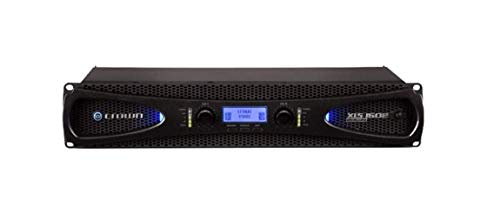
Crown XLS 1502
DriveCore Technology packs 300 watts per channel at 4 ohms into a 2U rack chassis. A built-in PIP slot accepts optional network or DSP cards for install work. Churches and small venues favor it where reliability matters more than boutique styling.
Pros
- Runs cool even at sustained high output
- PIP slot adds DSP or networked audio later
- Balanced XLR and TRS combo inputs
Cons
- No onboard DSP without the optional card
- Fan noise picks up under heavy load

QSC GX5
Class H topology shifts rail voltage to save power at idle, a design QSC built the GX5 around. Output reaches 500 watts per channel at 4 ohms and 850 watts bridged into a single 8-ohm speaker. Touring racks and permanent installs both suit the 2U chassis.
Pros
- High headroom for demanding PA loads
- Binding post and XLR/TRS outputs together
- Backed by QSC’s five-year warranty
Cons
- Heavier than comparable Class D amps
- Overkill for small bookshelf setups

Fosi Audio ZA3
A TI TPA3255 chip pushes 168 watts per channel into 4-ohm speakers from a chassis under two inches tall. Bluetooth 5.0, USB, optical, and coaxial inputs cover most desktop and shelf systems. A small included remote handles volume and input switching.
Pros
- Compact enough for a bookshelf or desk
- Multiple digital inputs cover most sources
- Included remote controls volume and input
Cons
- No balanced XLR inputs for pro gear
- Bass response softens above 100 watts

Behringer NX3000D
Class D efficiency pairs with onboard DSP tuned through the free NX-DRIVE software over USB. Each channel outputs roughly 1500 watts at 4 ohms, enough for mid-size PA cabinets. A 1U chassis keeps rack space free for other gear.
Pros
- Software DSP tunes crossover and limiting
- Lightweight for its power output
- Compact 1U footprint saves rack space
Cons
- DSP setup requires a laptop the first time
- Bluetooth control module sold separately
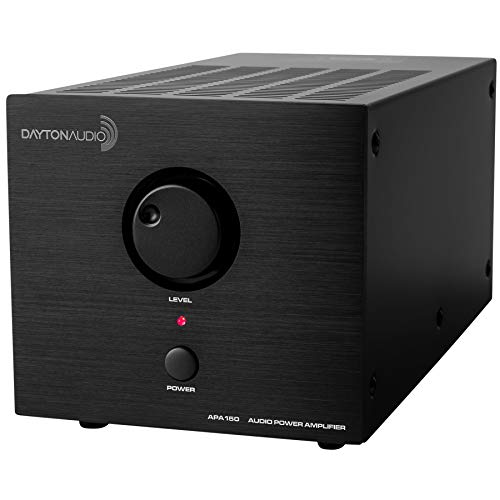
Dayton Audio APA150
Bookshelf and outdoor speaker systems get 75 watts per channel at 4 ohms from this compact amp. Both RCA line-level and speaker-level inputs work, so it can tap a signal straight from a receiver’s speaker terminals. A wired remote handles volume from across the room.
Pros
- Speaker-level input skips a preamp entirely
- Small footprint fits tight equipment shelves
- Remote reaches from another room
Cons
- 75 watts limits use with low-sensitivity speakers
- No Bluetooth or digital inputs

Crown XLi 3500
Class AB circuitry rated at 1350 watts per channel at 4 ohms targets DJs and live sound rental houses. A variable-speed fan manages heat under continuous use. Balanced XLR and quarter-inch inputs cover typical mixer outputs.
Pros
- High output suits large speaker cabinets
- Durable build common in rental fleets
- Simple front-panel gain controls
Cons
- Class AB runs warmer than Class D rivals
- Heavier to carry than newer amp designs

Sonos Amp
125 watts per channel reaches 8-ohm speakers through a Wi-Fi or Ethernet connection controlled by the Sonos app. HDMI ARC lets it double as a TV sound source, and AirPlay 2 covers wireless streaming from Apple devices. Trueplay tuning adjusts output to the room using a phone microphone.
Pros
- No amp-to-source cable needed once on Wi-Fi
- HDMI ARC adds basic TV sound duties
- Trueplay adapts output to room acoustics
Cons
- 125 watts trails dedicated pro amps
- Full features need other Sonos speakers nearby
What matters most
What to look for in a power amplifier Power output only means something next to speaker impedance. A 300-watt rating at 4 ohms drops closer to 180 watts at 8 ohms on most amps. Class D designs run cooler and lighter than Class AB, which matters in a rack with limited airflow. Input type matters too: XLR and TRS combo jacks suit pro mixers, while RCA and Bluetooth cover home systems.
Matching wattage to your speakers Speaker sensitivity, measured in decibels at one watt, determines how much power an amp needs to reach a given volume. Bookshelf speakers rated near 86 dB sensitivity need more clean wattage than horn-loaded PA cabinets rated above 95 dB. Pairing a 75-watt amp like the Dayton APA150 with inefficient towers can clip at moderate volume. Running an amp below its ceiling usually sounds cleaner than pushing an undersized one to its limit.
Home systems vs PA and touring rigs Home setups rarely need more than 150 watts per channel unless the room runs large or the speakers stay inefficient. Touring and install amps like the QSC GX5 or Crown XLi 3500 carry higher headroom for cabinets pushed at a party or venue. Rack-mount amps also add cooling fans and rugged connectors that home amps skip. Weight climbs with that ruggedness, so portable rigs favor Class D over older Class AB designs.
Wireless and DSP-equipped amps for simpler setups Not every system needs a mixer and a separate DSP box. Behringer’s NX3000D tunes crossover points and limiting through free software instead of external processors. Sonos Amp skips wired inputs almost entirely, streaming over Wi-Fi and controlling volume from a phone. Both suit buyers who want tone control without learning pro audio terminology.
How they stack up
| # | Model | Power output | Best for | Score | Price |
|---|---|---|---|---|---|
| 1 | Crown XLS 1502 | 300W/ch at 4 ohms stereo | Best overall | 9.4 | Check price |
| 2 | QSC GX5 | 500W/ch at 4 ohms stereo | Best for large rooms | 9.1 | Check price |
| 3 | Fosi Audio ZA3 | 168W/ch at 4 ohms | Best budget | 8.9 | Check price |
| 4 | Behringer NX3000D | ~1500W/ch at 4 ohms stereo | Best for DSP control | 8.6 | Check price |
| 5 | Dayton Audio APA150 | 75W/ch at 4 ohms | Best for bookshelf speakers | 8.4 | Check price |
| 6 | Crown XLi 3500 | 1350W/ch at 4 ohms stereo | Best for live sound | 8.2 | Check price |
| 7 | Sonos Amp | 125W/ch at 8 ohms | Best for wireless streaming | 8.0 | Check price |
Frequently asked questions
How many watts do I need for a power amplifier?
Match wattage to speaker sensitivity and impedance rather than room size alone. Speakers rated near 86 dB sensitivity typically need 100 to 300 watts per channel for clean volume. Higher-sensitivity PA cabinets need less power for the same loudness.
What’s the difference between Class D and Class AB amplifiers?
Class D amplifiers switch power transistors rapidly, which cuts heat and weight compared to Class AB. Class AB stays linear through the full signal, a trait some listeners prefer for midrange detail. Crown’s XLi series uses Class AB, while the XLS series switches to Class D.
Can I use a power amplifier with bookshelf speakers?
Yes, as long as the amp’s wattage at the speaker’s impedance stays within the speaker’s rated power handling. Dayton Audio’s APA150 targets bookshelf pairs with its 75-watt-per-channel output. Overpowering a bookshelf pair briefly at low volume is safer than underpowering it at high volume.
Is a power amplifier the same as a receiver?
No. A receiver combines a preamp, tuner, and power amplifier in one chassis, while a standalone power amplifier only handles the final signal boost. Power amplifiers need a separate preamp or source with line-level output, like an AV receiver’s pre-out or a mixer.
Do power amplifiers need a preamp?
Most do, since power amps only accept line-level input, not phono or microphone signals. The Dayton APA150 is an exception with a speaker-level input for tapping directly off a receiver’s speaker terminals. Bluetooth amps like the Fosi ZA3 also skip the preamp step for wireless sources.
Which power amplifier works best for a home theater?
Compact amps with speaker-level or line-level RCA inputs, such as the Dayton Audio APA150, fit best behind a home theater receiver. Sonos Amp works differently, replacing the receiver entirely with HDMI ARC and app control. Choose based on whether an existing receiver stays in the system.
Can a power amplifier connect over Bluetooth?
Yes, several consumer amps include Bluetooth, including the Fosi Audio ZA3 and Sonos Amp through its app-based streaming. Pro amps like the Crown XLS 1502 lack Bluetooth unless a networked PIP card gets added. Bluetooth range and codec support vary by model.
How much rack space does a 2-channel power amplifier need?
Most 2-channel pro amps take up 1U or 2U of standard 19-inch rack space, equal to about 1.75 or 3.5 inches of height. Behringer’s NX3000D fits a single 1U slot, while the Crown XLS 1502 and QSC GX5 use 2U. Desktop amps like the Dayton APA150 skip rack mounting entirely.
Power amplifier vs integrated amplifier: what’s the difference?
An integrated amplifier bundles a preamp and power stage in one box, ready to accept a turntable or streamer directly. A standalone power amp like the Crown XLS 1502 needs an external preamp or mixer feeding it line-level signal. Studios and PA setups favor standalone amps for the flexibility to swap preamp stages.
Best power amplifier for outdoor speakers?
Dayton Audio’s APA150 suits outdoor bookshelf-style speakers at 75 watts per channel, enough for patios and small yards. Larger outdoor systems covering a backyard party lean toward the QSC GX5 for extra headroom. Weatherproofing lives in the speakers themselves, not the amplifier, so keep the amp indoors or under cover regardless of model.
Final word
Crown’s XLS 1502 balances power, reliability, and rack-friendly size for most home and small-venue systems. Buyers running large PA cabinets should size up to the QSC GX5 for extra headroom, while anyone without a mixer or rack gear fits better with the wireless Sonos Amp. Skip the Fosi ZA3 if the setup demands balanced XLR inputs, since its inputs stay consumer-grade.
Marcus Chen
Marcus covered consumer electronics for enthusiast tech publications for six years before joining ChoiceCrest. He specializes in translating manufacturer spec sheets into plain-language buying advice, with a focus on audio, computing accessories and smart-home gear.
You might also need

Nintendo Game & Watch: Super Mario Bros Review: Still Worth It as a Collectible?

Ray-Ban Meta (Gen 2) Wayfarer Smart Glasses: Worth $379 for Clear Lenses?
AlyKets Nikon UC-E6 Replacement USB Cable: Does a $7.95 Cord Work as Well as the Original?
