Portable RV Water Filters with Real Flow for Big Rigs
The Camco TastePURE 40001 is the top pick for most RVers because it delivers a generous 10 gallons per minute flow while removing sediment, taste, and odor. Its main limitation is that it filters down to only 20 microns, so it does not remove viruses or dissolved heavy metals. For boondockers or full-timers who need high flow and longer filter life, the iSpring WSP-50 is a strong alternative.
RVers often struggle with poor water quality at campgrounds, where sediment, chlorine, and odd tastes are common. A portable filter that screws directly onto the hose is a simple solution, but many filters restrict flow, making tasks like filling a tank slow and frustrating. High-capacity models balance filtration with flow rate, so you can still run a washing machine or rinse dishes without waiting.
The filters below are all currently sold on Amazon and are chosen for their high flow rates or large capacity. They attach directly to a standard garden hose, though some require additional fittings. We focused on models that are easy to use, durable, and effective at improving water quality without sacrificing pressure.
How to pick the right one
Our top picks

Camco TastePURE 40001
The Camco TastePURE 40001 is a straightforward inline filter that screws between your hose and RV. It uses a replaceable carbon cartridge to reduce sediment, chlorine, and other tastes. Owners report that it delivers excellent water pressure, making it ideal for daily use.
Pros
- Very high flow rate for fast tank fills
- Easy twist-on installation
- Tastes great and removes chlorine
Cons
- Does not filter out heavy metals or bacteria
- Cartridge replacement needed every few months

iSpring WSP-50
The iSpring WSP-50 is a whole-house style filter that you can use as a portable unit. It has a 1-micron rating and a large capacity, making it effective for removing rust, sand, and other particles. It delivers up to 15 GPM, which is impressive for a filter this size. You need to add your own hoses, but the included mounting bracket allows for temporary setup.
Pros
- Exceptional filtration down to 1 micron
- Long filter life, reducing replacement frequency
- High flow rate supports multiple uses
Cons
- Bulkier and less portable than inline options
- Requires additional hose adapters
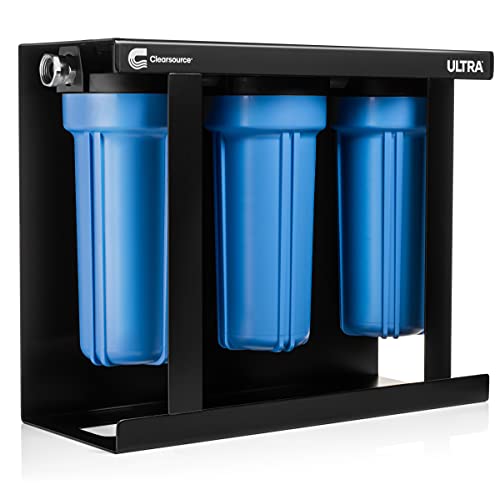
Clearsource Ultra
The Clearsource Ultra is a dual-canister system that combines a 5-micron sediment filter with a carbon block filter. This setup removes chlorine, taste, and odor while also trapping fine particles. It is built with stainless steel and is known for durability. Owners like the ability to replace filters separately, which can save money in the long run.
Pros
- Two-stage filtration for cleaner water
- Durable stainless steel construction
- Filters can be replaced individually
Cons
- Heavier and more complex to set up
- Lower flow rate than some inline models

RV Water Filter Store 1 Micron Absolute
This filter from RV Water Filter Store is designed for those who encounter heavy sediment, such as well water or sand. It has a 1-micron absolute rating, which means it removes nearly all visible particles. It is a single-stage filter, so it does not address taste or chemicals. However, for protecting your RV’s plumbing from grit, it is highly effective.
Pros
- Absolute 1-micron filtration for fine sediment
- Large capacity for seasonal use
- Simple inline design
Cons
- Lower flow rate
- No carbon filtration for taste or odor

Camco EVO 40043
The Camco EVO 40043 is an upgrade to the standard TastePURE, offering a larger capacity and a twist-and-lock design. It filters sediment and chlorine while maintaining a high flow rate. This filter is an excellent value for RVers who want a simple solution without breaking the bank.
Pros
- High flow rate
- Greater capacity than standard filters
- Easy twist-on installation
Cons
- Only 20-micron filtration
- Carbon block may not last as long as claimed

Watts Premier WPC20
The Watts Premier WPC20 is a carbon block filter that excels at reducing chlorine and improving taste. It has a 5-micron rating and provides a steady flow of 10 GPM. This filter is often used by RVers who hook up to municipal water with strong chlorine odors.
Pros
- Excellent chlorine and taste reduction
- High flow rate
- Long-lasting carbon block
Cons
- Not designed for heavy sediment
- Can be bulky when attached to hose

Valterra A01-0120VP
The Valterra A01-0120VP is a compact inline filter that is perfect for RVers with limited storage space. It provides basic sediment and chlorine reduction at a modest flow rate of 5 GPM. While it may not be as high-capacity as others, it is lightweight and easy to pack.
Pros
- Small and lightweight for easy storage
- Simple to install
- Affordable price point
Cons
- Lower flow rate
- Shorter filter life
The lineup, side by side
| # | Model | Flow Rate | Best for | Score | Price |
|---|---|---|---|---|---|
| 1 | Camco TastePURE 40001 | 10 GPM | Best Overall for Flow and Taste | 9.4 | Check price |
| 2 | iSpring WSP-50 | 15 GPM | Best for High Capacity and Sediment Reduction | 9.2 | Check price |
| 3 | Clearsource Ultra | 8 GPM | Best Dual-Stage Filtration for Full-Timers | 9.0 | Check price |
| 4 | RV Water Filter Store 1 Micron Absolute | 5 GPM | Best for Extremely Sediment-Prone Water | 8.7 | Check price |
| 5 | Camco EVO 40043 | 10 GPM | Best Twist-On Replacement for High Flow | 8.5 | Check price |
| 6 | Watts Premier WPC20 | 10 GPM | Best for City Water with Heavy Chlorine | 8.3 | Check price |
| 7 | Valterra A01-0120VP | 5 GPM | Best for Compact Storage and Travel | 8.0 | Check price |
Good to know
Can I use a portable RV water filter for drinking water?
Yes, these filters are designed for drinking water. They reduce sediment, chlorine, and improve taste. However, they do not remove viruses, bacteria, or dissolved heavy metals. If you need microbiological protection, consider a filter with a 0.5-micron rating or a UV purifier.
How often should I replace the filter cartridge?
Replacement frequency depends on the filter’s capacity and the quality of your water source. Inline filters with a 1,500-gallon capacity may need replacement every 3 months with regular use. Larger capacity filters can last up to 6 months or longer. Always follow the manufacturer’s guidelines and replace if you notice a drop in flow or taste.
Do these filters reduce water pressure?
All filters cause some pressure drop, but high-capacity models are designed to minimize it. Look for filters with a flow rate of at least 5 GPM. If you experience low pressure, check for clogs and replace the filter when needed. Using a pressure regulator can help maintain consistent pressure.
Can I leave the filter connected to the hose when not in use?
If you are stationary at a campsite, you can leave the filter connected. However, in freezing temperatures, you should disconnect and drain the filter to prevent cracking. Prolonged exposure to sunlight can also degrade the filter housing, so consider storing it indoors when not in use.
Will these filters remove well water sediment?
Yes, many of these filters are effective at removing sediment, rust, and sand. For heavy sediment, choose a filter with a 1-micron rating, such as the RV Water Filter Store 1 Micron Absolute. For lighter sediment, a 5-micron filter may suffice.
What is the difference between sediment and carbon block filters?
Sediment filters remove physical particles like dirt and rust. Carbon block filters also remove sediment but additionally reduce chlorine, taste, and odor. Some systems combine both, like the Clearsource Ultra. If you are concerned about taste, choose a carbon filter.
Do I need to use a pressure regulator with these filters?
It is recommended to use a pressure regulator if your campsite water pressure exceeds 60 PSI. High pressure can damage the filter and your RV’s plumbing. Many filters have a maximum pressure rating, so check the specifications and use a regulator if necessary.
Can I use these filters for filling my RV fresh water tank?
Yes, most portable filters can be used inline when filling your fresh water tank. The high flow rate models allow for quick filling. Ensure the filter is compatible with your hose and that you have a way to secure it, as some filters are heavy when full of water.
Are these filters NSF certified?
Some models are NSF certified, but not all. Check the product description for certifications like NSF/ANSI 42. If certification is important to you, look for filters that explicitly state they meet NSF standards.
What is the best way to store the filter when not in use?
After disconnecting the filter, drain any excess water and allow it to air dry. Store it in a cool, dry place away from direct sunlight. If you store it with water inside, mold can grow inside the filter media. Some filters have a protective cap to prevent contamination.
The verdict
For most RVers, the Camco TastePURE 40001 is the best all-around choice due to its high flow rate and effective taste improvement. If you frequently encounter sediment, the iSpring WSP-50 offers superior filtration and long life, making it a worthy investment for full-timers. The Clearsource Ultra is a premium option for those who want dual-stage filtration. Choose based on your specific water quality and flow needs, but any of these filters will greatly improve your RV water experience.
Tony Russo
Tony trained as an automotive technician and spent years in service and parts retail before moving into writing. He focuses on garage tools, car care products and accessories from a hands-on maintenance perspective.


