Portable Tire Inflators That Handle Truck Tires
VIAIR 400P fits most trucks, rated to 150 PSI with battery clamps and a 33 percent duty cycle. Smittybilt 2781 moves 5.65 CFM, the number that matters on 37 inch tires. DeWalt DCC020IB suits drivers who want cordless top ups without opening the hood.
VIAIR 400P is the safe default for a truck: 150 PSI capability, clamps straight to the battery and a 33 percent duty cycle that carries it through four wheels with short pauses. Bulk is the tradeoff. That carry case lives in the bed or behind a seat, never in a door pocket.
Truck tires break small inflators. Volume is the reason, since a 35 inch tire swallows several times the air of a sedan tire, and a socket powered pump overheats before the second wheel is done. We compared maximum pressure, published airflow, stated duty cycle, hose length and power source, then weighed owner reports on run times when airing up from trail pressure.
How to choose
What to look for in a truck tire inflator Maximum PSI takes the headlines, yet airflow decides how long you stand at each wheel. A light truck tire at 65 PSI holds several times the air of a passenger tire, so anything moving under 1 CFM stretches into many minutes per corner. Check the rated tire size, which most brands publish directly in their specifications. Hose length comes next: 25 feet covers all four wheels from one clamp position, while 10 feet means unclipping and moving the unit each time. A metal screw on chuck is worth adding, since cheap push on chucks leak pressure at the valve.
Power source: battery clamps, 12V socket or cordless pack Clamps hand the motor full battery current, which is why every high output unit here uses them. Accessory sockets are typically fused around 15 amps, capping what any inflator can pull no matter how the motor is rated. Cordless models such as the DeWalt DCC020IB skip the vehicle entirely, handy for trailers, bikes and a truck with a flat battery. Plan on one or two truck tires per pack, and carry a second battery if that is your only inflator. Owners who mix uses often keep an AstroAI in the glovebox and a clamp unit in the bed.
Duty cycle and why cheap inflators overheat Duty cycle states how long a compressor may run inside a period before it needs to cool. VIAIR quotes 33 percent at 100 PSI for the 400P, which works out as steady progress through a set of tires with short pauses between them. Budget socket units rarely publish a figure at all, and owners report thermal shutdowns partway through the third wheel. Heat kills these tools faster than anything else. Given a choice, a published duty cycle beats another 20 PSI on the dial.
Airing up 35 and 37 inch tires after a trail run Dropping to 15 PSI for traction takes seconds; putting it back is where equipment earns its place. Airflow rules at this size, which is why the Smittybilt 2781 and its 5.65 CFM rating sits ahead of everything else here. Idle the engine during a full set, because sustained draw above 20 amps pulls a battery down quickly. Work opposite corners rather than circling the truck, so a thermal pause leaves the vehicle sitting level. Anyone running 33 inch tires or smaller can save the bulk and use a VIAIR 88P instead.
Our top picks

VIAIR 400P Portable Air Compressor
Clamping straight to the battery sidesteps the amperage ceiling that chokes socket powered pumps. A 150 PSI rating covers light truck tires running well above passenger pressures, and 25 feet of hose reaches all four corners from one parking spot. Duty cycle sits at 33 percent at 100 PSI, so build short rests into a full set.
Pros
- Clamps bypass fuse limited 12V sockets
- Long hose reaches every wheel from one position
- Sealed carry case keeps hose and fittings together
Cons
- Needs the hood open every time you use it
- Case is bulky for permanent cab storage

Smittybilt 2781 Universal Air Compressor
Rated at 5.65 CFM, this shifts far more air per minute than typical portable units, which decides everything when four oversized tires sit at trail pressure. Pressure tops out at 150 PSI, and the same airflow drives a blow gun or an impact wrench for lug nuts. Current draw runs heavy, so owners advise clamping to a healthy battery with the engine idling.
Pros
- Fills oversized tires in a fraction of the time
- Enough airflow for light air tools
- Strong duty cycle for repeat fills
Cons
- Heavy current draw wants the engine running
- Largest and heaviest unit here to store

ARB CKMP12 Portable Air Compressor
Dust and moisture sealing sits at the centre of this design, and that is what separates a compressor lasting three seasons of trail use from one that quits. Battery clamps feed it to 150 PSI, while the hard case shrugs off being thrown into a bed with recovery gear. Airflow trails the Smittybilt, so very large tires take noticeably longer.
Pros
- Sealed housing handles dust, mud and rain
- Proven design in off-road recovery kits
- Clamps deliver full current from the battery
Cons
- Slower fills than high CFM compressors
- No cordless option for roadside use

VIAIR 88P Portable Air Compressor
Half the size of the 400P, still clamp powered, which keeps it clear of socket fuse limits. Its 120 PSI ceiling covers tires up to 33 inches, so most half ton trucks on factory rubber are handled. Fills take longer than the 400P, making it a better match for monthly pressure checks than regular trail airing.
Pros
- Clamp power in a genuinely compact case
- Covers factory sized half ton truck tires
- Simple gauge and bleed valve setup
Cons
- Not rated for 35 in and larger tires
- Longer fill times than the 400P

DeWalt DCC020IB 20V MAX Cordless Tire Inflator
Power arrives three ways: a 20V MAX pack, a 12V vehicle socket or household AC, covering a driveway, a parking lot and a trailhead with one unit. Dial in a target pressure and the motor stops on its own, up to a 160 PSI maximum. A second high volume hose inflates air mattresses and pool toys, which widens its use beyond tires.
Pros
- Works with no vehicle connection at all
- Auto shutoff at a set pressure
- Shares batteries with DeWalt 20V MAX tools
Cons
- Battery runtime limits it to one or two truck tires
- Slower than clamp powered compressors
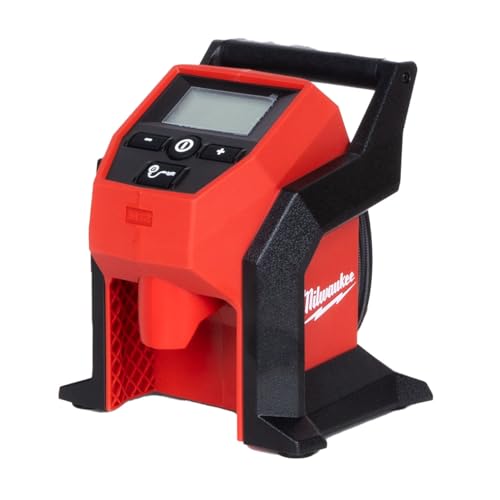
Milwaukee 2475-20 M12 Compact Inflator
Small enough to live behind a seat, quick enough to add a few PSI before a long drive. Digital control holds a target up to 120 PSI and cuts the motor automatically. Taking a 35 inch tire from trail pressure back to highway pressure is outside its remit, and owners note the housing warms up on long fills.
Pros
- Genuinely portable at around 5 lb
- Auto shutoff prevents overfilling
- Shares M12 packs with a large tool lineup
Cons
- Too slow for airing up oversized tires
- Heats up during extended fills

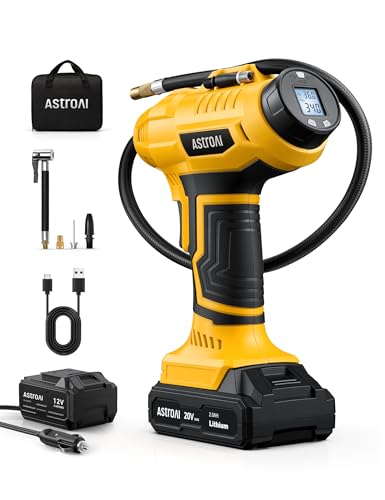
AstroAI Portable Tire Inflator Air Compressor
Plugging into the 12V socket keeps the hood shut, and 100 PSI covers pressure checks on light trucks and SUVs riding factory tires. Set the digital preset and the pump stops at that number, with a built in light for roadside work after dark. Socket wiring caps available current, so keep fills short and let the motor cool between wheels.
Pros
- No hood opening or clamps required
- Preset shutoff makes pressure checks quick
- Small enough for a glovebox or door pocket
Cons
- Socket power limits it to short fills
- 100 PSI ceiling rules out heavy load pressures
Side by side
| # | Model | Maximum pressure | Best for | Score | Price |
|---|---|---|---|---|---|
| 1 | VIAIR 400P Portable Air Compressor | 150 PSI | Best overall | 9.4 | Check price |
| 2 | Smittybilt 2781 Universal Air Compressor | 5.65 CFM | Best for 37 inch tires | 9.2 | Check price |
| 3 | ARB CKMP12 Portable Air Compressor | 150 PSI | Best for off-road recovery kits | 9.0 | Check price |
| 4 | VIAIR 88P Portable Air Compressor | 120 PSI | Best value | 8.8 | Check price |
| 5 | DeWalt DCC020IB 20V MAX Cordless Tire Inflator | 160 PSI | Best cordless | 8.6 | Check price |
| 6 | Milwaukee 2475-20 M12 Compact Inflator | 120 PSI | Best for topping off pressure | 8.3 | Check price |
| 7 | AstroAI Portable Tire Inflator Air Compressor | 100 PSI | Best budget | 8.0 | Check price |
Questions worth asking
What PSI do truck tires need?
Half ton trucks typically run 35 to 45 PSI, while heavy duty models on load range E tires often call for 65 to 80 PSI. Read the door jamb sticker, not the sidewall, because the sidewall prints a maximum rather than a recommendation.
Can a 12V socket inflator fill a truck tire?
Slowly, and really only for topping off. Accessory sockets are fused near 15 amps, which starves the motor. Airing up from trail pressure calls for a clamp powered compressor instead.
How long does it take to air up a 35 inch tire?
A high airflow unit such as the Smittybilt 2781 needs a few minutes per tire from trail pressure. Lower output compressors stretch that three times longer, and budget socket models may hit thermal shutdown before the set is finished.
Is a cordless tire inflator good enough for a truck?
For pressure checks and emergencies, yes. DeWalt’s DCC020IB reaches 160 PSI and stops at a preset value. Runtime is the ceiling, so it is not the tool for airing up four oversized tires.
What does duty cycle mean on an air compressor?
It names the share of time a unit may run before cooling, usually quoted at a stated pressure. A 33 percent rating at 100 PSI means roughly one third running, two thirds resting. Push past it and thermal protection cuts the motor.
Do I need to run the engine while using an inflator?
For clamp powered units on a full set of tires, yes. Sustained draw above 20 amps drags a battery down fast. Short top ups are fine with the engine off.
Which tire inflator is best for off-roading?
ARB CKMP12 for its sealed case and long record in recovery kits. Step up to the Smittybilt 2781 if you run 37 inch tires and want the fastest airing up. Both clamp directly to the battery.
Can these compressors run air tools?
Only the highest airflow models, and only in short bursts. Smittybilt rates the 2781 at 5.65 CFM, enough for a blow gun or an impact wrench on lug nuts. Compact inflators lack the volume for any air tool.
VIAIR 400P vs VIAIR 88P: which should a truck owner buy?
Choose the 400P for 35 inch tires, 150 PSI capability and a 25 foot hose. The 88P covers tires up to 33 inches at 120 PSI in a much smaller case. Occasional pressure checks favour the 88P; regular trail airing favours the 400P.
Final word
VIAIR 400P earns the default slot for a truck: clamp power, 150 PSI, 25 feet of hose and a published duty cycle that survives a full set of wheels. Step up to the Smittybilt 2781 if 37 inch tires live under your fenders, because 5.65 CFM turns a long chore into a short one. Drivers who only correct a few PSI should skip both and keep a cordless DeWalt DCC020IB behind the seat.
Tony Russo
Tony trained as an automotive technician and spent years in service and parts retail before moving into writing. He focuses on garage tools, car care products and accessories from a hands-on maintenance perspective.