Truck OBD2 Scanners, From Half Ton Pickups to Class 8
Autel MaxiCOM MK808S suits most pickup owners, reading every module and running service resets. ANCEL X7HD is the tool for class 6 to 8 diesel, since it speaks J1939 and J1708 on 24V. BlueDriver Bluetooth Pro keeps a phone as the screen and returns repair reports.
Autel MaxiCOM MK808S is the scanner most pickup owners should buy, because it reaches transmission, ABS, airbag and body modules instead of stopping at the check engine light. Service routines such as oil resets and electronic parking brake retraction come with it. One limit decides everything: no J1939, so heavy duty diesel rigs need a different tool.
Truck diagnostics splits into two worlds that share a name. A half ton pickup uses the standard 16 pin OBD2 port, while a class 8 tractor runs 6 pin or 9 pin Deutsch connectors on 24V. We compared protocol coverage, module access, live data handling, bidirectional control and update policy, then weighed owner reports on vehicle compatibility gaps and boot speed in the yard.
The best picks, ranked

Autel MaxiCOM MK808S
Full system access means engine, transmission, ABS, airbag and body modules all report in, not just the powertrain. Bidirectional control commands a fan, injector or solenoid directly, which confirms a circuit before any part gets ordered. Coverage targets 12V passenger and light truck platforms, so medium and heavy duty diesel sits outside its range.
Pros
- Reads modules well beyond the engine
- Active tests confirm a fault before parts go on
- Service resets cover routine maintenance jobs
Cons
- No J1939 heavy duty protocol
- Tablet needs charging before a long job

ANCEL X7HD
SAE J1939 and J1708 support opens class 6 to 8 trucks that a standard OBD2 tool cannot even see. Three cables ship in the kit, covering 9 pin, 6 pin and 16 pin ports on both 12V and 24V electrics. Forced DPF regeneration is the function that keeps a work truck moving rather than parked. Menu navigation runs slower than a tablet, and function depth shifts with the engine manufacturer.
Pros
- Reads heavy duty engine and chassis modules
- Handles 12V pickups and 24V rigs from one kit
- Forced DPF regeneration built in
Cons
- Menus respond slower than tablet scanners
- Function depth varies by engine brand

LAUNCH CRP129E
Four systems cover most real truck faults, and this one reads engine, transmission, ABS and SRS with graphed live data. Five reset services handle oil life, steering angle, electronic parking brake, throttle body and battery registration. Diagnosis stops at reading, though, because no bidirectional commands are available.
Pros
- Covers the four systems that fail most often
- Lifetime updates arrive over Wi-Fi at no cost
- Graphs live data instead of listing raw numbers
Cons
- No bidirectional active tests
- Body and comfort modules stay out of reach
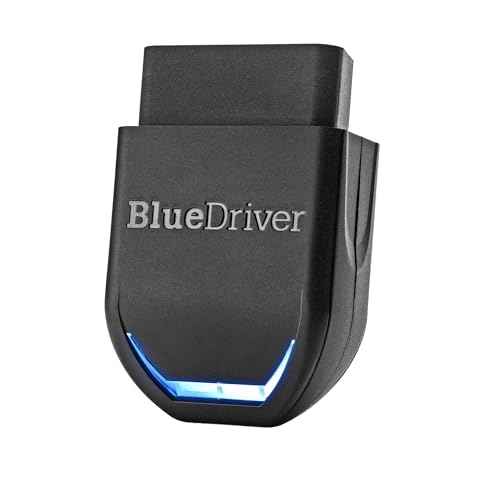
BlueDriver Bluetooth Pro OBDII Scan Tool
About the size of a matchbox, this dongle lives in the glovebox and turns the phone in your pocket into the screen. Repair reports draw on a fault database and list fixes reported on similar vehicles, which helps when a code points several ways. Everything hinges on that phone, so a flat battery in the cab means no diagnostics at all.
Pros
- Stores in a glovebox and never needs charging
- Repair reports turn vague codes into likely causes
- Core app carries no subscription
Cons
- Depends on a charged phone to work
- No bidirectional control

Innova 5610
ABS and SRS codes read alongside engine faults, and a battery plus charging system check catches the no start problems often blamed on a module. Its colour screen shows live data and freeze frame with nothing to pair. Styling looks dated next to the tablets, which matters far less than what it can actually reach.
Pros
- Battery and charging test is built in
- Runs standalone with no app or pairing
- Freeze frame data helps trace intermittent faults
Cons
- Interface design feels dated
- Updating takes longer than on Wi-Fi tools

FOXWELL NT301
Reading and clearing engine codes, running I/M readiness and streaming live sensor data is the whole job here, done on a wired handheld. A coloured LED and a beeper deliver the emissions readiness verdict before you drive to an inspection. ABS, airbag and transmission modules sit outside its scope entirely.
Pros
- Fast readiness check ahead of an emissions test
- Needs no batteries, app or pairing
- Simple enough to hand to anyone in the yard
Cons
- Engine module only
- Small screen makes long data lists tedious

OBDLink MX+
Sampling runs quick enough to catch a misfire pattern during a highway pull, which suits people who watch data rather than just pull codes. Manufacturer specific networks open up on many Ford, GM and Ram trucks, exposing parameters generic dongles never see. Sleep mode keeps it from draining a parked truck. Its own app covers the basics free, while deeper dashboards rely on third party software.
Pros
- Samples fast enough for logging on the move
- Reaches manufacturer specific parameters
- Sleeps rather than draining the truck battery
Cons
- Deeper features need third party apps
- Not usable as a standalone tool without a phone
How they stack up
| # | Model | Coverage | Best for | Score | Price |
|---|---|---|---|---|---|
| 1 | Autel MaxiCOM MK808S | All systems on most 12V light trucks | Best overall | 9.4 | Check price |
| 2 | ANCEL X7HD | SAE J1939, J1708 and standard OBD2 | Best for heavy duty diesel trucks | 9.2 | Check price |
| 3 | LAUNCH CRP129E | Engine, transmission, ABS and SRS | Best value | 9.0 | Check price |
| 4 | BlueDriver Bluetooth Pro OBDII Scan Tool | Bluetooth dongle with phone app | Best phone based scanner | 8.7 | Check price |
| 5 | Innova 5610 | Engine, ABS, SRS, transmission codes | Best for DIY repair guidance | 8.5 | Check price |
| 6 | FOXWELL NT301 | Engine codes and I/M readiness | Best budget | 8.2 | Check price |
| 7 | OBDLink MX+ | Bluetooth dongle with app | Best for live data logging | 8.0 | Check price |
What matters most
What to check before buying a truck scanner Look under the dash first. Light trucks carry the standard 16 pin OBD2 port, while class 6 to 8 rigs use 6 pin or 9 pin Deutsch connectors on heavy duty networks. Confirm the tool lists your make, model and year, since protocol support alone does not guarantee module access. Decide next whether reading codes is enough or whether you want to command components, because bidirectional control is the feature that separates the tiers. Update policy matters over the long run, as a tool with free Wi-Fi updates keeps pace with newer model years.
Handheld tool or Bluetooth dongle Dongles win on portability and outlay, and the phone already in your pocket becomes the display. Handhelds and tablets win on independence, booting without an app, holding their own charge and shrugging off a working shop. Drivers who scan a few times a year usually land on a dongle such as BlueDriver. Anyone diagnosing several trucks a week gets far more from a tablet with full system access. A wired handheld also stays usable when a phone is dead or a fleet driver forgets to pair.
Light duty pickups versus heavy duty diesel Any OBD2 tool built for vehicles sold after 1996 reads a half ton pickup fine. Medium and heavy duty diesel is a separate world, needing SAE J1939 or J1708 and often a 24V supply. ANCEL X7HD bridges both by shipping 9 pin, 6 pin and 16 pin cables in one kit. Forced DPF regeneration counts heavily on that side, because a clogged filter turns into downtime rather than a dashboard light. Light duty diesel pickups sold in the United States after 2007 sit on the OBD2 side of that line.
Which features actually save time in a work truck Graphed live data beats a wall of numbers when you are chasing fuel trim drift on a long grade. Battery and charging tests, as on the Innova 5610, catch the no start faults that get wrongly blamed on modules. Commanding a fan or an injector confirms a circuit in seconds, which is the real argument for a bidirectional tool. Skip subscription heavy platforms if you own a single truck, since recurring cost outweighs coverage you rarely use. Owners running a small fleet should weigh the opposite way, because one tablet covering every module pays back across several vehicles.
Frequently asked questions
Will a regular OBD2 scanner work on a diesel truck?
It works on light duty diesel pickups sold in the United States after 2007, which use the 16 pin port. Medium and heavy duty rigs need J1939 or J1708 support instead.
What is the difference between OBD2 and J1939?
OBD2 is the light vehicle standard running on a 16 pin connector. J1939 is the commercial truck network, usually reached through a 9 pin Deutsch plug and often on 24V electrics.
Which OBD2 scanner reads ABS and transmission codes?
Autel MaxiCOM MK808S and LAUNCH CRP129E both reach ABS and transmission modules, and the Innova 5610 covers them too. Budget handhelds such as the FOXWELL NT301 stop at engine codes.
Can an OBD2 scanner clear a check engine light permanently?
Clearing removes the stored code, but the light returns while the underlying fault remains. Repair the cause first, then clear it and drive the readiness cycle.
Do I need a bidirectional scan tool?
Only if commanding components matters to you rather than reading data. It cuts real time from fan, injector and solenoid diagnosis, and it is the main reason to move past a code reader.
Is it safe to leave a Bluetooth OBD2 dongle plugged in?
Pick one with a sleep mode, as the OBDLink MX+ has, so current draw stops when the truck is off. Dongles without sleep can flatten a battery across a long layup.
BlueDriver vs Autel MK808S, which suits a pickup owner?
BlueDriver fits someone scanning a few times a year who wants repair suggestions. MK808S suits anyone doing their own brake, suspension and service work, since it reaches every module and runs resets.
Can a portable scanner perform a DPF regeneration?
Some can. ANCEL X7HD includes forced regeneration for heavy duty engines, while most light duty consumer scanners leave that function out.
What does a scanner need for a 24V truck?
Check that the listing states 24V compatibility, not just heavy duty protocols. ANCEL X7HD handles both 12V and 24V systems, so one kit covers a pickup and a tractor unit.
Is a scan tool worth it for one truck?
Yes for anyone doing their own maintenance, since a single diagnosis at a shop usually costs more than a mid tier handheld. Owners who only need a readiness check before inspection can stay with a basic code reader.
The bottom line
Autel MaxiCOM MK808S is the buy for anyone maintaining pickups, because full system access plus active tests turns a guess into a confirmed diagnosis. Anyone running class 6 to 8 diesel should go to the ANCEL X7HD instead, since it is the only tool here speaking J1939 on 24V. Drivers who just want a readiness check before inspection are better served by the FOXWELL NT301, which does that job and nothing else.
Tony Russo
Tony trained as an automotive technician and spent years in service and parts retail before moving into writing. He focuses on garage tools, car care products and accessories from a hands-on maintenance perspective.