Portable Cat Scratching Posts for Everyday Clawing
SmartCat Ultimate Scratching Post leads for everyday clawing, since 32 inches allows a full stretch and woven sisal outlasts rope. PetFusion Ultimate Cat Scratcher Lounge suits flat scratchers and lifts with one hand. Necoichi Cozy Cat Scratcher Bowl packs smallest for a studio flat.
SmartCat Ultimate Scratching Post is the buy for a cat that claws something every day. Its 32 inch column lets an adult stretch out fully, and woven sisal fabric sheds far less than rope wrap. Weight is the limitation: around 10 pounds moves between rooms, but never one handed.
Portability and stability work against each other. Light posts tip when a big cat leans in, while heavy bases stay upright and stay where you left them. We compared height, base dimensions, surface material, total weight and refill availability, then read what owners report about tipping, shedding and whether cats actually left the sofa alone.
Our top picks
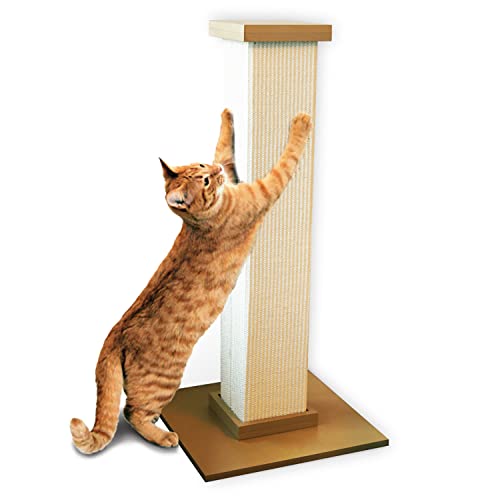
SmartCat Ultimate Scratching Post
Most adult cats want to reach up and pull down, and 32 inches allows exactly that. Woven sisal fabric runs with the grain, so claws strip cleanly instead of prying loose a coil of rope. A 16 inch square base holds steady when a 15 pound cat leans in hard.
Pros
- Full 32 inch stretch suits long bodied adults
- Woven sisal sheds less debris than rope wrap
- Wide 16 inch base stays planted during hard pulls
Cons
- About 10 pounds, so carrying it takes two hands
- Pale fabric shows dirt after a year of use

PetFusion Ultimate Cat Scratcher Lounge
Cats that shred rugs rather than sofa arms need a flat surface, and this curved deck doubles as a nap spot. Dense recycled cardboard holds up through months of daily use, then flips over for a second face. One hand lifts the 34 inch board, so it travels from living room to bedroom easily.
Pros
- Curved deck invites napping, which keeps cats on it
- Reversible board gives two usable surfaces
- Light enough to carry in one hand
Cons
- Loose cardboard crumbs collect underneath
- Nothing vertical for cats that stretch upward

Necoichi Cozy Cat Scratcher Bowl
Round walls turn this into a bed and a scratcher at once, which saves floor space in a studio. Corrugated cardboard forms the entire structure, so it weighs little and slides under a side table when guests arrive. Curling and kneading cats adopt it fast, while dedicated vertical scratchers walk straight past.
Pros
- Smallest footprint among these seven picks
- Raised rim suits cats that like enclosed beds
- Weighs little enough to reposition daily
Cons
- Cats above roughly 15 pounds overhang the rim
- Cardboard surface wears faster than sisal

Catit Style Scratcher Bench with Catnip
Angled panels cover the slope, the flat top and the side, matching the three positions cats usually choose. Worn inserts lift straight out of the moulded frame, so only the cardboard gets replaced. Catit includes a catnip sachet to shorten the first introduction.
Pros
- Three scratching angles within one footprint
- Cardboard insert lifts out for replacement
- Moulded plastic wipes clean during shedding season
Cons
- Bench slides on laminate without a mat
- Refill inserts are sold separately

Amazon Basics Cat Scratching Post
Sisal rope wraps a short upright column set on a carpet covered base. Dangling a ball from the top pulls a kitten toward it during the first week. Rope loosens across several months of daily clawing, and owners report trimming the strands to keep it tidy.
Pros
- Straightforward first post for kittens
- Light enough to move one handed
- Hanging toy helps with the introduction
Cons
- 16 inches is short for a full adult stretch
- Rope wrap loosens sooner than woven sisal

Trixie Mijas Scratching Post
Plush covers the platform while sisal wraps the column, a combination young cats climb readily. At roughly 20 inches it tucks under a windowsill without dominating a bedroom corner. Adults past about 12 pounds outgrow both the height and the base width.
Pros
- Plush platform gives kittens somewhere to rest
- Short column is easy for young cats to climb
- Compact enough for a bedroom corner
Cons
- Base can tip under a heavy adult cat
- Plush traps loose hair and needs brushing

SmartyKat Scratch Scroll Cat Scratcher
Rolled corrugated cardboard curves into a scroll that lies on the floor or leans against a wall. Under 2 pounds means it drops into a car footwell for holidays and vet stays. Compression is the tradeoff, since repeated clawing flattens a scroll faster than a fabric post wears down.
Pros
- Lightest pick here for travel and temporary stays
- Low curve suits cats that scratch long and flat
- Stores upright behind a sofa
Cons
- Shortest working life of these seven
- Needs a wall or mat to stop it sliding
How to pick the right one
What to look for in a portable scratching post Height and stability decide whether a cat uses a post at all. Measure your cat stretched from front paws to back feet, then add a few inches. Base width should run at least half the post height, which is why a 32 inch column needs a 16 inch footprint. Surface ranks next: woven sisal outlasts sisal rope, and both outlast carpet. Skip carpet covered columns entirely, since they teach a cat that carpet is fair game. Cardboard is the cheapest surface and performs best lying flat.
Vertical vs horizontal scratchers: which does your cat want? Existing damage answers this faster than any spec sheet. Shredded sofa arms and door frames point to a vertical post. Frayed rug edges and carpet corners point to a flat pad or lounge. Plenty of cats do both, which is where a bench or angled shape earns its footprint. Place the new scratcher directly against the furniture under attack, not in a quiet corner, because location beats material. Shift it a few inches each week once the habit holds.
Best portable picks for small apartments and frequent movers Floor space decides more than anything else in a studio. Necoichi’s bowl pays for its footprint twice by working as a bed. PetFusion’s lounge slots beside a sofa and lifts with one hand. Renters who move often should avoid particle board bases, as cardboard weighs little and is easy to leave behind. Keep a second scratcher near the sleeping spot, since most scratching happens within a minute of waking.
How long refills last and when to replace them One cat typically gets a few months from a cardboard insert, and two cats far less. Replace the surface once it stops catching a claw, because a smoothed board sends the cat back to the rug. Sisal fabric posts run for years and can be rewrapped with sisal webbing and a staple gun. Check the column for wobble every few months and tighten the centre bolt. Cats abandon a wobbling post quickly, even when the surface still looks fine.
Compared at a glance
| # | Model | Height | Best for | Score | Price |
|---|---|---|---|---|---|
| 1 | SmartCat Ultimate Scratching Post | 32 inches | Best overall | 9.4 | Check price |
| 2 | PetFusion Ultimate Cat Scratcher Lounge | 34 by 10.5 by 7.5 inches | Best for horizontal scratchers | 9.2 | Check price |
| 3 | Necoichi Cozy Cat Scratcher Bowl | 15.7 inches | Best for small apartments | 9.0 | Check price |
| 4 | Catit Style Scratcher Bench with Catnip | Replaceable corrugated cardboard insert | Best for multi angle scratching | 8.7 | Check price |
| 5 | Amazon Basics Cat Scratching Post | About 16 inches | Best budget | 8.5 | Check price |
| 6 | Trixie Mijas Scratching Post | About 20 inches | Best for kittens | 8.2 | Check price |
| 7 | SmartyKat Scratch Scroll Cat Scratcher | Recycled corrugated cardboard | Best for travel | 8.0 | Check price |
Good to know
How tall should a cat scratching post be?
Tall enough for a full stretch, which lands near 28 to 32 inches for most adult cats. Kittens manage at 16 to 20 inches but outgrow that within a year. Hold a tape measure against the wall while your cat stretches to confirm.
Is sisal fabric better than sisal rope?
Woven fabric lasts longer, because claws travel along the grain instead of prying at a coiled rope. Rope unravels over months and leaves strands across the floor. Fabric also wears evenly rather than in loose loops.
Which scratching post is best for a small apartment?
Necoichi Cozy Cat Scratcher Bowl uses the least floor space and doubles as a bed. For a slightly larger flat, PetFusion Ultimate Cat Scratcher Lounge slides beside a sofa and moves with one hand.
Can a scratching post stop a cat scratching the couch?
Often yes, provided the post stands next to the couch and is tall and steady. Wobble is the usual reason cats give up on one. Catnip or a treat at the base during the first week speeds up the switch.
Are cardboard cat scratchers worth buying for daily use?
For flat scratchers they work well and replace easily. Expect a few months per surface with one cat. Reversible designs such as the PetFusion lounge give you two faces before the board is finished.
How many scratching posts does one cat need?
Two is the practical floor: one by the sleeping spot, one by the furniture at risk. Multi cat homes usually want one per cat plus a spare, which reduces resource guarding.
Do cat scratching posts need catnip to work?
No. Catnip helps introductions, and roughly two thirds of cats respond to it. Silvervine or valerian root works for the cats that ignore it.
How do you stop a scratching post sliding on hard floors?
Stick adhesive rubber feet to the base or slide a thin non slip mat underneath. Plastic framed scratchers such as the Catit bench move most on laminate. Pushing the unit against a wall removes what is left.
What is the best scratching post for a kitten?
Trixie Mijas Scratching Post fits kittens, with a 20 inch column and a plush platform to rest on. Amazon Basics Cat Scratching Post is the simpler alternative at about 16 inches with a toy on top.
Final word
Buy the SmartCat Ultimate Scratching Post if your cat claws every day, since full height and a 16 inch base remove the two reasons cats reject posts. Cats that target rugs instead of furniture are better served by the PetFusion Ultimate Cat Scratcher Lounge. In a studio, Necoichi’s bowl gives you a scratcher and a bed in the space of one cushion.
Olivia Hartley
Olivia spent several years working at an animal shelter and a pet-supply retailer before joining the editorial team. She researches pet gear with an emphasis on safety, comfort and the fine print that owners often miss.

