Portable Cat Scratching Posts for Small Apartments
SmartCat Ultimate Scratching Post leads at 32 inches of woven sisal on a 16 inch base, tall enough for a full adult stretch. PetFusion Ultimate Cat Scratcher Lounge covers cats that claw flat. Necoichi Cozy Cat Scratcher Bowl collapses for storage in a studio.
SmartCat Ultimate Scratching Post is the pick for cats that claw upright surfaces. Woven sisal climbs 32 inches on a 16 by 16 inch base, so a full-grown cat can stretch beside a door frame. Downside: it is heavy, and shifting it on cleaning day takes two hands.
Apartment scratchers sit inside a conflict. Heavy bases resist tipping, while light ones travel between rooms without a fuss. We compared base dimensions, published weights, surface material and mounting style across seven current listings. Owner reports on tipping, cardboard shedding and whether cats abandoned the sofa settled the final order.
How to choose
What to look for in an apartment cat scratching post Three numbers decide the shortlist: height, base width and weight. Adult cats need roughly 26 inches of vertical surface to extend both front legs, and anything shorter sends them back to the sofa arm. Pair a tall post with a base of at least 15 inches, or it rocks under a hard pull. Weight cuts both ways, since stability and portability pull in opposite directions. When floor space is the real constraint, choose a narrow base rather than a light one.
Sisal vs cardboard in a rental Woven sisal fabric outlasts every other surface here and suits cats that scratch standing up. It also drums through hardwood, which the neighbour below hears at 4am. Cardboard runs quiet, costs little and replaces easily, though it sheds crumbs and rarely survives past a few months with a determined cat. Many apartment households keep one of each: a tall sisal post by the entryway, a flat lounge beside the sofa. Most cats show a clear angle preference, and owning both removes the guesswork.
Where to put a scratching post to save your sofa Cats scratch to mark territory and to stretch after sleeping, so placement outranks product choice. Set the post right against the damaged furniture, not in a spare corner. Shift it a few inches per week once the habit sticks. Sleeping spots are the other high-value location, because most cats scratch within a minute of waking. Covering the old target in double-sided tape while the new post stands beside it speeds the switch considerably.
How to stop a light scratcher sliding on hardwood Smooth flooring turns a light cardboard scratcher into a hockey puck. Once it slides, the cat gives up on it and goes back to the rug. Rubber furniture pads under each corner fix most cases. Bench-style scratchers do better pressed against a wall or sofa side, which removes the direction they can travel. For tall posts, widen the base instead of stacking weights on it, since anything loose gets knocked off within a week.
Our top picks
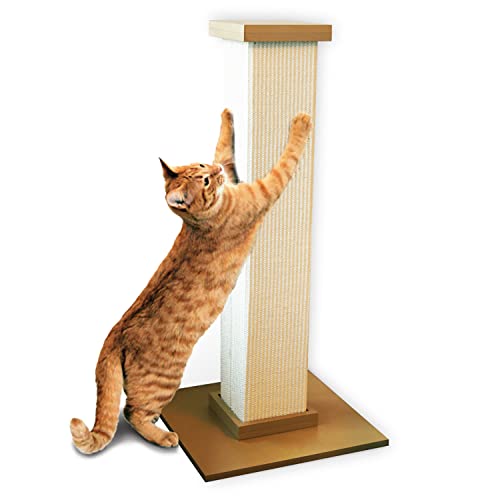
SmartCat Ultimate Scratching Post
Woven sisal fabric wraps a wood core to 32 inches, bolted onto a 16 inch square base. Fabric wears down evenly, while wound rope loosens into loops that cats stop touching. Narrow footprint slots between a bookshelf and a wall in a one-bedroom.
Pros
- Full 32 inch height suits adult cats and large breeds
- Sisal fabric thins out evenly instead of unravelling
- Base fits a 16 inch gap beside a door frame
Cons
- Repositioning it takes two hands
- Carpeted base looks plain in a furnished living room

PetFusion Ultimate Cat Scratcher Lounge
Recycled corrugated cardboard curves into a shallow lounge, so a cat claws the surface then sleeps on it. Both faces work, which roughly doubles the interval before replacement. Weighing a few pounds, it slides across a floor one-handed whenever you rearrange.
Pros
- Flipping the board doubles usable life
- Silent on hardwood during a 3am session
- Moves with one hand
Cons
- Loose cardboard crumbs need weekly vacuuming
- 34 inch length eats floor space in a studio

Necoichi Cozy Cat Scratcher Bowl
Cats sit inside this round cardboard bowl and scratch the curved inner wall. Storage is the trick here, since the bowl collapses flat and slides under a bed. Cats above roughly 15 pounds perch on the rim rather than settling in.
Pros
- Smallest floor footprint in this lineup
- Enclosed shape suits cats that like to curl up
- Two pounds, so a child can carry it
Cons
- Cramped for cats over about 15 pounds
- No vertical surface for upright scratchers

Amazon Basics Cat Scratching Post with Hanging Ball
Sisal rope wraps a carpeted post about 16 inches tall, topped by a dangling ball. That height works as a second scratcher near a couch, not as the only one in the home. Rope frays into loops sooner than woven fabric, the trade at this tier.
Pros
- Light enough for a child to carry
- Fits a hallway corner or a gap beside a bed
- Hanging ball draws kittens onto the post
Cons
- Too short for an adult cat to stretch fully
- Rope loosens after a few months of heavy use

Catit Style Scratcher Bench
Bench shape pairs a flat cardboard panel with a raised back, covering cats that switch between angles. Push it against the sofa side taking damage and the habit moves without adding a tall post. Catit sells replacement inserts, so the plastic frame stays in service.
Pros
- Two scratching angles inside one footprint
- Insert swaps out instead of the whole unit
- Sits flush against a wall or sofa side
Cons
- Light frame slides on tile and laminate
- Refill inserts become a recurring purchase

Petstages Easy Life Hammock, Scratcher and Hideaway
One frame stacks a fabric hammock over a covered hideaway, with a cardboard scratch panel built in. Consolidation is the point when three separate cat items will not fit a 400 square foot flat. Tubing is light, so cats past roughly 15 pounds flex the frame on landing.
Pros
- Replaces three items inside a 21 by 16 inch footprint
- Covered hideaway suits cats spooked by hallway noise
- Shifts between rooms with one hand
Cons
- Frame flexes under cats above about 15 pounds
- Hammock fabric needs regular washing

Trixie Mijas Scratching Post
Under 20 inches tall, this sisal post stands on a plush platform with a pompom hanging off the top. Low weight makes it easy to carry into a bedroom or beside a carrier. Kittens outgrow the height within a year, so treat it as a starter or a second post.
Pros
- Carries one-handed between rooms
- Plush platform gives kittens a nap spot after play
- Fits a bedroom corner under a window
Cons
- Adult cats cannot reach a full stretch on it
- Base can tip when a cat lunges at the pompom
Side by side
| # | Model | Height | Best for | Score | Price |
|---|---|---|---|---|---|
| 1 | SmartCat Ultimate Scratching Post | 32 in | Best overall | 9.4 | Check price |
| 2 | PetFusion Ultimate Cat Scratcher Lounge | Recycled corrugated cardboard | Best for cats that scratch flat | 9.2 | Check price |
| 3 | Necoichi Cozy Cat Scratcher Bowl | Corrugated cardboard | Best for studio apartments | 9.0 | Check price |
| 4 | Amazon Basics Cat Scratching Post with Hanging Ball | Around 16 in | Best budget | 8.8 | Check price |
| 5 | Catit Style Scratcher Bench | Cardboard insert in plastic frame | Best for cats that claw furniture corners | 8.6 | Check price |
| 6 | Petstages Easy Life Hammock, Scratcher and Hideaway | Hammock, scratcher, hideaway | Best three-in-one for small rooms | 8.3 | Check price |
| 7 | Trixie Mijas Scratching Post | Under 20 in | Best for kittens | 8.0 | Check price |
Questions worth asking
How tall should a cat scratching post be?
Aim for at least 26 inches so an adult cat can extend both front legs. SmartCat’s post clears that at 32 inches, which covers Maine Coons and other large breeds. Treat anything under 20 inches as a kitten item or a secondary scratcher.
Which cat scratching post is best for a small apartment?
Necoichi’s Cozy Cat Scratcher Bowl takes the least floor space and folds flat between uses. Cats that scratch standing up need height instead. SmartCat delivers 32 inches on a 16 inch base that fits beside most door frames.
Are cardboard cat scratchers worth buying?
For cats that claw flat surfaces, yes. Cardboard stays quiet on hardwood, moves with one hand and replaces easily. Expect crumbs around it and a lifespan counted in months rather than years.
Sisal rope vs sisal fabric: what is the difference?
Rope winds around the post in a spiral and eventually loosens into claw-catching loops. Fabric wraps as a woven sheet and thins out flat. Fabric lasts considerably longer, which is why the SmartCat post uses it and the Amazon Basics post does not.
How do I get my cat to use a new scratching post?
Stand it beside the furniture being damaged, not in a spare corner. Rub catnip into the surface and reward use immediately. Cover the old target with double-sided tape for two weeks. Move the post only a few inches at a time, because bigger jumps reset the habit.
Will a scratching post stop a cat clawing the sofa?
Usually, provided the post matches the cat’s preferred angle and stays in one spot. Owners report the best results when a vertical post and a flat scratcher are both available. Some cats use one for the morning stretch and the other for territory marking.
Do cats prefer vertical or horizontal scratchers?
Preference splits by cat and often by moment. Vertical posts serve the post-nap stretch, while flat scratchers suit cats that dig at rugs and carpet. Watching which surface your cat already ruins is the fastest way to tell.
Can a cat scratching post be moved between rooms easily?
Cardboard lounges and bowl scratchers travel with one hand. Tall sisal posts weigh more by design, since the base has to resist a full-body pull. Where portability matters most, pick a narrow base rather than a light one.
How often do cardboard scratchers need replacing?
Single-cat households typically swap them every two to four months. Two cats roughly halve that. Reversible designs such as the PetFusion lounge stretch the interval by flipping once the first side hollows out.
The verdict
Buy the SmartCat Ultimate Scratching Post first if your cat works upright surfaces, because height is the specification most apartment-sized posts get wrong. Households with a rug-digger should order the PetFusion Ultimate Cat Scratcher Lounge instead and flip it once the first side wears through. Reserve the Necoichi bowl for genuinely tiny studios, where folding a scratcher away before guests arrive outweighs its size limit.
Olivia Hartley
Olivia spent several years working at an animal shelter and a pet-supply retailer before joining the editorial team. She researches pet gear with an emphasis on safety, comfort and the fine print that owners often miss.
