Portable Blower Fans Compared by CFM, Power and Noise
The DEWALT DCE100B leads for cordless jobsite convenience, running off the same 20V batteries as other DEWALT tools. XPOWER’s FC-300 moves the most air for flood and mold cleanup. Lasko’s U15617 covers home and garage use at a lower corded price.
The DEWALT DCE100B runs off the same 20V battery as other DEWALT tools, making it the pick for jobsites without a reliable outlet. Three speed settings cover everything from drying concrete to cooling a work van, though its CFM trails dedicated corded blowers. Restoration crews dealing with standing water need the raw output of the XPOWER FC-300 instead.
CFM printed on the box gets measured in open air, not against the resistance of a hallway or a stacked crawlspace. We compared stated airflow, motor and power type, and owner reports on how each fan performs against real obstructions like doorways and debris.
The shortlist, ranked

DEWALT DCE100B 20V MAX Jobsite Fan
Running off the same 20V battery as other DEWALT tools means no separate charger to carry. Three speed settings shift airflow between drying concrete and cooling a work van. Crews on sites without outlets keep it running alongside their other cordless tools all day.
Pros
- Shares batteries with other DEWALT 20V tools
- Works on sites with no power outlet nearby
- Compact enough to fit in a tool bag
Cons
- Battery and charger sold separately
- Lower CFM than dedicated corded floor fans

XPOWER FC-300 Multi-Purpose Blower Fan
Flood cleanup and mold remediation crews reach for this over a box fan for the airflow alone. A tiltable head aims the stream at floors, walls or ceilings without moving the base. Crews stack several units in larger rooms to cut drying time.
Pros
- Highest airflow output in this lineup
- Tiltable head reaches floors and ceilings alike
- Stacks with other units for faster multi-room drying
Cons
- Louder in operation than household box fans
- Bulkier to store between jobs
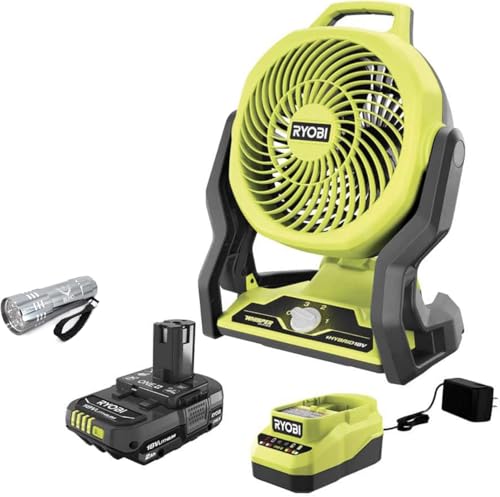
Ryobi P3320 18V ONE+ Hybrid Fan
Switching between an 18V battery and a wall cord means the fan never fully stops mid-task for lack of power. A folding design collapses flat for storage in a truck bed or closet. Owners already in the Ryobi ONE+ ecosystem add it without buying another charger.
Pros
- Runs on battery or AC power without a battery installed
- Folds flat, saving storage space in a truck
- Compatible with the wide Ryobi ONE+ battery lineup
Cons
- AC adapter sold separately in some kits
- Peak airflow trails dedicated blower fans

Lasko U15617 High Velocity Utility Fan
A pivoting head aims air toward a ceiling or straight across a room without extra brackets. Metal blades and housing outlast the plastic construction common at this price. Garages and basements near a wall outlet are where owners run it most.
Pros
- Metal construction holds up to daily use
- Pivoting head directs airflow precisely
- Costs less than cordless alternatives
Cons
- Cord limits placement away from outlets
- No battery option for job sites
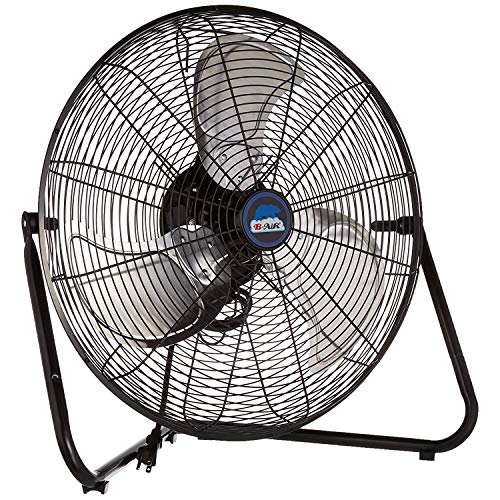
B-Air Firtana 20X Air Circulator Fan
A 20 inch blade circulates air across warehouses and large garages that smaller fans barely reach. Steel housing and an enclosed motor tolerate dusty environments better than household units. Long shifts are where the sealed motor design earns its keep.
Pros
- Enclosed motor tolerates dust and debris
- Large blade covers wide industrial spaces
- Steel housing resists jobsite damage
Cons
- Heavier and less portable than smaller fans
- Overkill for single-room home use

Makita DCF201Z 18V LXT Cordless Fan
A slim profile tucks into a tool bag pocket that bulkier fans cannot fit. Three speeds cover light cooling up through stronger directional airflow. Owners already in the Makita 18V LXT ecosystem add it as a low-cost accessory.
Pros
- Slim shape fits tight storage spaces
- Hanging hook works in vans or on ladders
- Shares batteries with Makita 18V LXT tools
Cons
- Lower airflow than dedicated blower fans
- Battery sold separately

Honeywell HT-900 TurboForce Air Circulator Fan
A pivoting head and small footprint suit tight spots like closets, workbenches or a garage corner. Turbo design concentrates airflow into a stronger stream than its size suggests. Low cost is why owners keep several scattered around the house.
Pros
- Concentrated airflow from a small footprint
- Inexpensive enough to buy multiple units
- Pivoting head reaches tight angles
Cons
- Not built for heavy jobsite dust exposure
- Plastic housing feels less durable than steel rivals
How they stack up
| # | Model | Power source | Best for | Score | Price |
|---|---|---|---|---|---|
| 1 | DEWALT DCE100B 20V MAX Jobsite Fan | 20V MAX battery, sold separately | Best overall | 9.3 | Check price |
| 2 | XPOWER FC-300 Multi-Purpose Blower Fan | Up to 3,344 CFM | Best for restoration work | 9.1 | Check price |
| 3 | Ryobi P3320 18V ONE+ Hybrid Fan | 18V battery or AC adapter, both work standalone | Best hybrid power option | 8.9 | Check price |
| 4 | Lasko U15617 High Velocity Utility Fan | High velocity, 3 speeds | Best value | 8.6 | Check price |
| 5 | B-Air Firtana 20X Air Circulator Fan | 20 inches | Best for large spaces | 8.4 | Check price |
| 6 | Makita DCF201Z 18V LXT Cordless Fan | 18V LXT battery, sold separately | Best for compact storage | 8.2 | Check price |
| 7 | Honeywell HT-900 TurboForce Air Circulator Fan | Compact turbo airflow design | Best budget | 8.0 | Check price |
What matters most
What to look for in a portable blower fan Power source decides where a fan can go, since cordless models run anywhere but on limited battery time. CFM tells you how much air actually moves, not how loud the motor sounds. Housing material matters most on dusty jobsites, where plastic grilles crack faster than metal or enclosed steel bodies. Weigh all three against the environment before comparing extra features.
Best fans for jobsites without a power outlet Cordless models like the DEWALT DCE100B, Ryobi P3320 and Makita DCF201Z solve the outlet problem by sharing batteries with other cordless tools already on the truck. Hybrid units like the Ryobi add an AC option for when a plug happens to be available. Battery runtime shrinks fastest on the highest speed setting, so budget power accordingly for a full shift.
Best fans for flood, mold and restoration jobs Restoration work needs raw CFM more than portability, which is where the XPOWER FC-300 and B-Air Firtana 20X outperform smaller cordless units. Stacking several high-output fans around a room cuts drying time compared to running just one. Enclosed motors on industrial models also resist the moisture these jobs create.
Best fans for home and garage use A household garage or basement rarely needs industrial CFM, so a corded floor fan like the Lasko U15617 or a compact unit like the Honeywell HT-900 covers most needs at a lower price. Pivoting heads let one fan double for cooling a workbench and clearing fumes from a project. Save the higher-output industrial models for actual water damage or large open spaces.
Questions worth asking
What CFM is good for a portable blower fan?
Household cooling and drying tasks work fine around 1,000 to 2,000 CFM. Flood and mold restoration jobs benefit from 3,000 CFM or more, which is why the XPOWER FC-300 rates higher than typical utility fans.
Are cordless blower fans as powerful as corded ones?
Generally no. Battery-powered fans like the DEWALT DCE100B prioritize portability over peak airflow, so a corded industrial fan outmoves them at full speed. Cordless wins when no outlet exists at all.
Can a portable blower fan dry out a flooded room?
It helps significantly alongside a dehumidifier, since the fan moves moist air away from wet surfaces faster than it evaporates on its own. High CFM models built for restoration, like the XPOWER FC-300, are designed for exactly this.
How long does a battery last in a cordless jobsite fan?
Runtime depends on the battery’s amp hour rating and the speed used. A larger battery on a low setting can run for several hours, while a smaller one on high speed may last one.
Metal or plastic housing: which holds up better on a jobsite?
Metal housing, like on the Lasko U15617 and B-Air Firtana 20X, survives drops and dust better than plastic. Plastic housings stay lighter and work fine for occasional home use.
Can these fans handle dusty or wet environments?
Enclosed motor designs, common on industrial models like the B-Air Firtana 20X, tolerate dust and moisture far better than open motor housings on household fans.
What is the difference between a blower fan and a regular box fan?
Blower fans use a more powerful motor and a tiltable or pivoting head to aim air at a specific target, like a wet floor or a hot attic corner. Box fans move air broadly without that directional focus.
Do jobsite fans share batteries with other cordless tools?
Yes. Brand-specific models like the DEWALT DCE100B, Ryobi P3320 and Makita DCF201Z run on the same battery platform as drills and saws from that brand, so no separate charger is needed.
Is a hybrid battery-or-AC fan worth it over a pure cordless model?
For most crews, yes, since the Ryobi P3320 keeps running on wall power once a battery runs low, avoiding downtime a pure cordless fan can’t dodge.
The bottom line
Anyone stocking a truck without daily outlet access should buy the DEWALT DCE100B, since it runs on batteries already in the toolbox. Standing water or mold calls for the raw CFM of the XPOWER FC-300 instead. Homeowners just cooling a garage or drying a small area do fine with the corded, lower-cost Lasko U15617.
Jake Monroe
Jake worked as a residential contractor for over a decade before shifting to full-time writing. He evaluates power tools, hand tools and workshop gear through the lens of someone who has actually used them on job sites, not just read the box.