Which polymer clay holds detail and survives a drop
Sculpey Premo handles the widest range of work, curing firm with enough flex for thin earrings at 275F. Fimo Professional suits caning, thanks to a stiff body and a repeatable mixing system. Sculpey III stays soft in the pack, which helps children and first projects.
Sculpey Premo fits most makers, from earring blanks to palm sized sculptures, since it cures hard enough to survive a drop and still takes fine texture. Conditioning is the cost, and a pasta machine saves your hands.
Packaging rarely mentions what actually decides a project: bake temperature, flexibility after curing, and how fast clay softens in warm hands. We compared manufacturer bake instructions, cured properties and block formats across the seven. Long running maker feedback on cracking, breakage and color shift settled the close calls.
The shortlist, ranked

Sculpey Premo Polymer Clay Multipack
Cured Premo keeps a little flex, so a thin earring blank bends rather than snapping. Bake at 275F for 15 minutes per quarter inch of thickness. Its palette covers mixing primaries plus metallic and translucent shades for layered work.
Pros
- Fine texture survives curing
- Thin jewelry pieces resist snapping
- Metallics and translucents in the same line
Cons
- Firm from the pack and slow to condition
- Pale shades attract lint while you work
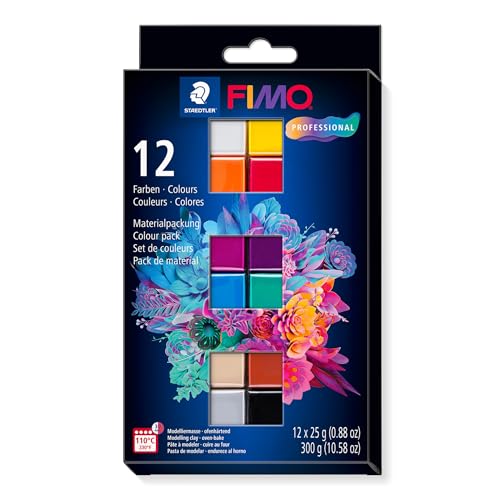
Staedtler Fimo Professional Polymer Clay
A stiff, low tack body resists fingerprints and smudging through long sculpting sessions. True Colours blocks follow a documented mixing system, so a recipe repeats exactly months later. Cure at 230F for 30 minutes, lower than any Sculpey line here.
Pros
- Sharp edges stay sharp through handling
- Mixing recipes repeat batch to batch
- Cane slices come off clean
Cons
- Hand conditioning takes real effort
- Novelty and effect colors are limited

Sculpey Souffle Polymer Clay
Souffle bakes to a suede like matte surface that hides fingerprints without sanding. Density sits below standard clay, so oversized statement earrings stay light on the ear. Bake at 275F for 30 minutes per quarter inch.
Pros
- Stays flexible after curing
- Conditions with light kneading
- Matte finish skips the sanding step
Cons
- Scuffs show up on dark shades
- Carved detail softens at the edges

Sculpey III Polymer Clay Multipack
Straight from the wrapper, Sculpey III takes a thumbprint with almost no kneading. That softness suits children, classrooms and a first attempt at a shape. Thin cured sections stay brittle, so build walls thick and bake at 275F for 15 minutes per quarter inch.
Pros
- Shapeable with no conditioning
- Manageable for young makers
- Sold in large color assortments
Cons
- Thin baked pieces snap easily
- Too soft for clean cane slices
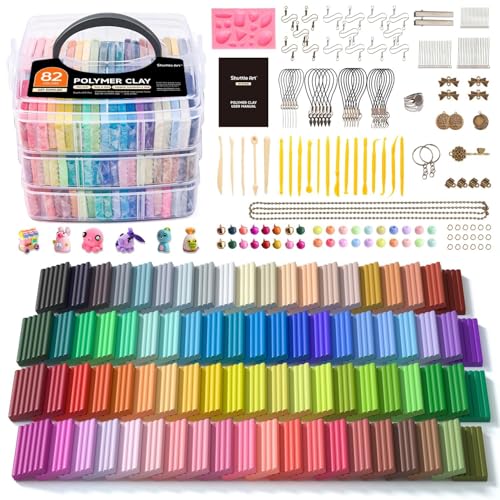
Shuttle Art Polymer Clay Kit
Fifty small blocks arrive with sculpting tools and accessories, so a first setup needs nothing else. Block size points this at charms, earrings and test tiles rather than busts. Bake at 275F following the sheet in the box.
Pros
- Fifty shades with no mixing needed
- Tools included for a first project
- Non toxic formulation
Cons
- Blocks are small for larger sculpts
- Shades drift slightly between batches

Kato Polyclay
Under a tissue blade, Kato holds its cross section instead of squashing, which is why cane makers stay loyal. Cured strength ranks among the highest here, and the surface buffs to gloss with no varnish. Bake at 300F for 10 minutes.
Pros
- Cane patterns stay undistorted
- High strength in thin sections
- Shines without a sealer
Cons
- Conditioning is hard work
- Baking gives off a noticeable odour

Original Sculpey
Large white and terracotta blocks make this the practice clay, or the skin over a foil armature. Cured pieces stay chalky and brittle, which rules out jewelry and thin limbs. Bake at 275F for 15 minutes per quarter inch.
Pros
- Bulk volume for practice forms
- Takes acrylic paint without priming
- Soft enough to shape immediately
Cons
- Brittle and chalky once cured
- Two colors only
How they stack up
| # | Model | Bake temperature | Best for | Score | Price |
|---|---|---|---|---|---|
| 1 | Sculpey Premo Polymer Clay Multipack | 275F | Best overall | 9.4 | Check price |
| 2 | Staedtler Fimo Professional Polymer Clay | 230F | Best for detail work | 9.1 | Check price |
| 3 | Sculpey Souffle Polymer Clay | 275F | Best for lightweight jewelry | 8.9 | Check price |
| 4 | Sculpey III Polymer Clay Multipack | 275F | Best for beginners | 8.7 | Check price |
| 5 | Shuttle Art Polymer Clay Kit | 50 blocks | Best value | 8.5 | Check price |
| 6 | Kato Polyclay | 300F | Best for caning | 8.2 | Check price |
| 7 | Original Sculpey | 275F | Best budget | 8.0 | Check price |
Before you buy
What to look for in polymer clay Cured strength decides what you can make. Premo and Kato hold together in thin sections that crack in Sculpey III or Original Sculpey. Bake temperature comes next, and it varies more than most people expect: 230F for Fimo Professional, 275F across the Sculpey range, 300F for Kato. Conditioning effort shapes your daily routine, since firm clays want a pasta machine while soft clays need a minute of kneading. Format matters too, because small blocks suit charms and large blocks feed a sculpture.
Best polymer clay for earrings and jewelry Flexibility protects thin work. Premo and Souffle both bend when an earring hits the floor, while Original Sculpey usually breaks. Souffle weighs less, which keeps large statement shapes comfortable through a full day. Premo takes a glossy finish and crisper edges, so choose by finish once strength is settled. Roll blanks to roughly 2 to 3mm and bake them on a ceramic tile for a flat back.
Clay for canes, sculpting and fine detail Stiff bodies keep an edge under a blade. Kato Polyclay and Fimo Professional both slice without smearing, so a reduced cane keeps its pattern down to the last few millimetres. Armature work wants firm clay for the same reason, because soft clay sags before the oven door closes. Chill a finished cane for twenty minutes before slicing. Keep a cool tile on the bench if your hands run warm.
Beginners, kids and bulk practice Forgiveness beats strength while you are learning. Sculpey III and the Shuttle Art kit soften in seconds and survive rough handling. Work through shapes in a large Original Sculpey block first, then switch to Premo once a design is settled. An oven thermometer is the accessory worth getting early, since home ovens overshoot the dial and scorch clay. Keep clay tools separate from kitchen tools, and never use a microwave.
Questions worth asking
Which polymer clay is strongest after baking?
Kato Polyclay and Sculpey Premo lead on cured strength. Both hold together in thin sections where Sculpey III snaps.
What temperature do you bake polymer clay at?
Follow the brand rather than a general rule. Fimo Professional cures at 230F, every Sculpey line here at 275F, and Kato at 300F.
Can you mix different polymer clay brands together?
Yes, within a single piece. Bake the blend at the lower of the two temperatures and expect a consistency somewhere between them.
Is polymer clay safe for kids to use?
Major brands carry non toxic certification. An adult should run the oven, and clay must never go in a microwave.
Why did my polymer clay crack after baking?
Under conditioning, trapped air and a cool oven cause most cracks. Knead until a strip bends without tearing, then check the oven with a separate thermometer.
Fimo vs Sculpey: which is better for beginners?
Sculpey, since Premo and Sculpey III soften faster in the hands. Fimo Professional rewards patience with sharper edges and repeatable color recipes.
Does polymer clay need to be sealed?
Not for durability. Sealing changes appearance only, and Kato buffs to a gloss with nothing on top.
What is the best polymer clay for earrings?
Souffle for lightweight matte pieces. Premo when you want firmer edges and a glossy surface.
How long does polymer clay last in the packet?
Sealed blocks keep for years away from heat and direct sunlight. Partly used clay stiffens, though kneading or a little clay softener brings it back.
Our pick
Sculpey Premo wins on range, pairing cured strength with detail retention and a palette that mixes predictably. Pattern makers who slice canes should absorb the extra conditioning work and buy Kato Polyclay, which holds its cross section under a blade. Teaching a child or shaping a first figure calls for Sculpey III instead.
Jake Monroe
Jake worked as a residential contractor for over a decade before shifting to full-time writing. He evaluates power tools, hand tools and workshop gear through the lens of someone who has actually used them on job sites, not just read the box.