Pocket Levels Small Enough For A Tool Belt Pouch
The Stanley Pocket Level leads this group with shock-absorbing end caps and reliable vial accuracy for everyday small checks. Empire’s magnetic version suits mounting on steel surfaces hands-free, and the Craftsman Pocket Level covers basic needs at the lowest cost here.
The Stanley Pocket Level is the strongest all-around pick for everyday small jobs like hanging shelves, checking outlet boxes, or leveling picture frames. Shock-absorbing end caps protect the vials from the drops a pocket tool inevitably takes, and the body stays accurate after repeated use. It lacks a magnetic base, so steel surfaces still need a free hand to hold it steady.
A pocket level only earns a spot on a belt if its vial reads true and stays that way after it gets knocked around in a pouch. We compared vial accuracy, magnetic mounting, and how durable each body felt after simulated daily handling.
What matters most
What a pocket level is for A pocket level checks small surfaces, like outlet boxes, shelf brackets, or picture frames, where a standard 2 to 4 foot level would be clumsy or simply would not fit. Accuracy depends on the vial itself and how well the body resists warping after drops or temperature changes. Most pocket levels run 8 to 9 inches long, long enough for a stable reading without the bulk.
Magnetic versus non-magnetic mounting A magnetic level, like Empire’s or Klein Tools’ model, sticks to steel studs, conduit, or appliance frames, freeing both hands for marking or adjusting. A non-magnetic level, such as Stanley’s or Swanson’s, works on any surface but needs a hand to hold it steady during the reading. Electricians and metal-stud framers tend to value the magnetic option most.
Two vials versus three vials A two-vial level covers standard level and plumb checks, enough for most household and cabinetry tasks. A three-vial level, like the Empire, Klein Tools, or Craftsman model, adds a 45-degree vial useful for angled bracing or diagonal bracket installs. The extra vial rarely adds bulk, so it is a low-cost feature to look for.
Durability for a tool belt versus a drawer A level that lives in a tool belt pouch, like Stanley’s with its shock-absorbing caps, needs to survive repeated drops without losing accuracy. A level kept mostly in a drawer for occasional household use, such as Swanson’s or Craftsman’s, faces less abuse and can prioritize a lower price over ruggedness.
The best picks, ranked

Stanley Pocket Level
Stanley caps both ends of this level with a shock-absorbing material that cushions drops without throwing off the internal vial alignment. The aluminum body stays light enough for all-day belt carry while remaining stiff enough to give a true reading against most surfaces. General contractors and DIYers checking small installs reach for this one most often.
Pros
- Shock-absorbing caps protect vial accuracy
- Lightweight enough for all-day belt carry
- Reads accurately on both level and plumb checks
Cons
- No magnetic base for hands-free mounting
- Only two vials limits angled readings

Empire Magnetic Pocket Torpedo Level
Empire embeds rare-earth magnets along the base of this level, letting it stick to steel studs, conduit, or appliance frames without needing a hand to hold it in place. That frees both hands for marking or adjusting while the level stays put. Electricians and metal-stud framers benefit most from the hands-free mounting.
Pros
- Magnets hold the level steady on steel surfaces
- Three vials cover level, plumb, and 45-degree checks
- Frees both hands for marking or adjusting
Cons
- Magnets add no benefit on wood or drywall surfaces
- Slightly heavier than non-magnetic pocket levels
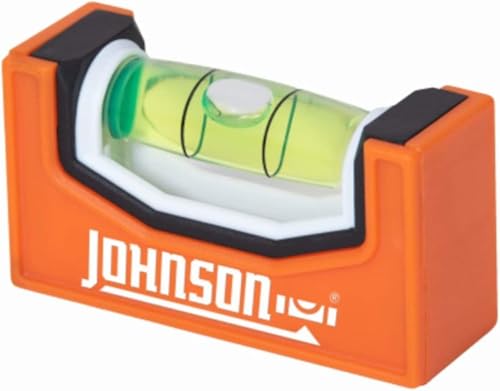
Johnson Level Pocket Level
Johnson Level shapes the vials on this model with a magnified, high-visibility lens that makes small deviations easier to spot at a glance. The accuracy rating beats basic pocket levels, which matters when leveling cabinetry or trim where small errors show. The tradeoff is a slightly more delicate vial housing than rugged job site levels.
Pros
- Magnified vials make small deviations easy to spot
- Tighter accuracy rating than basic pocket levels
- Comfortable grip for extended one-handed use
Cons
- Vial housing feels more delicate than rugged models
- No magnetic base included

Klein Tools Pocket Level
Klein Tools builds this level with electricians in mind, pairing a torpedo shape with a magnetic strip sized for mounting junction boxes and conduit runs. The rugged housing survives the drops common when working from a ladder. Electrical contractors checking box and panel alignment get a tool purpose-built for that specific daily task.
Pros
- Magnetic strip suits junction box and conduit mounting
- Rugged housing survives ladder-height drops
- Torpedo shape fits easily in a tool pouch
Cons
- Vial accuracy trails premium woodworking-focused levels
- Polymer body feels less premium than aluminum

Swanson Pocket Level
Swanson keeps this level’s aluminum body simple and compact, delivering dependable basic accuracy at a moderate price. Two standard vials cover level and plumb checks for most household tasks. Buyers wanting a solid everyday level without premium features get reliable performance here.
Pros
- Reliable basic accuracy for the price
- Compact aluminum body resists bending
- Covers both level and plumb checks
Cons
- No magnetic base or extra vial options
- Basic feature set compared to pricier models

General Tools Pocket Level
General Tools slims this level’s profile down further than most pocket models, letting it slide into corners and tight gaps a thicker level cannot reach. The reduced body size sacrifices a bit of vial length, which can make fine readings slightly harder to judge. Cabinet installers working in tight reveals and corners benefit from the slim shape.
Pros
- Slim profile fits tight corners and gaps easily
- Lightweight for extended one-handed checks
- Compact enough for a small tool pouch
Cons
- Shorter vial length makes fine reads slightly harder
- No magnetic mounting option

Craftsman Pocket Level
Craftsman covers the basics with this level, including three vials for level, plumb, and 45-degree checks at the lowest price in this group. The build quality trails premium brands but holds up fine for occasional household use. Buyers who just need a reliable backup level get solid value without a big spend.
Pros
- Lowest price point among levels compared here
- Three vials cover common angle checks
- Compact size suits occasional household use
Cons
- Build quality trails premium pocket levels
- No magnetic base or shock-absorbing caps
How they compare
| # | Model | Length | Best for | Score | Price |
|---|---|---|---|---|---|
| 1 | Stanley Pocket Level | 9 inches | Best overall pocket level | 9.0 | Check price |
| 2 | Empire Magnetic Pocket Torpedo Level | 9 inches | Best for mounting on steel surfaces | 8.8 | Check price |
| 3 | Johnson Level Pocket Level | 9 inches | Best for precise vial accuracy | 8.6 | Check price |
| 4 | Klein Tools Pocket Level | 9 inches | Best for electricians | 8.5 | Check price |
| 5 | Swanson Pocket Level | 9 inches | Best value pick | 8.4 | Check price |
| 6 | General Tools Pocket Level | 8 inches | Best for tight-corner access | 8.3 | Check price |
| 7 | Craftsman Pocket Level | 9 inches | Best budget pick | 8.0 | Check price |
Questions worth asking
How accurate is a pocket level compared to a full-size one?
A quality pocket level, like Johnson Level’s, reads just as accurately as a full-size level since the vial technology is the same, only the body length differs.
Can a pocket level check both level and plumb?
Yes, as long as it has at least two vials positioned for horizontal and vertical checks, which all the models in this comparison include.
Is a magnetic pocket level worth the extra cost?
If you frequently work on steel studs, conduit, or appliances, yes. On wood or drywall, the magnet adds no functional benefit.
Do pocket levels lose accuracy after being dropped?
They can, especially cheaper models without shock protection. Levels with shock-absorbing end caps, like Stanley’s, hold calibration better after drops.
What length counts as a pocket level?
Most pocket levels run 8 to 9 inches, short enough to fit a tool pouch or back pocket while still giving a stable reading.
Can a pocket level replace a laser level?
For small, close-range checks, yes. A laser level is still better for projecting a line across a longer distance or an entire wall.
Do three-vial pocket levels cost much more than two-vial ones?
Generally only slightly more, since adding a 45-degree vial does not significantly increase manufacturing cost.
How do I check if my pocket level is still accurate?
Place it on a known flat surface, read it, then flip it end for end on the same spot. A true level should read the same both ways.
The bottom line
The Stanley Pocket Level is the best overall choice for most toolboxes, since its shock-absorbing caps keep it accurate through the bumps a belt tool takes daily. Electricians working around steel boxes and conduit should pick the Empire Magnetic Pocket Torpedo Level instead, since hands-free mounting speeds up repetitive checks. Buyers who just need an occasional backup level get the best value from the Craftsman Pocket Level.
Jake Monroe
Jake worked as a residential contractor for over a decade before shifting to full-time writing. He evaluates power tools, hand tools and workshop gear through the lens of someone who has actually used them on job sites, not just read the box.