Plant Frost Covers for Protecting Gardens Through Cold Nights
Agfabric’s floating row cover leads this list for covering whole garden beds ahead of a frost warning. Dalen’s Gardeneer Frost Protek bags suit individual shrubs and potted plants better than a wide sheet. Agribon’s AG-30 cloth works as a lighter option for mild, short frost events.
Agfabric’s floating row cover is the best overall pick for protecting a vegetable bed or row of plants, since its lightweight fabric drapes directly over foliage without crushing stems, and it still lets light and water through during the day. It covers a wide area rather than a single plant, so anyone protecting a few potted shrubs should choose Dalen’s Gardeneer bags instead.
Frost covers differ mainly in whether they drape over a bed as a sheet, wrap around a single plant as a bag, or hold a fixed dome shape above low crops. We compared fabric weight, coverage style and how many seasons each cover typically survives across seven options.
The shortlist, ranked
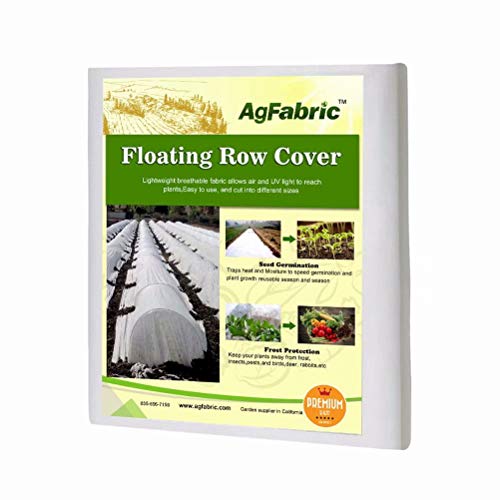
Agfabric Floating Row Cover
Agfabric weaves this cover from a lightweight, permeable fabric that lets light, air and water pass through while still trapping enough warmth to protect plants from a light frost. The wide sheet drapes directly over a row of vegetables or flower beds, held down at the edges with soil, rocks or pins. Its woven structure allows it to double as season-extension cover beyond frost events.
Pros
- Lets light and water through without removal
- Wide coverage protects an entire row at once
- Doubles as general season-extension cover
Cons
- Needs pins or weights to hold edges down in wind
- Less effective than a heavier blanket during a hard freeze
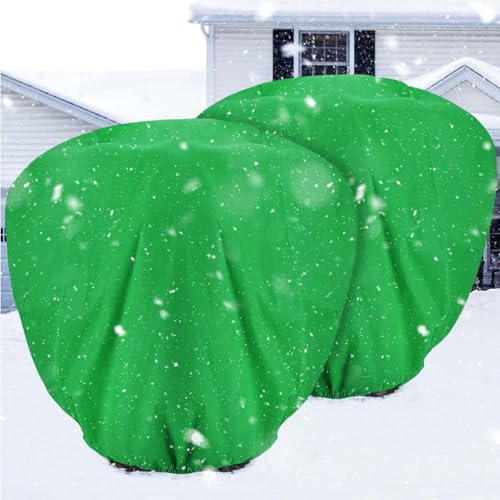
Dalen Gardeneer Frost Protek Plant Cover Bags
Dalen shapes these covers as drawstring bags rather than flat sheets, fitting snugly around a single shrub or potted plant. The drawstring cinches at the base, sealing in warmth better than a draped sheet that can slip off in wind. Bag-style covers suit an individual specimen plant more than a long garden row.
Pros
- Drawstring base seals in warmth better than a loose sheet
- Snug fit resists slipping off in wind
- Suits individual specimen plants well
Cons
- Not practical for covering a long row of plants
- Sizing needs to roughly match the plant’s shape

Agribon AG-30 Frost Cloth
Agribon weaves this cloth lighter than heavier frost blankets, trading some cold protection for better light transmission underneath. It suits a mild frost warning more than a hard freeze, since the thinner fabric holds in less heat overall. The lighter weight also makes it easier to drape over taller plants without crushing them.
Pros
- Lighter weight is easier to drape over taller plants
- Higher light transmission suits extended daytime covering
- Lower cost than heavier frost blankets
Cons
- Less heat retention than a heavier blanket during a hard freeze
- Thinner fabric tears more easily if snagged

Levin Plant Covers Freeze Protection Bags
Levin sells these as a multi-pack of drawstring bags sized for potted plants rather than in-ground shrubs. Each bag cinches closed at the base around a pot’s rim, which holds the cover in place better than draping fabric over an unanchored container. The multi-pack covers several potted plants in one purchase.
Pros
- Multi-pack covers several potted plants at once
- Drawstring cinches around a pot rim for a secure fit
- Lightweight enough to store easily off-season
Cons
- Sizing suits pots better than irregular in-ground shrubs
- Thinner fabric than heavy-duty reusable blankets

Gardzen Plant Covers for Winter Frost Protection
Gardzen prices this multi-pack of frost covers lower than premium reusable blankets, suiting a gardener who needs to cover several beds or plants without a large upfront cost. The fabric still blocks frost for a single cold night, though it is not built for repeated seasons of heavy use. Elastic or drawstring closures vary by size within the pack.
Pros
- Lower cost per cover than premium reusable options
- Multi-pack suits covering several plants or beds
- Lightweight fabric is easy to store
Cons
- Not built for many repeated seasons of heavy use
- Thinner fabric than Singhal’s reusable blanket

Singhal Reusable Frost Blanket
Singhal weaves this blanket from a heavier fabric than disposable frost covers, built to survive multiple seasons of folding, storage and reuse. The added weight holds in more warmth during a harder freeze than lightweight row cover fabric. A tighter weave also blocks more wind than thinner, more breathable options.
Pros
- Heavier weave holds in more warmth during a hard freeze
- Built to survive multiple seasons of reuse
- Blocks more wind than lightweight covers
Cons
- Heavier fabric is bulkier to store off-season
- Lower light transmission than lightweight grades like Agribon’s
Quictent Pop-Up Plant Cover Cloche
Quictent holds its shape with a built-in frame rather than relying on the plant itself to support the fabric. The dome sits over low crops like lettuce or strawberries without resting weight directly on the leaves. A zippered or Velcro opening allows access for watering without fully removing the cover.
Pros
- Frame keeps fabric off delicate leaves and stems
- Zippered access allows watering without full removal
- Pop-up design folds flat for storage
Cons
- Fixed dome size limits use to low-growing crops
- Frame adds cost compared to a simple fabric sheet
How they stack up
| # | Model | Material | Best for | Score | Price |
|---|---|---|---|---|---|
| 1 | Agfabric Floating Row Cover | Spun polypropylene fabric | Best overall | 9.0 | Check price |
| 2 | Dalen Gardeneer Frost Protek Plant Cover Bags | Drawstring bag | Best for individual plants and shrubs | 8.5 | Check price |
| 3 | Agribon AG-30 Frost Cloth | Lightweight grade | Best lightweight option for mild, short frost events | 8.3 | Check price |
| 4 | Levin Plant Covers Freeze Protection Bags | Drawstring bag, multi-pack | Best drawstring bags for potted plants | 8.1 | Check price |
| 5 | Gardzen Plant Covers for Winter Frost Protection | Multiple covers | Best multi-pack budget option | 7.9 | Check price |
| 6 | Singhal Reusable Frost Blanket | Heavy-duty grade | Best reusable heavy-duty blanket | 8.6 | Check price |
| 7 | Quictent Pop-Up Plant Cover Cloche | Frame-supported dome | Best structured dome cover for low crops | 8.4 | Check price |
What matters most
What a Frost Cover Actually Does A frost cover like Agfabric’s traps a thin layer of warmer air near the plant overnight, buying a few degrees of protection rather than fully blocking cold. None of these covers prevent damage during a hard, prolonged freeze without additional heat sources.
Sheets, Bags and Domes for Different Plant Shapes A flat sheet like Agfabric’s or Agribon’s suits a row of similarly sized plants, while a drawstring bag like Dalen’s or Levin’s fits a single shrub or potted plant more snugly. Quictent’s framed dome works best for low, spreading crops that a draped sheet would crush.
Lightweight Versus Heavy-Duty Fabric Agribon’s lightweight cloth lets more light through for extended daytime covering during a mild cold spell, while Singhal’s heavier blanket holds in more warmth during a harder freeze at the cost of blocking more light. Gardzen’s budget multi-pack sits closer to the lightweight end.
Reusability Across Multiple Seasons Singhal’s heavy-duty blanket and Quictent’s framed cloche are built to fold, store and reuse across several winters, while Gardzen’s and Levin’s budget covers trade some durability for a lower price per cover. A gardener covering the same beds every winter gets more long-term value from a reusable option.
Common questions
How many degrees of protection does a frost cover provide?
Most fabric covers, including Agfabric’s and Agribon’s, typically add a few degrees of protection, enough for a light frost but not a hard, extended freeze.
Can a frost cover stay on a plant during the day?
Lighter, more permeable fabrics like Agfabric’s and Agribon’s can stay on during the day since they let light through, while heavier blankets like Singhal’s are usually removed once temperatures rise.
Do frost cover bags fit any size of potted plant?
Bag-style covers like Dalen’s and Levin’s come in a few sizes, so matching the bag to the pot or shrub’s dimensions matters more than with an adjustable flat sheet.
Is a heavier frost blanket always better protection?
A heavier blanket like Singhal’s holds in more warmth during a hard freeze, but it blocks more light, so leaving it on too long during the day can stress the plant.
Can a frost cover be reused next winter?
Reusable options like Singhal’s blanket and Quictent’s cloche are built for multiple seasons, while lighter budget covers like Gardzen’s may not hold up as long.
Do framed cloches work for taller plants?
Quictent’s dome is sized for low crops like lettuce or strawberries and will not fit over taller plants the way a draped sheet can.
What holds a floating row cover in place during wind?
Agfabric’s cover typically needs pins, rocks or soil piled along the edges to keep wind from lifting it off the bed.
Should frost covers touch the plant’s leaves directly?
Direct contact is generally fine with lightweight fabric, but a framed option like Quictent’s keeps fabric off delicate leaves entirely, which some growers prefer.
Can one frost cover work for both beds and potted plants?
Not well. A flat sheet like Agfabric’s suits beds and rows, while a drawstring bag like Dalen’s or Levin’s fits potted plants and individual shrubs more securely.
The bottom line
Agfabric’s floating row cover is the most versatile pick for protecting a vegetable bed or row of plants through a light frost, since it drapes widely and still allows light and water through during the day. A gardener protecting a few potted shrubs or specimen plants should choose Dalen’s Gardeneer Frost Protek bags instead, since a draped sheet rarely seals as snugly around an individual container.
Sierra Daniels
Sierra's background is in landscape design and nursery retail. She focuses on lawn and garden equipment, outdoor furniture and gear durability, weighing published specs against how materials actually hold up outside.


