Planers That Tame Rough Lumber for Every Workshop
For most woodworkers, the DEWALT DW735X stands out as the top pick due to its powerful 15 amp motor and three-knife cutterhead, delivering smooth finishes on wide boards. Its main limitation is its weight and price, which may be overkill for occasional DIYers. For those on a budget, the WEN 6552 offers a compact and affordable option with surprising accuracy for light duty jobs.
A planer is an essential tool for any woodworker who wants to turn rough, uneven lumber into flat, smooth boards. Whether you are reclaiming old wood, dimensioning stock for furniture, or just cleaning up edges, the right planer saves time and effort.
We compared seven top-selling planers on the market, focusing on power, cutting width, portability, and ease of use. Our selection includes benchtop thickness planers for heavy duty work and handheld electric planers for quick tasks. Each product has been evaluated based on owner reports and technical specifications to help you choose the best tool for your shop.
How to choose
The best picks, ranked

DEWALT 13 Inch Thickness Planer with Three Knife Cutterhead (DW735X)
This benchtop planer is a favorite among professionals and hobbyists alike. Its 15 amp motor and three knife cutterhead provide a smooth finish and rapid stock removal. The DW735X includes an extra set of knives and a stand, making it a complete package for the workshop.
Pros
- Powerful motor handles hardwoods without bogging down
- Three knife cutterhead gives a clean finish
- Includes a stand and extra knives for convenience
Cons
- Heavy and bulky, requires dedicated space
- Higher price point compared to other benchtop planers

WEN 6552 13 Inch Two Speed Benchtop Thickness Planer
The WEN 6552 offers a 15 amp motor and a two speed gearbox for different finishing needs. It comes with a spiral cutterhead? Actually, it has a straight knife cutterhead but with two knives. It is an affordable option that delivers accurate results for the price.
Pros
- Very affordable for a 13 inch planer
- Two speed options allow for rough or finish cuts
- Built in dust port helps with cleanup
Cons
- Knives may dull faster than spiral heads
- Some users report snipe on board ends

CRAFTSMAN 13 Amp 12 Inch Portable Thickness Planer (CMEW020)
This Craftsman planer is lightweight at just 62 pounds, making it easier to move around. It has a 13 amp motor and a two knife cutterhead. It is a solid choice for those who need to take their planer to different sites or have limited bench space.
Pros
- Lighter than many benchtop models, easy to transport
- Priced reasonably for the features
- Easy to adjust and set up
Cons
- Less powerful than 15 amp models
- No stand included, must be placed on a workbench
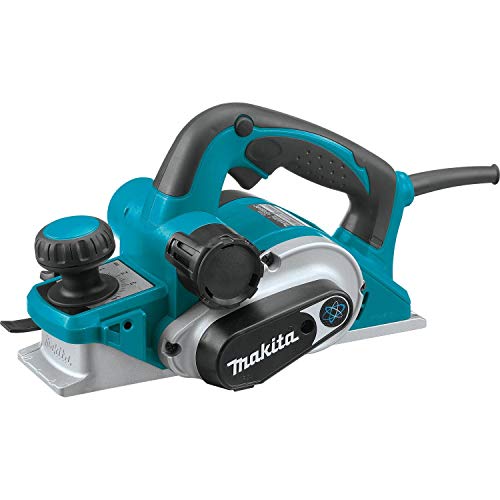
Makita 6-1/4 Inch Hand Planer (KP0810)
The Makita KP0810 is a powerful handheld planer with a 10.5 amp motor. It is designed for trimming and smoothing edges, and its double edged blades provide long life. It has a reversible shoe for beveling and chamfering.
Pros
- Strong motor for a handheld unit
- Precise adjustments for depth and bevel
- Dust bag included for cleaner operation
Cons
- Handheld use requires skill to maintain flatness
- Not for planing wide boards

PORTER-CABLE 6 Amp Handheld Planer (PC60THP)
This Porter-Cable planer is compact and easy to handle, weighing only 6.2 pounds. It has a 6 amp motor, which is sufficient for softwoods and occasional use. It is a great choice for DIYers who need to trim doors or smooth small surfaces.
Pros
- Very lightweight and manageable
- Affordable price for basic planing
- Adjustable depth knob for precise cuts
Cons
- Not powerful enough for hardwoods
- Dust collection is not very effective
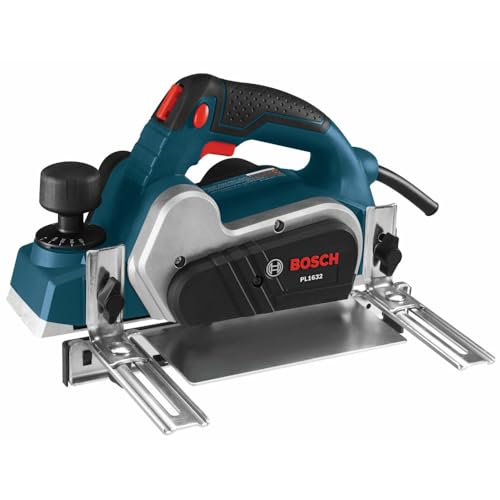
BOSCH 6.5 Amp Corded Hand Planer (PL1632)
The Bosch PL1632 features a 6.5 amp motor and a unique dual edge guide for precise chamfering. Its micro-adjustable depth control allows for very fine cut adjustments. It is a favorite for finish work and cabinetry.
Pros
- Micro-adjustment allows for extremely fine cuts
- Powerful for its size
- Durable construction from a trusted brand
Cons
- Blade change requires a wrench
- Slightly heavier than some competitors

DEWALT 12-1/2 Inch Three Knife Benchtop Planer (DW734)
The DW734 is a smaller sibling to the DW735X, offering a 12-1/2 inch cutting width and a 15 amp motor. It uses a three knife cutterhead for smooth results. It is a solid mid range option that does not break the bank.
Pros
- Powerful motor at a lower price than DW735X
- Three knife design provides clean cuts
- Folding tables save space
Cons
- No stand included
- Some users report snipe if not adjusted properly
Compared at a glance
| # | Model | Motor | Best for | Score | Price |
|---|---|---|---|---|---|
| 1 | DEWALT 13 Inch Thickness Planer with Three Knife Cutterhead (DW735X) | 15 Amp | Best overall for serious woodworkers | 9.4 | Check price |
| 2 | WEN 6552 13 Inch Two Speed Benchtop Thickness Planer | 15 Amp | Best budget pick for hobbyists | 8.8 | Check price |
| 3 | CRAFTSMAN 13 Amp 12 Inch Portable Thickness Planer (CMEW020) | 13 Amp | Best for mobile jobs and small shops | 8.5 | Check price |
| 4 | Makita 6-1/4 Inch Hand Planer (KP0810) | 10.5 Amp | Best handheld planer for precise edge work | 8.9 | Check price |
| 5 | PORTER-CABLE 6 Amp Handheld Planer (PC60THP) | 6 Amp | Best lightweight handheld for quick tasks | 8.2 | Check price |
| 6 | BOSCH 6.5 Amp Corded Hand Planer (PL1632) | 6.5 Amp | Best for smooth finishes on edges | 8.6 | Check price |
| 7 | DEWALT 12-1/2 Inch Three Knife Benchtop Planer (DW734) | 15 Amp | Best value benchtop from a top brand | 8.4 | Check price |
Good to know
What is the difference between a planer and a jointer?
A jointer is used to flatten one face of a rough board and straighten one edge, while a planer is used to make the opposite face parallel to the flattened face and achieve a uniform thickness. Many woodworkers use both, but if you are on a budget, you can use a planer with a sled to flatten one face.
Can I use a handheld planer to thickness boards?
It is not recommended. Handheld planers are for trimming and smoothing edges or small areas. To thickness a board accurately, a benchtop planer is required because it maintains a consistent depth across the entire board.
What is the maximum width board I can plane?
It depends on the planer’s cutting width. Benchtop planers typically handle boards from 12 to 13 inches wide. Handheld planers have cutting widths of 3 to 6 inches, so they are not suitable for wide boards.
How do I prevent snipe on my planer?
To reduce snipe, make sure the infeed and outfeed tables are level with the cutterhead. Feed boards through without stopping, and use a sacrificial board at the beginning and end of your work piece. Some planers have a snipe lock feature that helps.
How often should I replace the knives on my planer?
The frequency depends on usage and the wood you plane. If you notice the finish becoming rough or the motor straining, it is time to sharpen or replace the knives. Some users get several months of hobby use, while heavy use may require more frequent changes.
Are planers with spiral cutterheads better?
Spiral cutterheads have multiple small carbide inserts that rotate, producing a finer finish and reducing noise. They are also easier to replace individually. However, they are more expensive than straight knife models. For most hobbyists, a good straight knife planer is sufficient.
Can I use a planer on end grain?
Planing end grain is not recommended because it can cause tear out and is dangerous. Use a sander or a different tool for end grain work.
Do I need a dust collector for a benchtop planer?
While not strictly necessary, a dust collector or shop vac connected to the dust port is highly recommended because planing produces large amounts of chips. Without it, cleanup becomes tedious.
What safety gear should I wear when using a planer?
Always wear safety glasses to protect your eyes from flying chips. Hearing protection is also advisable because planers can be loud. Avoid wearing loose clothing and ensure your workspace is well lit.
Can I plane pressure treated lumber?
It is not recommended because the chemicals in pressure treated wood can dull blades quickly and produce toxic dust. Use a planer only on untreated wood.
The verdict
For the best overall performance, choose the DEWALT DW735X. Its power and finish quality justify the higher price. If you are a hobbyist or on a budget, the WEN 6552 offers excellent value for the money. For edge work or portability, the Makita KP0810 is a reliable handheld option. Ultimately, your choice should be guided by the scale of your projects and whether you need a stationary or portable tool.
Dana Whitfield
Dana spent eight years buying and merchandising for a regional kitchenware retailer before moving into editorial work. She has handled thousands of SKUs across cookware, small appliances and kitchen organization, and focuses on the practical differences that matter once a product is actually in daily use.
You might also need

V Slicer Mandolines That Make Perfect Cuts Every Time

Electric Pressure Cookers Compared for Every Kitchen Size

INOVADAY 100% Blackout Curtains: Do They Really Block Every Bit of Light?
