Pipe Insulation That Stops Freezing and Condensation Drip
Frost King’s self-sealing foam tube covers most household pipes affordably and goes on without glue or tape. Tundra’s thicker-wall foam suits colder garages and crawl spaces where thin foam risks splitting. Armacell’s Tubolit insulation holds up best on HVAC lines that swing between hot and cold.
Frost King’s self-sealing foam pipe insulation tops this list because its slit seam closes over a pipe without tape, glue, or a heat gun, and it covers the common half-inch to one-inch sizes at a low cost per foot. Garages and unheated crawl spaces that see hard freezes do better with Tundra’s thicker-wall foam, since a thin tube can split once the water inside actually freezes. HVAC lines carrying both hot refrigerant and cold condensate need Armacell’s Tubolit instead, since standard foam breaks down faster under that temperature swing.
Pipe insulation looks simple until the wrong wall thickness or material meets a real freeze. We compared wall thickness, material, and how each product handles outdoor exposure across seven foam tubes and wrap-style insulations, then matched each to the pipe situation it protects best.
What to look for
What decides whether pipe insulation actually prevents freezing Wall thickness matters more than brand name once temperatures drop below freezing for several hours. A thin foam tube like Frost King’s standard option slows heat loss but will not stop a pipe from freezing solid in an unheated space overnight. Tundra’s thicker-wall foam and Armacell’s Tubolit both buy more time before the water inside reaches freezing, though none of these products replace heat tape on a pipe that sits below freezing for days.
Matching material to where the pipe actually runs Pipes running through a heated basement rarely need more than Frost King’s standard foam tube, since the surrounding air stays above freezing. Garages, crawl spaces, and attics without heat call for Tundra’s or NomaCo’s thicker options, which resist splitting under sustained cold. HVAC refrigerant and condensate lines need Armacell’s Tubolit specifically, since its closed-cell structure handles condensation that plain foam absorbs over time.
Covering fittings, valves, and larger pipes A precut foam tube fits straight pipe runs well but leaves gaps at elbows, tees, and valves. M-D Building Products’ wrap tape conforms around those irregular shapes where a rigid tube cannot bend cleanly. Main water lines and HVAC trunk pipes wider than standard foam tubes need Frost King’s fiberglass wrap instead, sized for diameters foam insulation does not cover.
Installing insulation without leaving gaps Self-sealing tubes from Frost King, Tundra, NomaCo, and Armacell close along a slit seam, so pressing the seam shut by hand is usually enough without extra tape. Wrap-style products from M-D Building Products and Frost King’s fiberglass need a half-width overlap at every pass, since a straight wrap with no overlap leaves a thin gap where cold air reaches the pipe. Sealing the ends where insulation meets a wall or fitting keeps moisture from wicking in from either side.
The shortlist, ranked

Frost King Self-Sealing Foam Pipe Insulation
Frost King slits this polyethylene foam tube along one side so it snaps around a pipe and seals itself shut. Six-foot lengths cover long runs with fewer seams than shorter tubes. It fits the half-inch and three-quarter-inch copper and PVC sizes found under most sinks and basements.
Pros
- Seals shut without tape or adhesive
- Covers long runs in fewer pieces
- Low cost per foot for basic protection
Cons
- Thinner wall than dedicated outdoor foam
- Can split if the pipe inside fully freezes

Tundra Self-Seal Foam Pipe Insulation
Tundra builds this foam tube with a thicker wall than standard household insulation, giving it more buffer before a hard freeze reaches the pipe. Multi-packs cover longer runs across a garage or crawl space in one purchase. The self-sealing seam still snaps shut without extra tools.
Pros
- Thicker wall buffers against hard freezes
- Multi-packs cover long runs economically
- Self-sealing seam, no tape required
Cons
- Bulkier profile takes up more clearance
- Still needs a UV-safe wrap for direct sun exposure
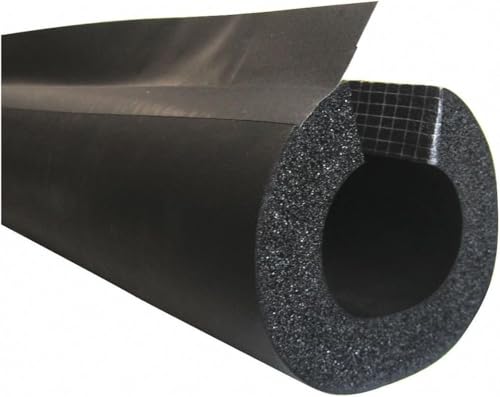
NomaCo Insul-Tube Self-Sealing Pipe Insulation
NomaCo manufactures Insul-Tube as a closed-cell elastomeric foam, the same category plumbers and HVAC technicians install on commercial jobs. Its denser cell structure resists moisture absorption better than basic open-cell foam. The self-sealing seam still goes on without solvent adhesive.
Pros
- Denser foam resists moisture absorption
- Contractor-grade material used on commercial jobs
- Still installs without solvent adhesive
Cons
- Costs more per foot than basic household foam
- Overkill for a single exposed sink pipe

M-D Building Products Pipe Insulation Wrap Tape
M-D Building Products sells this insulation as a wrap tape rather than a precut tube, so it conforms to elbows, valves, and fittings a rigid tube cannot cover cleanly. The foil backing reflects some radiant heat loss on hot water lines. Overlapping the wrap by half its width keeps gaps from forming at bends.
Pros
- Conforms to elbows and valves tubes cannot cover
- Foil backing reflects radiant heat on hot lines
- One roll handles multiple small fittings
Cons
- Slower to install than a self-sealing tube
- Needs careful overlap or gaps let cold through
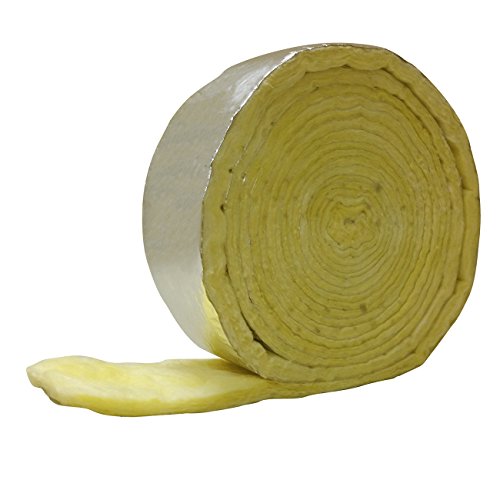
Frost King Foil-Backed Fiberglass Pipe Wrap
Frost King scales this fiberglass wrap to pipes larger than standard foam tubes are made to fit, including main water lines and larger HVAC trunk pipes. The foil facing acts as a vapor barrier, cutting down on condensation under the wrap. It needs tape at the seams rather than a self-sealing edge.
Pros
- Fits larger pipes foam tubes do not cover
- Foil facing cuts down on condensation
- Higher heat tolerance than foam
Cons
- Requires separate tape to seal seams
- Fiberglass needs gloves during installation

Armacell Tubolit Self-Seal Pipe Insulation
Armacell built Tubolit for the temperature swings HVAC lines see, running cold during air conditioning season and warm when carrying hot water or heating lines. Its closed-cell structure resists the condensation that forms on refrigerant lines in humid climates. The self-seal edge still skips the need for adhesive.
Pros
- Handles both hot and cold HVAC line swings
- Closed-cell structure resists condensation
- No adhesive needed for the seam
Cons
- Pricier than basic plumbing foam
- Sized for HVAC lines, not every plumbing diameter

Dyiom Self-Seal Foam Pipe Insulation Tubes
Dyiom packages several shorter foam tubes together, aimed at quick fixes on exposed pipes under a sink or along a short exterior run rather than a whole-house job. Smaller diameters fit tighter plumbing than the larger tubes made for main lines. Pricing per pack stays lower than buying a bulk coil.
Pros
- Lower cost for small, one-off jobs
- Precut lengths need no cutting to size
- Easy for first-time DIY installers
Cons
- Shorter pieces mean more seams on long runs
- Thinner wall than garage-rated foam
Side by side
| # | Model | Material | Best for | Score | Price |
|---|---|---|---|---|---|
| 1 | Frost King Self-Sealing Foam Pipe Insulation | Polyethylene foam | Best overall for standard household pipes | 9.3 | Check price |
| 2 | Tundra Self-Seal Foam Pipe Insulation | Polyethylene foam | Best for unheated garages and crawl spaces | 9.0 | Check price |
| 3 | NomaCo Insul-Tube Self-Sealing Pipe Insulation | Closed-cell elastomeric foam | Best for a contractor-grade finish | 8.8 | Check price |
| 4 | M-D Building Products Pipe Insulation Wrap Tape | Foil-backed wrap tape roll | Best for irregular shapes and fittings | 8.5 | Check price |
| 5 | Frost King Foil-Backed Fiberglass Pipe Wrap | Fiberglass with foil facing | Best for larger diameter pipes | 8.3 | Check price |
| 6 | Armacell Tubolit Self-Seal Pipe Insulation | Closed-cell polyethylene foam | Best for HVAC refrigerant and condensate lines | 8.6 | Check price |
| 7 | Dyiom Self-Seal Foam Pipe Insulation Tubes | Polyethylene foam | Best budget multi-pack for small fixes | 8.0 | Check price |
Questions worth asking
What pipe insulation actually prevents frozen pipes?
Thicker-wall foam like Tundra’s or closed-cell options like Armacell’s Tubolit slow heat loss longer than thin standard foam, though none fully prevent freezing in sustained sub-freezing temperatures without added heat.
How thick should pipe insulation be for a garage?
A heavier wall thickness than typical indoor foam, such as Tundra’s garage-rated tube, holds up better in an unheated garage than the thinner foam sold for basement use.
Can pipe insulation be used outdoors?
Foam tubes need a UV-resistant wrap or paint over them for long-term outdoor use, since direct sunlight breaks down unprotected polyethylene foam over time.
Is foam or fiberglass better for pipe insulation?
Foam tubes install faster and self-seal, while fiberglass wrap like Frost King’s fits larger diameters and tolerates higher heat, so the better choice depends on pipe size.
Does pipe insulation work on both hot and cold water lines?
Yes, standard foam tubes insulate hot water lines against heat loss and cold lines against freezing, though HVAC lines with constant temperature swings do better with Armacell’s Tubolit.
How do you insulate pipe fittings and elbows?
Wrap tape like M-D Building Products’ conforms around fittings a rigid foam tube cannot bend around cleanly, applied with a half-width overlap at each pass.
What size pipe insulation fits under a kitchen sink?
Most kitchen supply lines measure one-half inch, matching the common size for Frost King’s and Dyiom’s precut foam tubes.
Can pipe insulation replace heat tape in freezing climates?
No, insulation slows heat loss but does not add heat, so pipes exposed to extended hard freezes still need heat tape alongside insulation.
Does pipe insulation reduce condensation on cold pipes?
Closed-cell foam like Armacell’s Tubolit resists moisture absorption better than open-cell foam, cutting down on the condensation that drips from cold HVAC lines.
How long does foam pipe insulation last?
Indoor foam tubes typically last for years without degrading, while outdoor exposure without UV protection shortens that lifespan considerably.
Our pick
Frost King’s self-sealing foam tube covers most indoor plumbing at the lowest cost and takes minutes to install without tools. Garages, crawl spaces, and other unheated areas that see real freezes should move up to Tundra’s thicker-wall foam or NomaCo’s Insul-Tube instead, since thin foam alone will not stop a hard freeze. Anyone insulating HVAC refrigerant or condensate lines should skip standard foam entirely and choose Armacell’s Tubolit, built specifically for that temperature swing.
Jake Monroe
Jake worked as a residential contractor for over a decade before shifting to full-time writing. He evaluates power tools, hand tools and workshop gear through the lens of someone who has actually used them on job sites, not just read the box.
You might also need
U.S. Art Supply 4 Oz Squeeze Bottles (12-Pack) Review: Handy Beyond Just Craft Paint?

DMSO 8 oz Glass Bottle (99.995% Pharma Grade): What This Lab Solvent Actually Is

Mold Armor Mold Kill & Control Spray: Does the No-Scrub Claim Hold Up?
