Pinking Shears That Slow Fraying on Woven Fabric
Fiskars 8 inch pinking shears fit most home sewing, with stainless blades and a bent handle that holds fabric flat. Gingher 7.5 inch shears are forged, so denim and wool cut cleanly. SINGER ProSeries 9 inch shears cover more yardage per stroke for quilters.
Fiskars 8 inch pinking shears are the default for garment sewing. Their bent handle rests on the table, so the lower blade tracks a seam allowance without lifting cotton or linen. Stamped stainless does surrender its edge on canvas, and no home sharpener brings it back.
Photos hide what decides comfort: tooth pitch, pivot tension and handle spread. We compared published blade length, steel type, zigzag pitch and handle geometry across each pair. Owner feedback on jamming, dulling and chewed edges filled in what listings leave out.
The top picks, ranked
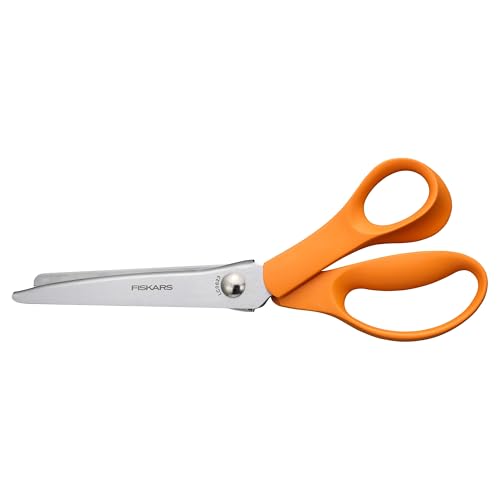
Fiskars 8 Inch Pinking Shears
Stainless blades lay an even zigzag through quilting cotton, linen and flannel without dragging the fabric upward. Because the handle is bent, the lower blade slides along the table and a seam allowance stays flat. Owners report the pivot holding tension for years, yet the edge cannot be reground at home.
Pros
- Bent handle holds fabric flat to the table
- Even tooth spacing with no chewed edges
- Light enough for an afternoon of cutting
Cons
- Stamped blades are not resharpenable at home
- Stalls on canvas and upholstery weight cloth

Gingher 7.5 Inch Pinking Shears
Forged chrome plated steel and a knife edge let these slice dense wovens instead of crushing them. Extra mass in the metal handles pushes the blade through wool, denim and heavy twill. Bare metal loops press into the fingers, so long sessions ask for a padded wrap.
Pros
- Forged edge can be reground by a sharpening service
- Clean teeth through layered or dense cloth
- Weight does the work instead of your grip
Cons
- Heavier than any plastic handled pair here
- Unpadded metal handles mark the fingers

SINGER ProSeries 9 Inch Bent Pinking Shears
Nine inches of frame carries a longer blade, which means fewer restarts and fewer stutter marks along yardage. Cushioned grips take pressure off the thumb during repeat quilting cuts. Chiffon and fine silk slip on the teeth, a trait shared by most large pinking shears.
Pros
- Longer blade covers more fabric per stroke
- Cushioned grip suits repeat cutting days
- Cuts felt and fleece without packing up
Cons
- Fine silk and chiffon slide on the teeth
- Too long to follow small curved shapes
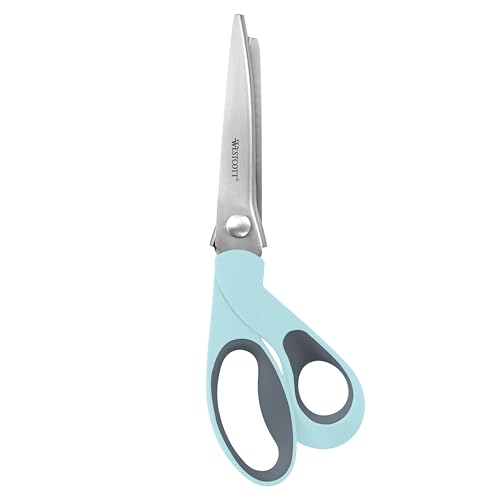
Westcott 8 Inch Titanium Bonded Pinking Shears
Titanium bonding hardens the cutting surface, useful when one pair crosses between fabric, cardstock and craft foam. Scrapbookers who also sew skip buying a second pair on that basis. Straight handles lift the cut line off the table, so long seam allowances wander.
Pros
- Hardened coating survives occasional paper work
- Soft grip fits smaller hands comfortably
- Cuts craft foam and felt shapes cleanly
Cons
- Straight handle raises fabric off the table
- Not built for layered denim or canvas

Mundial Red Dot 9 Inch Pinking Shears
Built for workroom hours, the Red Dot line pairs hot forged carbon steel with an adjustable tension screw at the pivot. Nine inches and real heft carry it through layered canvas, drapery and upholstery samples. Carbon steel rusts when stored damp, and the handle spread runs wide for a small hand.
Pros
- Pivot tension adjusts as the pair wears in
- Passes through layered heavy cloth without stalling
- Forged blades accept professional regrinding
Cons
- Wide handle spread tires a small hand
- Carbon steel needs drying to avoid rust

Fiskars 45mm Pinking Rotary Blade
This blade drops into a standard 45mm rotary cutter and rolls a zigzag along a ruler edge. Long quilt strips finish far faster than with shears, and the wrist stays neutral throughout. A compatible cutter and a self healing mat are both required, so it works as an add on rather than a first purchase.
Pros
- Quickest route through long straight yardage
- Tracks a quilting ruler without wobble
- Neutral wrist position reduces joint strain
Cons
- Useless without a cutter and cutting mat
- Cannot pivot into tight curves or notches
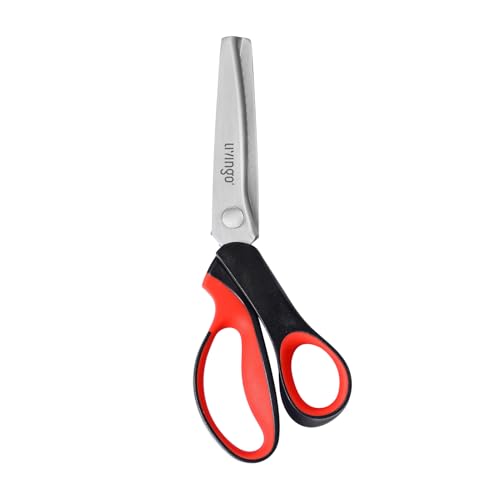
LIVINGO 9 Inch Premium Pinking Shears
Stainless blades and a rubber coated handle cover occasional seam finishing on cotton, felt and fleece. Low weight suits short sessions and younger hands in a craft class. Frequent use loosens the pivot sooner than on forged pairs, so keep the projects light duty.
Pros
- Rubber coating is comfortable straight away
- Handles quilting cotton and craft felt
- Light pair for occasional seam finishing
Cons
- Pivot loosens under frequent heavy cutting
- Not suited to daily workroom volume
Compared at a glance
| # | Model | Overall length | Best for | Score | Price |
|---|---|---|---|---|---|
| 1 | Fiskars 8 Inch Pinking Shears | 8 inches | Best overall | 9.4 | Check price |
| 2 | Gingher 7.5 Inch Pinking Shears | 7.5 inches | Best premium | 9.2 | Check price |
| 3 | SINGER ProSeries 9 Inch Bent Pinking Shears | 9 inches | Best value | 9.0 | Check price |
| 4 | Westcott 8 Inch Titanium Bonded Pinking Shears | 8 inches | Best for mixed materials | 8.8 | Check price |
| 5 | Mundial Red Dot 9 Inch Pinking Shears | 9 inches | Best for heavy fabric | 8.6 | Check price |
| 6 | Fiskars 45mm Pinking Rotary Blade | 45 mm rotary | Best for long straight edges | 8.4 | Check price |
| 7 | LIVINGO 9 Inch Premium Pinking Shears | 9 inches | Best budget | 8.0 | Check price |
What matters most
What pinking shears do and where they fall short A zigzag cut shortens every exposed thread along the edge, which slows fraying on woven fabric. Slowing is not sealing. Knits barely fray at all, so pinking them reads as decoration. Loose weaves such as linen gauze shed threads anyway after several washes, and a serged or zigzag stitched seam outlasts a pinked one on anything you launder weekly. Pattern makers get a second use from the same edge, marking notches in a single snip.
Blade steel, tooth pitch and edge life Forged pairs from Gingher and Mundial can go to a sharpening service that grinds each tooth individually. Stamped stainless pairs are effectively sealed units, so replacement is the realistic plan. Pitch changes the result as much as steel does: tight teeth handle lightweight cotton, wider teeth clear fleece without packing. Dedicate one pair to fabric only. Paper fibers and adhesive backing round an edge several times faster than cloth.
Handle angle, hand span and fatigue Bent handles seat the lower blade against the table, keeping fabric flat across a long seam allowance. Straight handles raise the cut line, which is fine for short trimming and poor for yardage. Hand span decides the rest, since a 9 inch pair asks for a wider grip than many sewers have. Sore thumb joints point toward the 8 inch Fiskars or a rotary blade. Metal handled shears also need a finger wrap for sessions past an hour.
Heavy fabric, curves and cutting yardage Canvas, drapery and upholstery samples call for forged blades and a pivot you can tighten, which names the Mundial Red Dot. Tight curves and notches stay easiest with a 7.5 or 8 inch pair, because a long blade overshoots the drawn line. Quilters slicing strips save the most time with the 45mm pinking rotary blade run against a ruler. Skip that route for small appliqué shapes, since a rolling blade cannot turn in place.
Frequently asked questions
What are pinking shears used for?
They cut a zigzag edge that limits fraying on woven fabric and tidies a raw seam allowance. Crafters also use them for decorative borders on felt, ribbon and cardstock. Pattern makers snip notches with them instead of switching tools.
Do pinking shears stop fabric from fraying completely?
No. Shortening each exposed thread slows unraveling, but a loose weave still sheds after repeated washing. Serged seams, French seams or a bound edge hold up far better on garments in regular rotation.
Which pinking shears are best for beginners?
Start with the Fiskars 8 inch pair. Its bent handle keeps fabric flat, weight stays manageable, and the cut runs even without heavy pressure. Step up to forged shears once denim or canvas enters your projects.
Can pinking shears cut paper and cardstock?
Titanium bonded models such as the Westcott tolerate occasional paper. Fibers and adhesive backing dull any edge fast, so keep sewing shears off the craft table entirely.
Pinking shears or a pinking rotary blade: which is better?
Shears handle curves, notches and small pieces. A 45mm pinking rotary blade beats them on straight yardage, guided along a ruler. Plenty of quilters own both and choose by the shape of the cut.
How do you sharpen pinking shears?
Forged pairs such as Gingher and Mundial go to a professional service that grinds each tooth. Stamped stainless pairs are not worth sharpening, so budget for a replacement instead. Wiping blades dry after use delays the need either way.
Are there left handed pinking shears?
Dedicated left handed models are rare in this category. Most left handed sewers pick a symmetrical soft grip pair or move to a rotary pinking blade, which cuts the same in either hand.
What size pinking shears should you buy?
Seven and a half to 8 inches suits garment sewing and curved pieces. Nine inches earns its length on quilting yardage and heavy cloth. Measure your comfortable grip spread first, because a wide pair fights a small hand.
Why do my pinking shears chew fabric instead of cutting?
Three causes account for most of it: a loose pivot, a dulled edge, or fabric finer than the tooth pitch. Tighten an adjustable screw, then test on quilting cotton. Chiffon and silk usually need a rotary blade on a mat.
The bottom line
Buy the Fiskars 8 inch pair for general home sewing, since the bent handle keeps a seam allowance flat and the pivot survives years of cotton and linen. Denim, wool or anything you expect to resharpen justifies the forged Gingher 7.5 inch shears instead. Quilters cutting long straight strips should skip shears and fit the Fiskars 45mm pinking rotary blade to a cutter already on the table.
Jake Monroe
Jake worked as a residential contractor for over a decade before shifting to full-time writing. He evaluates power tools, hand tools and workshop gear through the lens of someone who has actually used them on job sites, not just read the box.
You might also need
U.S. Art Supply 4 Oz Squeeze Bottles (12-Pack) Review: Handy Beyond Just Craft Paint?

DMSO 8 oz Glass Bottle (99.995% Pharma Grade): What This Lab Solvent Actually Is
Mold Armor Mold Kill & Control Spray: Does the No-Scrub Claim Hold Up?
