Pie Dishes That Brown a Bottom Crust Properly
Pyrex Easy Grab Glass Pie Plate leads overall, since its clear glass shows the bottom crust as it browns. USA Pan Aluminized Steel Pie Pan browns crust fastest of the seven. Anchor Hocking Glass Pie Plate covers the same visibility at the lowest cost.
Bottom crust quality depends on what the dish is made from more than what recipe you follow. Pyrex Easy Grab Glass Pie Plate tops this list because you can watch the crust brown through the glass. USA Pan’s aluminized steel browns more aggressively, and Anchor Hocking covers the same visibility for less money.
Metal conducts heat fast and browns hard, ceramic heats slowly and holds warmth, glass sits between the two while letting you see what’s happening underneath. Soggy pies usually trace back to this exact tradeoff. We compared material, depth, rim design and what owners report about cracking and browning to rank the seven below.
Before you buy
What material should a pie dish be made of? Material decides bottom crust more than any other factor. Metal conducts heat fastest, so pastry sets and browns before filling soaks in, giving aluminized steel the crispest base. Ceramic and stoneware heat slowly and evenly, suiting custard fillings that curdle under fast heat, though the base turns out softer. Glass sits between the two and adds visibility that neither metal nor ceramic offers. Switch to metal before changing a recipe if soggy bottoms keep happening.
Standard or deep dish: how do you tell? Standard pie plates hold roughly what a typical recipe expects. Deep dish pans hold considerably more, which fruit pies and quiche often need, but timing changes too, since a deeper filling needs longer at a lower temperature to cook through without scorching the crust. A recipe written for a standard plate looks underfilled in a deep dish and finishes early. Check the stated volume, not just the diameter, before swapping pans.
Can glass pie dishes go from freezer to oven? Tempered glass bakeware handles oven heat safely but not sudden temperature swings. Setting a hot glass dish on a wet counter, adding cold liquid to a hot dish, or moving one straight from freezer to hot oven can shatter it. Ceramic behaves the same way. Metal has no such limitation, a real advantage for anyone baking from frozen or moving dishes around quickly.
Which rim style works best for a crimped edge? A wide flat rim gives room to crimp a decorative edge and supports pastry so it doesn’t slump. A fluted rim does much of that crimping automatically. A plain narrow rim works fine for lattice-top or crustless pies but gives an ambitious crimp nothing to rest on. Double-crust bakers should prioritize a wide rim over almost any other feature.
The best picks, ranked

Pyrex Easy Grab 9.5 Inch Glass Pie Plate
Tempered glass shows the underside of the crust mid-bake, removing the guesswork behind soggy bottoms. Molded handles give a real grip with oven mitts, unlike a plain rim. Custard, fruit and savory pies all suit this dish equally, which is why bakers reach for it by default.
Pros
- You can watch the bottom crust brown
- Handles give a secure grip with oven mitts
- Non reactive with acidic fruit fillings
Cons
- Cannot go under a broiler or on a burner
- Sudden temperature changes risk thermal shock
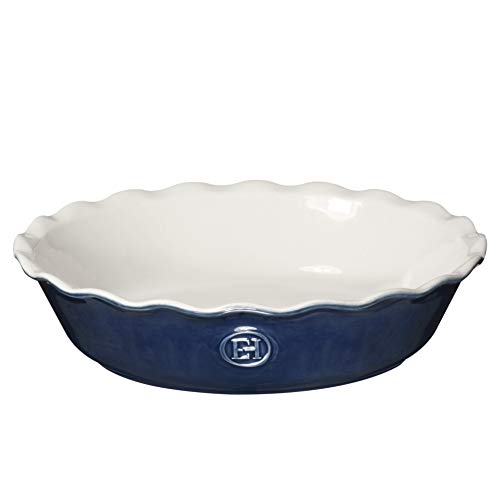
Emile Henry Modern Classics Pie Dish
Glazed ceramic heats slowly, then holds that heat steadily, suiting custard and quiche fillings that dislike sharp temperature swings. A fluted rim gives a crimped edge something to sit against. Many owners move it straight from oven to table, since it doesn’t look like typical bakeware.
Pros
- Even, steady heat suits custard fillings
- Presentable enough to serve straight from it
- Glaze resists staining from fruit
Cons
- Slower heating means less bottom crust browning
- Heavier and pricier than glass alternatives

USA Pan Bakeware Aluminized Steel Pie Pan
Aluminized steel conducts heat faster than glass or ceramic, setting and browning the bottom crust before filling can soak in. A corrugated surface lifts the pastry slightly, improving airflow underneath. Fruit pies benefit most, since this pan produces the crispest bottom crust of the seven.
Pros
- Sharpest bottom crust browning in the group
- Corrugation improves airflow under the pastry
- Light and easy to handle
Cons
- Opaque metal hides crust progress
- Hand washing is recommended to protect the coating

OXO Good Grips Non-Stick Pro Pie Pan
Heavy-gauge aluminized steel carries a ceramic-reinforced non-stick coating, useful for pies meant to serve in clean slices rather than scoops. A micro-textured surface improves release further. Washing afterward takes little effort, matching how easily the first slice lifts out.
Pros
- Cleanest slice release in the group
- Heavy gauge steel resists warping
- Easy to clean after baking
Cons
- Metal utensils wear down the non-stick coating
- Opaque pan hides crust progress

Le Creuset Stoneware Pie Dish
Dense glazed stoneware holds heat long after leaving the oven, keeping a pie warm on the table through a meal. The glaze resists cutting marks from a serving knife. Heat retention and appearance drive most purchases here, not a crisp bottom crust.
Pros
- Keeps a pie hot through a meal
- Hard glaze resists knife marks
- Presents well at the table
Cons
- Slowest heating produces the softest bottom crust
- Heavy to lift when full

HIC Harold Import Co. Deep Dish Pie Pan
Porcelain construction runs deeper than a standard pan, which suits fruit pies that would otherwise overflow and quiche with a generous custard fill. White porcelain resists staining from berries. Extra volume means longer bake times than a shallow dish requires.
Pros
- Extra depth prevents fruit pies overflowing
- Porcelain resists staining from berry fillings
- Suits deep quiche and pot pies
Cons
- Bake times run longer than shallow dishes
- Standard recipe timings need adjustment

Anchor Hocking 9 Inch Glass Pie Plate
A plain tempered glass plate with a simple fluted rim delivers the main benefit of glass, crust visibility, at the lowest cost here. No handles keep the design basic. Many owners buy two or three at once for holiday baking, since several identical dishes beat one expensive one.
Pros
- Affordable enough to own several
- Same crust visibility as pricier glass
- Fluted rim supports a crimped edge
Cons
- No handles makes lifting with mitts awkward
- Glass runs thinner than premium alternatives
How they compare
| # | Model | Material | Best for | Score | Price |
|---|---|---|---|---|---|
| 1 | Pyrex Easy Grab 9.5 Inch Glass Pie Plate | Tempered soda lime glass | Best overall | 9.4 | Check price |
| 2 | Emile Henry Modern Classics Pie Dish | Glazed Burgundy ceramic | Best ceramic | 9.2 | Check price |
| 3 | USA Pan Bakeware Aluminized Steel Pie Pan | Aluminized steel with silicone coating | Best crust browning | 9.0 | Check price |
| 4 | OXO Good Grips Non-Stick Pro Pie Pan | Aluminized steel with non stick coating | Best non stick | 8.8 | Check price |
| 5 | Le Creuset Stoneware Pie Dish | Glazed stoneware | Best for serving | 8.5 | Check price |
| 6 | HIC Harold Import Co. Deep Dish Pie Pan | White porcelain | Best deep dish | 8.2 | Check price |
| 7 | Anchor Hocking 9 Inch Glass Pie Plate | Tempered glass | Best budget | 8.0 | Check price |
Common questions
Should I use glass or metal for pie?
Metal gives the crispest bottom crust, while glass lets you watch that crust brown and handles a wider range of pies. Metal conducts heat faster, setting pastry before filling soaks in. Glass is the safer single choice if you own only one pie dish.
Why does my bottom crust always turn out soggy?
The base usually never gets hot enough fast enough. Bake on a preheated sheet or stone on the lowest rack, blind bake the shell for wet fillings, and switch to a metal pan if the problem continues. Brushing the base with egg white before filling also helps.
Can a glass pie dish go straight from the freezer into a hot oven?
No. Tempered glass tolerates high heat but not a rapid temperature jump, and freezer-to-oven risks shattering. Let a frozen pie sit at room temperature while the oven preheats, or freeze it in a metal pan instead, which has no thermal shock limit.
What size pie dish do most recipes assume?
A 9 inch standard-depth plate covers most published recipes. A 9.5 inch or deep dish pan holds noticeably more, so a standard recipe looks sparse inside one. Recipes labeled deep dish will overflow a standard plate.
Do you need to grease a pie dish before baking?
Usually not for pastry crusts, since fat in the dough does that job already. Crumb crusts and very lean doughs benefit from a light greasing. Non-stick pans need nothing at all, and greasing glass can make crust slide as it bakes.
Is ceramic or stoneware better for quiche?
Generally yes. Custard fillings dislike fast, direct heat, and the slow, even warming of ceramic and stoneware suits them well. The tradeoff is a less crisp base, which blind-baking the shell first largely solves.
Can a pie dish go under the broiler?
Metal pans can handle it. Glass and most ceramic should not, since intense direct heat creates the uneven temperature that causes cracking. Recipes calling for browning a meringue under a broiler need a metal pan or a kitchen torch instead.
How do you stop the crust edge from burning?
Cover the rim with foil strips or a purpose-made pie shield once it reaches the color you want, usually well before the center finishes. Starting at a higher oven temperature and lowering it after the first fifteen minutes also helps, since the edge takes most of its color early.
Our pick
Pyrex Easy Grab Glass Pie Plate suits most kitchens best, since watching the bottom crust removes the guesswork behind soggy pies. USA Pan Aluminized Steel Pie Pan browns crust better than anything else here if crisp pastry matters most. Emile Henry Modern Classics is the pick for custard fillings and for serving straight from the oven.
Dana Whitfield
Dana spent eight years buying and merchandising for a regional kitchenware retailer before moving into editorial work. She has handled thousands of SKUs across cookware, small appliances and kitchen organization, and focuses on the practical differences that matter once a product is actually in daily use.


