How to Choose an Air Purifier for Pet Dander and Odor
Levoit’s Core 300 suits small rooms on a tight budget. Winix’s 5500-2 adds a washable carbon filter for ongoing litter odor control. Coway’s Airmega 400 covers large open spaces with multiple pets. Room coverage and carbon capacity matter most for pet odor, not just HEPA grade.
Levoit’s Core 300 handles rooms up to about 200 square feet, a practical fit for a bedroom shared with a cat or dog. It pairs a pet-specific filter with quiet low-speed operation, though it can’t cover an open living room alone.
Dander and litter box odor need more than a basic HEPA filter to manage well. We compared HEPA grade, carbon layer thickness, and coverage across seven purifiers marketed for pet owners, then checked those specs against owner reports on noise and filter cost.
The top picks, ranked

Levoit Core 300 Pet Allergy Air Purifier
A pet-specific filter variant wraps extra activated carbon around the HEPA layer, aimed at dander and odor beyond standard filtration. Coverage suits a bedroom or home office rather than an open floor plan. Quiet operation on low settings makes it usable overnight without disturbing sleep.
Pros
- Pet-specific filter targets dander and odor
- Runs quietly on low fan settings
- Compact size fits bedrooms or offices
Cons
- Coverage limited to mid-size rooms
- Replacement filters needed every few months

Winix 5500-2 Air Purifier
A washable carbon pre-filter cuts long-term replacement costs versus fully disposable systems. PlasmaWave technology adds a second odor-reduction layer, useful for litter boxes or multiple pets. Coverage extends further than compact bedroom units, better suited to an open living room.
Pros
- Washable carbon filter lowers replacement costs
- Covers larger rooms than compact purifiers
- PlasmaWave adds a second odor-reduction layer
Cons
- Bulkier footprint than smaller purifiers
- PlasmaWave can be switched off but adds upfront cost
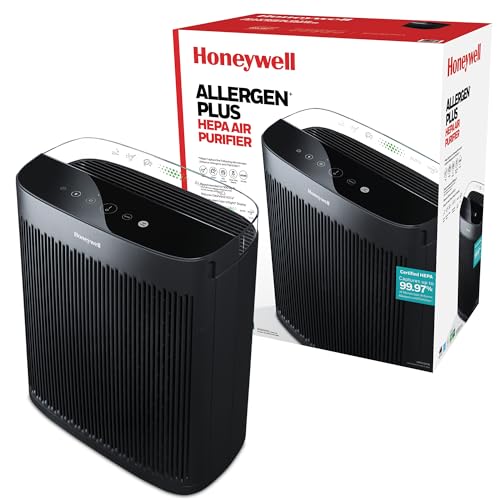
Honeywell HPA300 True HEPA Air Purifier
Coverage up to 465 square feet suits open-concept spaces with multiple pets generating more combined dander. A turbo fan setting clears the air fast after cleaning a litter box or grooming a dog indoors. Size and weight favor a fixed spot over frequent moving.
Pros
- Covers large open living spaces
- Turbo mode clears air fast after pet activity
- Optional carbon pre-filter adds odor control
Cons
- Larger footprint needs dedicated floor space
- Turbo setting runs noticeably louder

GermGuardian AC4825 Air Purifier
A charcoal filter layer handles basic pet odor for less than premium multi-stage purifiers cost. UV-C light adds airborne germ reduction, though its effect on dander itself stays limited since dander is a particulate, not a pathogen. The tower shape takes up little floor space in smaller rooms.
Pros
- Costs less than premium HEPA purifiers
- Compact tower fits small rooms easily
- UV-C adds airborne germ reduction
Cons
- Smaller room coverage than mid-tier options
- UV-C does little for dander itself
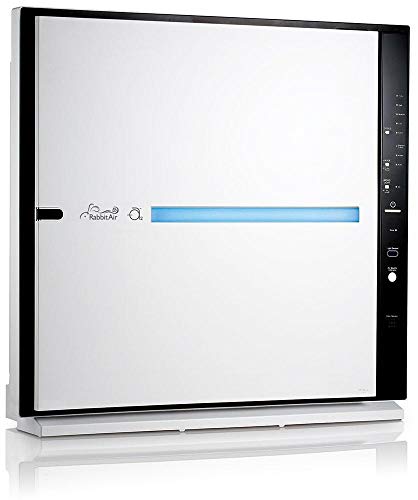
RabbitAir MinusA2
Six filtration stages include a swappable customization filter, with a pet-specific option available for dander and odor. Coverage up to 815 square feet handles a large room or open floor plan in one unit. Wall-mounting frees up floor space that most tower purifiers still take up.
Pros
- Swappable pet-specific filter option
- Covers large rooms in a single unit
- Wall-mountable to save floor space
Cons
- Costs more than standard tower purifiers
- Wall mounting adds installation effort
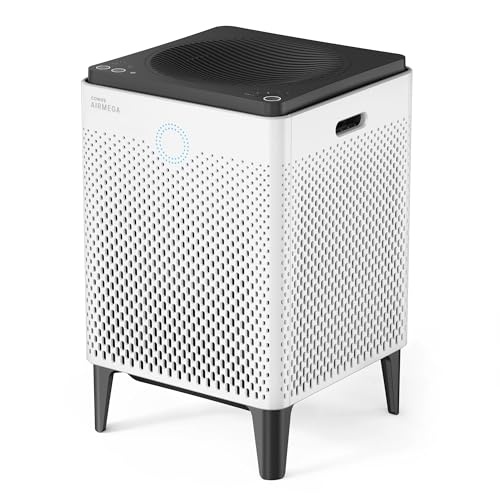
Coway Airmega 400 Air Purifier
Auto mode adjusts fan speed using a built-in air quality sensor, ramping up after it detects a fresh dander or odor spike. Coverage reaches large open living areas, suited to homes with multiple pets across connected rooms. A combined HEPA and carbon filter simplifies replacement to one part.
Pros
- Very large coverage for open floor plans
- Auto mode reacts to real-time air quality
- Combined filter simplifies replacement
Cons
- Higher upfront cost than compact purifiers
- Large unit needs dedicated space

Blueair Blue Pure 211+ Auto
HEPASilent technology combines mechanical and electrostatic filtration, aiming to keep airflow high while still catching fine particles like dander. One combined filter simplifies maintenance versus systems with separate carbon and HEPA layers. Automatic fan adjustment cuts down on manual speed changes through the day.
Pros
- Single-filter design simplifies maintenance
- Covers mid-to-large rooms effectively
- Automatic fan adjustment needs little input
Cons
- Replacement filters cost more than basic HEPA-only filters
- Less odor-specific control than a dedicated carbon system
How to choose
What to look for in a pet air purifier True HEPA filtration captures dander-sized particles, while activated carbon handles the odor HEPA alone misses. Room coverage should match or exceed the actual room size, since undersized units cycle air less effectively. Noise level matters most for units running in a bedroom overnight.
Matching room size to coverage Compact purifiers like Levoit’s Core 300 and GermGuardian’s AC4825 suit bedrooms or offices under 220 square feet. Winix’s 5500-2 and Blueair’s 211+ step up to living rooms near 550 square feet. Open floor plans or multi-pet households need coverage closer to Coway’s Airmega 400 or RabbitAir’s MinusA2, both rated past 800 square feet.
Odor control for litter boxes and multi-pet homes Carbon thickness varies more between models than HEPA grade does, and a thicker layer handles litter box ammonia better than a thin pre-filter. Washable carbon filters, like Winix’s, cut long-term replacement costs for homes needing frequent odor control. Multiple pets generate more combined odor than a single cat or dog, favoring higher-capacity units.
Maintenance and filter replacement Combined HEPA-carbon filters, like Coway’s Max2, simplify maintenance to one replacement part instead of several. Washable pre-filters stretch the time between full filter swaps but don’t eliminate them. Filter price adds up over a purifier’s life, so check replacement cost before buying a unit that needs frequent swaps.
Compared at a glance
| # | Model | Filtration | Best for | Score | Price |
|---|---|---|---|---|---|
| 1 | Levoit Core 300 Pet Allergy Air Purifier | True HEPA plus activated carbon | Best overall | 9.3 | Check price |
| 2 | Winix 5500-2 Air Purifier | True HEPA plus washable carbon filter | Best for ongoing odor control | 9.1 | Check price |
| 3 | Honeywell HPA300 True HEPA Air Purifier | True HEPA | Best for large multi-pet households | 8.8 | Check price |
| 4 | GermGuardian AC4825 Air Purifier | True HEPA plus charcoal filter | Best value | 8.4 | Check price |
| 5 | RabbitAir MinusA2 | 6-stage including HEPA and customizable filter | Best for customizable filtration | 8.3 | Check price |
| 6 | Coway Airmega 400 Air Purifier | 4-stage including True HEPA and deodorization filter | Best for large open spaces | 8.1 | Check price |
| 7 | Blueair Blue Pure 211+ Auto | 3-stage including HEPASilent technology | Best for simple, low-maintenance operation | 8.0 | Check price |
Common questions
Do air purifiers actually help with pet dander?
True HEPA filtration captures particles down to 0.3 microns, which covers most pet dander. A properly sized HEPA purifier measurably reduces airborne dander.
What size air purifier do I need for a room with pets?
Match the purifier’s rated square footage to the room, or size up slightly. Pets add more particulate load than a room without animals.
Does an air purifier remove pet odor or just dander?
HEPA filtration targets particles, not odor. An activated carbon layer, standard on pet-specific purifiers, is what actually cuts smell from litter boxes or wet fur.
Is UV-C light useful in a pet air purifier?
UV-C targets airborne germs, not particulate matter like dander. Its effect on pet allergy symptoms specifically stays limited compared to HEPA filtration.
How often do pet air purifier filters need replacing?
Most HEPA filters need swapping every 6 to 8 months under regular pet use. Washable carbon pre-filters, like Winix’s, stretch the interval for that component.
Can one air purifier cover a whole house with multiple pets?
Large-coverage units like Coway’s Airmega 400 or RabbitAir’s MinusA2 handle bigger open spaces. Most multi-pet homes still do better running a separate unit per main living area.
Are washable filters better than disposable ones for pet owners?
Washable carbon pre-filters lower long-term cost. They typically still pair with a disposable HEPA filter that needs periodic replacement.
What noise level is normal for an air purifier running overnight?
Purifiers rated around 24 to 30 decibels on their lowest setting, like Levoit’s Core 300, run quiet enough for a bedroom without disrupting sleep.
What’s the difference between a pet allergy filter and a standard HEPA filter?
A pet allergy filter adds extra activated carbon around the HEPA media. Standard HEPA alone catches dander but does little for litter box or wet-fur odor.
Is a bigger air purifier always better for a home with pets?
Not if the extra coverage goes unused. An oversized unit costs more upfront and often runs at a lower, less efficient fan speed for a small room.
The bottom line
Levoit’s Core 300 covers a typical bedroom or office well and adds a pet-specific filter at a reasonable cost, making it the default pick for single-pet homes. Households with litter boxes or multiple pets should choose Winix’s 5500-2 instead for its washable carbon filter and larger coverage. Large open floor plans call for Coway’s Airmega 400. Skip an undersized purifier once a room passes 300 square feet.
Dana Whitfield
Dana spent eight years buying and merchandising for a regional kitchenware retailer before moving into editorial work. She has handled thousands of SKUs across cookware, small appliances and kitchen organization, and focuses on the practical differences that matter once a product is actually in daily use.