Permanent Markers Ranked by Ink Type and Tip Width
Sharpie Fine Point suits most labelling jobs, gripping plastic, foil and coated paper in seconds. Rusty steel and damp lumber call for Sharpie Pro instead. Milwaukee INKZALL keeps a usable nib on drywall and OSB, while Sakura Pen-Touch stays opaque on black surfaces.
Sharpie Fine Point fits nearly every household and office labelling task. Its alcohol dye bites into plastic, foil and glossy card within seconds. Sunlight is the weak spot, since black lines drift brown after a season outdoors. Anyone marking oily fittings or wet timber should start with Sharpie Pro.
Three unrelated ink families all carry the word permanent, which is where most buying mistakes begin. We compared stated line widths, listed surface compatibility, refill options and tolerance for being left uncapped. Owner feedback on bleed-through, nib collapse and drying out settled the close calls.
Our top picks

Sharpie Fine Point Permanent Marker
Alcohol dye carries pigment into the surface, then flashes off in a few seconds. A bullet nib lays roughly a 1mm line, fine enough for cable tags and bold enough to read across a room. Owners warn that the tip stiffens fast whenever the cap sits off.
Pros
- Grips dry plastic, foil and glass with no primer
- Colour packs reach 24 shades for coding
- 1mm line keeps small labels legible
Cons
- Bleeds through thin notebook paper
- Black drifts brown after months in sun

Sharpie Pro Permanent Marker
An industrial formula targets surfaces that shed ordinary ink: rusted steel, greasy fittings, damp framing lumber. Marks shrug off moisture once cured, which matters for parts stored outside before assembly. Colour choice runs thin next to the standard Sharpie range.
Pros
- Writes on greasy and rain-damp material
- Cured lines survive outdoor storage
- Keeps the same fine bullet profile
Cons
- Stocked mainly in black, red and blue
- Solvent odour is stronger than standard ink
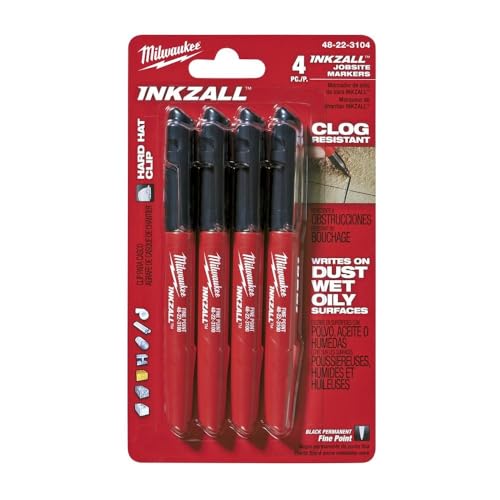
Milwaukee INKZALL Fine Point Job Site Marker
Drywall dust and torn OSB mushroom a soft felt nib inside a week. Milwaukee hardens the tip so it keeps a point across block, sheathing and damp studs. A snap cap and pocket clip suit a tool belt rather than a desk drawer.
Pros
- Nib holds shape on block and sheathing
- Cap clicks hard so it rarely pops in a pouch
- Lines stay readable over dust
Cons
- Colour range too narrow for trade coding
- Wider line than a drafting nib

Staedtler Lumocolor Permanent 318 F
Built in Germany around a 0.6mm line for coding film, glassware and lab labels. Staedtler calls the ink dry safe, so days spent uncapped will not finish the nib. Refill bottles and spare tips keep one barrel working for years.
Pros
- Survives long stretches without its cap
- 0.6mm line suits vials and archive cards
- Refills and spare tips cut waste
Cons
- Too fine for cardboard shipping labels
- Rarely stocked in general stores

Sakura Pen-Touch Paint Marker
Pigmented paint sits on top of a surface instead of soaking in, so white and gold read clearly on black plastic, slate or leather. Shake the barrel, then press the 2.0mm valve nib to start the flow. Drying runs slower than alcohol ink, which invites smudges if you stack work quickly.
Pros
- Stays opaque on dark and glossy material
- Holds up outdoors once fully cured
- Valve nib meters an even flow
Cons
- Needs shaking and priming before use
- Slower to dry than felt tip ink

BIC Intensity Permanent Marker
A low odour formula makes these workable at a shared classroom table or a small home office. Two barrel widths cover box labels and fine annotation from the same pack. Saturation on glossy plastic lands slightly behind Sharpie.
Pros
- Mild smell in rooms with little airflow
- Bulk packs lower the cost per marker
- Ultra fine barrel handles small print
Cons
- Lighter coverage on gloss than Sharpie
- Caps feel less rigid than rivals
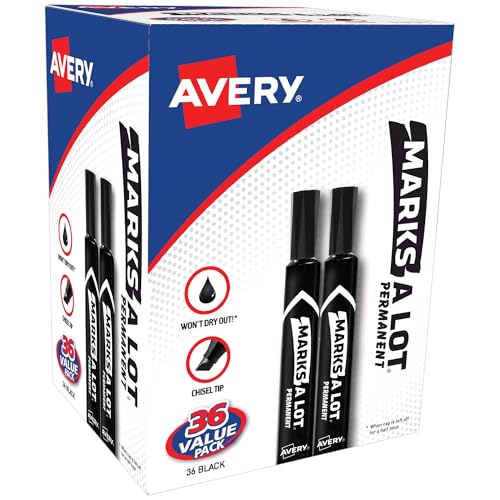
Avery Marks-A-Lot Large Desk-Style Permanent Marker
One chisel nib yields three line widths depending on wrist angle, handy when a moving box needs a room name and a fragile warning. Heavy ink loading keeps writing readable across a garage. Its desk barrel is far too fat for a shirt pocket.
Pros
- Strokes read from several feet away
- Angle changes width with no pen swap
- Ink load lasts through a full house move
Cons
- Too thick for vials and cable tags
- Barrel will not ride in a pocket
How they compare
| # | Model | Tip | Best for | Score | Price |
|---|---|---|---|---|---|
| 1 | Sharpie Fine Point Permanent Marker | Fine bullet, about 1mm line | Best overall | 9.4 | Check price |
| 2 | Sharpie Pro Permanent Marker | Fine bullet | Best for rough or oily surfaces | 9.2 | Check price |
| 3 | Milwaukee INKZALL Fine Point Job Site Marker | Fine point, abrasion resistant nib | Best for job sites | 9.0 | Check price |
| 4 | Staedtler Lumocolor Permanent 318 F | 0.6mm fine | Best for glass, film and labels | 8.7 | Check price |
| 5 | Sakura Pen-Touch Paint Marker | Oil based opaque paint, xylene free | Best for dark and glossy surfaces | 8.5 | Check price |
| 6 | BIC Intensity Permanent Marker | Fine and ultra fine | Best value | 8.2 | Check price |
| 7 | Avery Marks-A-Lot Large Desk-Style Permanent Marker | Chisel, three line widths | Best for boxes and bold labels | 8.0 | Check price |
How to pick the right one
What to look for in a permanent marker Three unrelated chemistries share the word permanent. Alcohol dye, used in Sharpie and BIC barrels, soaks into porous stock and flashes dry within seconds. Pigment ink holds its colour far longer under UV, at a higher cost per pen. Paint ink, as in the Pen-Touch, cures as an opaque film sitting on top of the material. Pick the chemistry from the surface first, then choose a brand. Getting that order wrong is what leaves a label unreadable a year later.
Tip shapes, line widths and bleed Nib width sets both legibility and bleed. At 0.6mm, the Staedtler 318 F fits vials, index cards and cable tags. Around 1mm, a standard fine bullet covers general labelling with no technique. Chisel nibs such as the Marks-A-Lot shift between three widths on wrist angle alone, which speeds up cardboard work. Less ink reaches the sheet as the point gets finer, so bleed-through drops with narrow nibs. Slip a scrap sheet under thin notebook paper whatever brand you use.
Marking plastic, glass, metal and dark surfaces Glossy plastic, glass and foil take no ink into the surface, so a fresh line lifts under a thumbnail. Give alcohol dye a full minute to cure before handling the part. Rust, grease and standing moisture defeat standard barrels outright, which is the gap Sharpie Pro fills. Black or clear material is a separate problem: dye ink vanishes into it, and only opaque paint like the Pen-Touch stays visible. Isopropyl alcohol lifts marks off glass and metal cleanly, useful where labels change every few weeks.
Best markers for classrooms, job sites and archives Solvent odour decides the choice in enclosed rooms, and BIC Intensity is the mildest option here. Trades face the opposite problem, since dust and splinters flatten soft felt within days, so the INKZALL nib earns its slot. Archive work rules out cheap dye ink, because sun exposure turns black lines brown inside a season. Labs and photo storage suit the refillable Staedtler, which keeps one barrel out of the bin for years. Skip the desk-style chisel if your labels are small, since it was designed for boxes and bins.
Good to know
What is the best permanent marker for plastic?
Sharpie Fine Point covers most rigid plastics once the ink cures for a minute. Switch to Sakura Pen-Touch paint ink for black or textured plastic, since dye ink disappears into dark surfaces.
Do permanent markers work on glass?
Yes, though the line rests on the surface and a fingernail can scratch it. Staedtler Lumocolor 318 F is rated for glass and film, and isopropyl alcohol removes it cleanly when a label changes.
How do you fix a dried out permanent marker?
Dip the nib in rubbing alcohol for a few seconds, cap it, then stand it tip down for an hour. Felt usually reopens. Barrels that have lost all their solvent stay dead.
Sharpie vs Marks-A-Lot: which one for moving boxes?
Marks-A-Lot wins on boxes, because the chisel nib writes strokes readable from across a garage. Keep Sharpie Fine Point for cable tags, jar lids and anything needing detail.
Are permanent markers waterproof?
Most resist splashes once cured rather than true soaking. Sharpie Pro is the one built for damp and oily material. Scrubbing or long immersion lifts any of them.
Which permanent markers do not bleed through paper?
Finer nibs deposit less ink, so BIC Intensity ultra fine and the 0.6mm Staedtler bleed least. Very thin notebook stock still needs a scrap sheet underneath.
Can you write on fabric name labels with a permanent marker?
Alcohol ink holds on cotton tags through normal washes, then fades gradually. Mark a dry tag, leave it overnight, and wash cold to slow that fade.
Is a paint marker better than a permanent marker?
On dark, glossy or outdoor surfaces, yes, since paint ink stays opaque and weather resistant. For paper and fast everyday labelling, felt tip alcohol ink is quicker and needs no priming.
What marker works on wet or oily metal?
Sharpie Pro handles rust, grease and moisture that standard ink beads off. Milwaukee INKZALL is the other option on site, where an abrasion resistant nib matters as much as the ink.
The verdict
Buy the Sharpie Fine Point for general labelling, since it asks for no shaking, priming or cure time on paper, plastic and metal. Trades marking damp framing or oily steel get more out of Sharpie Pro or the INKZALL nib, which keeps a point on abrasive stock. Reach for the Sakura Pen-Touch when the surface is black, clear or glossy, because no dye ink will show up there.
Marcus Chen
Marcus covered consumer electronics for enthusiast tech publications for six years before joining ChoiceCrest. He specializes in translating manufacturer spec sheets into plain-language buying advice, with a focus on audio, computing accessories and smart-home gear.
You might also need
Nintendo Game & Watch: Super Mario Bros Review: Still Worth It as a Collectible?

Ray-Ban Meta (Gen 2) Wayfarer Smart Glasses: Worth $379 for Clear Lenses?
AlyKets Nikon UC-E6 Replacement USB Cable: Does a $7.95 Cord Work as Well as the Original?
