7 Peelers That Handle Everything From Apples to Squash
The OXO Good Grips Swivel Peeler suits most everyday cooking, the Kuhn Rikon Original Swiss Peeler moves fastest through a big prep pile, and the OXO Good Grips Pro Y Peeler handles hard squash and celeriac. Between them they cover soft skins, bulk prep, and stubborn produce.
One peeler suits most kitchens, and that is the OXO Good Grips Swivel Peeler. Faster prep on a mountain of potatoes calls for the Kuhn Rikon Original Swiss Peeler, while butternut squash and celeriac skin need the OXO Good Grips Pro Y Peeler.
Peelers look too simple to research until a dull one meets a bag of carrots. Blade shape decides hand motion, and steel quality decides how long an edge stays sharp. Handle geometry matters more than expected for anyone with wrist or grip issues. We compared blade type and material, handle design, how much flesh each takes with the skin, and what owners report about edge life over months of regular use.
Our top picks
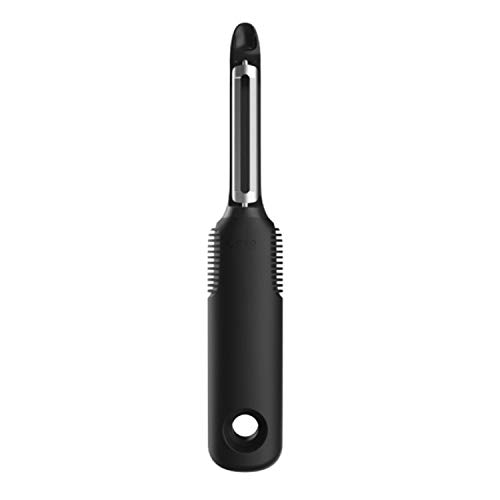
OXO Good Grips Swivel Peeler
A cushioned non-slip handle explains why this has stayed a default recommendation for so long, especially for anyone with arthritis or a weaker grip. Its swivelling stainless blade follows the contours of a potato or carrot for a thin peel. Owners report the edge stays usable for a year or more of regular household prep.
Pros
- Comfortable for long prep sessions and weak grips
- Swivel blade follows curves and wastes little flesh
- Eye remover saves reaching for a knife
Cons
- Bulkier in a drawer than a slim Y peeler
- Blade cannot be sharpened or replaced

Kuhn Rikon Original Swiss Peeler
Professional kitchens buy this one in packs, since the horizontal Y shape lets you pull toward yourself in quick repeated strokes. Its carbon steel blade is noticeably sharper out of the packet than most stainless equivalents. Owners report it is cheap enough to replace yearly, which keeps a genuinely sharp edge in the drawer.
Pros
- Very sharp edge straight out of the packet
- Fastest tool here on a large prep pile
- Light and stores flat in a drawer
Cons
- Carbon steel needs drying to avoid spotting
- Slim handle is less comfortable for large hands
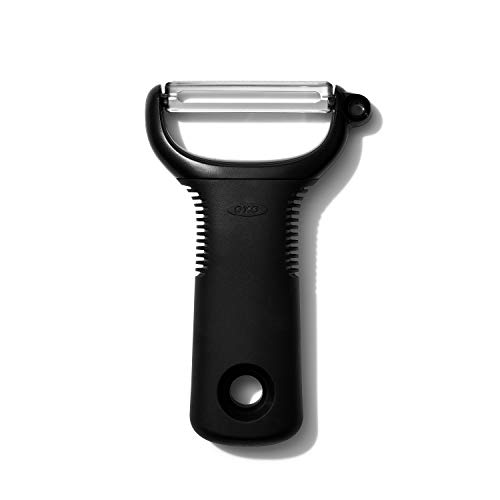
OXO Good Grips Pro Y Peeler
A Japanese stainless blade pairs with a substantial handle here, giving the leverage needed to push through butternut squash and celeriac skin. Extra weight makes it feel more like a tool than a gadget. Based on specifications it is the sturdiest peeler here for produce that fights back.
Pros
- Handles squash, celeriac and swede without flexing
- Solid handle gives real leverage
- Edge holds up well over time
Cons
- Heavier than a standard Y peeler
- Overkill for soft skinned produce
Messermeister Pro-Touch Swivel Peeler
Nimble in the hand describes this swivel peeler well, which suits trimming asparagus, shaving parmesan, or working around awkward shapes. Its thin blade takes a very fine peel, which matters on expensive produce. Owners report reaching for it specifically when precision counts more than speed.
Pros
- Takes a very thin peel with minimal waste
- Nimble around irregular shapes
- Comfortable slim handle
Cons
- Thin blade is less suited to hard squash
- Not the fastest on bulk prep

Victorinox Swiss Classic Serrated Peeler
Slippery skins that a straight edge slides right off get caught by this serrated blade, making it the answer for tomatoes, peaches, and ripe plums. It works as a specialist rather than an everyday peeler, solving a problem nothing else here does. Based on specifications the serrations also grip waxy supermarket produce.
Pros
- Grips soft and slippery skins reliably
- Avoids blanching tomatoes to peel them
- Inexpensive addition to a drawer
Cons
- Leaves a rougher surface on potatoes
- Serrations are harder to clean

Zyliss Smooth Glide Peeler
Zyliss shapes this handle around the palm rather than the fingers, reducing pinch grip effort over a long prep session. Its dual blade design handles both directions of stroke. Owners report it suits cooks who find standard peelers tiring on the hand.
Pros
- Reduces hand strain over long sessions
- Works on both push and pull strokes
- Easy to hang within reach
Cons
- Bulky shape takes drawer space
- Edge dulls faster than the top picks

Deiss PRO Julienne Peeler
Fine matchstick strips come off carrots, courgettes, and cucumbers with this tool, rather than removing skin, which suits salads, slaws, and garnish work. Its toothed blade stays sharp and the handle is comfortable across repeated passes. Based on specifications it adds to a drawer rather than replacing a standard peeler.
Pros
- Fast, even julienne strips without a mandoline
- Comfortable handle for repeated strokes
- Compact and easy to store
Cons
- Does not replace a standard peeler
- Teeth need a brush to clean properly
How to choose
What to look for in a vegetable peeler Blade material, handle shape, and blade orientation drive nearly every difference in this category. Stainless resists rust and holds a decent edge; carbon steel starts sharper but needs drying. Cushioned handles beat slim ones for anyone prepping for more than a few minutes at a time.
Swivel or Y: it comes down to hand motion A swivel peeler lines the blade up with the handle, so peeling feels like a knife stroke moving away from or toward the body. A Y peeler holds the blade across the top, so short pulling strokes do the work. Y peelers generally move faster through bulk prep and hard produce, since force applies in line with the blade. Swivel peelers give more control around curves. Many well-equipped kitchens keep one of each.
How long does peeler sharpness actually last? Carbon steel takes the keenest edge and dulls fastest, plus it spots or discolors if left wet. Stainless resists moisture better but starts slightly less sharp. Japanese stainless sits between the two and tends to hold an edge longest. Peeler blades cannot practically be resharpened, so treating a peeler as a consumable is the honest approach. Owners report that replacing an inexpensive sharp peeler yearly beats nursing an expensive dull one.
Best peeler for hard squash, tomatoes, and other tricky produce Soft, slippery skins like tomatoes and peaches need a serrated blade to bite; a straight edge just skids across them. Hard produce such as butternut squash, celeriac, and swede needs a rigid blade with a substantial handle for leverage. Everyday potatoes, carrots, and apples suit any sharp peeler, where the real difference is comfort and speed rather than capability.
The lineup, side by side
| # | Model | Blade type | Best for | Score | Price |
|---|---|---|---|---|---|
| 1 | OXO Good Grips Swivel Peeler | Swivel, straight orientation | Best overall | 9.4 | Check price |
| 2 | Kuhn Rikon Original Swiss Peeler | Y shape, horizontal | Best value | 9.2 | Check price |
| 3 | OXO Good Grips Pro Y Peeler | Y shape, horizontal | Best for hard produce | 9.0 | Check price |
| 4 | Messermeister Pro-Touch Swivel Peeler | Swivel, straight orientation | Best for detailed work | 8.8 | Check price |
| 5 | Victorinox Swiss Classic Serrated Peeler | Serrated, Y orientation | Best for tomatoes and soft fruit | 8.6 | Check price |
| 6 | Zyliss Smooth Glide Peeler | Dual direction swivel | Best for comfort | 8.3 | Check price |
| 7 | Deiss PRO Julienne Peeler | Toothed julienne blade | Best for julienne strips | 8.0 | Check price |
Common questions
Is a Y peeler better than a swivel peeler?
Neither wins universally. Y peelers move faster on large quantities and handle hard produce better, since the pulling motion applies force in line with the blade. Swivel peelers give more control on curved and irregular shapes. Many cooks keep both, since neither costs much.
How do I sharpen a vegetable peeler?
Realistically, most people don’t. Blade geometry and thin steel make resharpening impractical for home cooks. Drawing fine sandpaper or a ceramic rod carefully along the bevel adds a little life, but replacing an inexpensive peeler is the more sensible answer.
What peeler works best on butternut squash?
A Y peeler with a rigid blade and substantial handle, such as the OXO Good Grips Pro Y, handles squash best. Thin flexible blades skip across squash skin. Cutting the squash into flat-sided sections first also makes the job safer and faster.
Can I peel tomatoes without blanching them?
Yes, with a serrated peeler. Its teeth catch skin where a straight blade slides off. It works well on ripe tomatoes, peaches, and plums, and saves boiling water for small quantities.
Are vegetable peelers dishwasher safe?
Most stainless models are, and the picks here note it in their specs. Carbon steel blades should be washed by hand and dried immediately, since dishwasher cycles cause spotting and speed up dulling.
Which peeler is easiest for arthritic hands?
Wide cushioned handles that fill the palm reduce pinch grip effort most, which is why the OXO Good Grips and Zyliss designs come up often in recommendations. A very sharp blade helps too, since a dull peeler demands far more force.
How much flesh should a peeler remove?
A good peeler takes the skin and very little else. Thick peel with a lot of attached flesh usually means a dull blade or too much pressure. Swivel blades generally waste less on curved produce than fixed blades.
Do I need a separate julienne peeler?
Only for regular slaws, salads, or garnishes with matchstick vegetables. It does not replace a standard peeler, but it beats knife work for that specific job and takes almost no drawer space.
What is the best peeler for large hands?
Wider cushioned handles like the OXO Good Grips Swivel Peeler fit large hands more comfortably than slim professional-style handles, which can feel cramped during long prep.
Our pick
Buying just one peeler means picking the OXO Good Grips Swivel Peeler, since comfort and a thin peel matter more day to day than raw speed. Cooks prepping in volume move faster with the Kuhn Rikon Original Swiss Peeler, and anyone who regularly wrestles with squash or celeriac should add the OXO Good Grips Pro Y Peeler alongside it.
Dana Whitfield
Dana spent eight years buying and merchandising for a regional kitchenware retailer before moving into editorial work. She has handled thousands of SKUs across cookware, small appliances and kitchen organization, and focuses on the practical differences that matter once a product is actually in daily use.

