Acrylic vs Oil Painting Mediums: Which One Do You Need
For most acrylic painters, Liquitex Professional Gloss Medium & Varnish extends paint, builds glazes, and finishes with a clear gloss coat, all from one bottle. Pour painters get cleaner cells from Liquitex Professional Pouring Medium. Oil painters glazing thin layers cut drying time to a day or two with Winsor & Newton Liquin Original.
Liquitex Professional Gloss Medium & Varnish tops this list because one bottle extends acrylic paint, builds transparent glazes, and finishes with a gloss topcoat. It thins pigment without weakening the acrylic binder, something plain water cannot do. The tradeoff: that gloss finish is permanent and cannot be stripped later like a true removable varnish.
Painting mediums confuse buyers because acrylic and oil formulas solve different problems, and gels thicken while glazing liquids thin. Few bottles handle both jobs. We compared paint type compatibility, stated finish, drying behavior and container size across listings, then weighed owner reports on cracking, yellowing and long term durability.
What to look for
What a painting medium actually changes A medium changes how paint behaves, not its color. Gels add body that holds brush or knife texture. Glazing liquids thin paint while keeping the binder intact, something water alone cannot do. Pouring mediums flatten out and encourage cell patterns between colors. Driers and retarders shift how fast paint sets, which matters more in oil work since oil already dries slowly. Pick a category first, then a brand within it.
Acrylic and oil mediums are not interchangeable Acrylic mediums are water based and mix straight into acrylic paint with no separate binder step. Oil mediums usually add a resin, oil or alkyd component that reacts with the paint’s own oil binder. Swap one for the other and the paint film breaks down over time. Check the paint type line on the label first, since most brands make separate lines for each.
Matching a medium to pouring, glazing or impasto Pour painters need a self-leveling medium plus a flow additive for clean cells without muddy color. Glazing calls for a thin, transparent medium that keeps layered color see-through rather than chalky. Impasto and heavy texture work needs a gel with enough body to hold a knife ridge without slumping overnight. Matching medium to technique matters more than reaching for the priciest bottle on the shelf.
Speeding up or slowing down drying time Alkyd based mediums like Liquin cut oil drying time to about a day or two, useful for painters who cannot leave a canvas wet for a week. Walnut, poppy and stand oil work the opposite direction, extending blending time for skin tones and skies painted over more than one sitting. Beginners working in a single session usually gain more from a faster drying medium than a slower one. Anyone painting in a shared or poorly ventilated space should weigh solvent smell alongside drying speed.
Our top picks

Liquitex Professional Gloss Medium & Varnish
This medium thins acrylic paint without diluting the binder, keeping color workable through several glazed layers. One bottle covers extending color, building glazes, and brushing on a clear gloss topcoat once a painting dries. In a warm room, owners report it dries fast enough to recoat within an hour.
Pros
- Extends, glazes and varnishes from a single bottle
- Dries clear and resists yellowing over time
- Sold in 8, 16 and 32 ounce sizes
Cons
- Leaves a permanent gloss finish
- Not a substitute for a removable protective varnish

Golden Heavy Gel (Gloss)
Mixed into acrylic paint, this gel holds peaks and knife ridges that straight paint cannot hold alone. Less pigment covers more canvas, since the gel stretches color further per stroke. Painters building thick impasto layers say it dries without the deep cracking thinner gels sometimes show at that depth.
Pros
- Holds sharp peaks and palette knife texture
- Stretches paint volume across larger canvases
- Resists cracking when applied thick
Cons
- Too thick for smooth glazing work
- Dries through more slowly than thinner mediums

Liquitex Professional Pouring Medium
Blended with fluid acrylic, this medium flattens itself across a surface instead of holding brush marks. Lower surface tension lets layered colors separate into the cell patterns pour painters chase. It dries to a clear, even sheen without the crazing that plain water thinned paint can develop.
Pros
- Self-levels for smooth pour surfaces
- Encourages cell formation between colors
- Dries without crazing or fine surface cracks
Cons
- Takes practice to dial in pour ratios
- Not built for brushwork or glazing

Winsor & Newton Liquin Original
This jelly like medium thins oil paint into transparent glazes and cuts normal drying time to roughly a day or two. Brushstrokes flatten out as the paint flows, softening visible marks in thin layers. Owners note a milder smell than turpentine based mediums, though ventilation still matters.
Pros
- Cuts oil drying time to about a day or two
- Levels brushstrokes for smooth thin glazes
- Milder odor than turpentine based mediums
Cons
- Too thin for building heavy texture
- Requires adequate ventilation during use

Golden Acrylic Flow Release
A few drops mixed into water thinned acrylic stop paint from beading on canvas or paper. That opens up staining techniques and fine ink like lines that would otherwise pull back into droplets. Carrying no color or gloss itself, it gets added to whatever medium a painter already uses.
Pros
- Stops thinned acrylic from beading on the surface
- Layers into other mediums without changing sheen
- Small bottle lasts through many sessions
Cons
- Overuse can weaken the paint film
- Adds nothing for body or texture
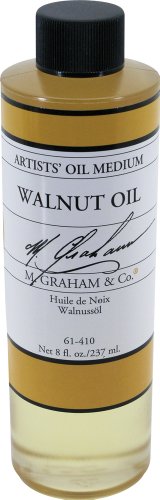
M. Graham Walnut Oil
Mixed into oil paint, this walnut oil extends working time for wet on wet blending and soft edges. It resists yellowing longer than linseed oil, which matters most on pale colors like white and light blue. The same bottle doubles as a brush cleaner for painters who already use it that way.
Pros
- Extends wet blending time versus linseed oil
- Resists yellowing on pale colors
- Doubles as a natural brush cleaner
Cons
- Slower drying suits patient painters, not fast turnaround work
- Costs more per ounce than raw linseed oil
Grumbacher Neo-Megilp
This gel follows a traditional megilp formula for building transparent glazes over dried layers. Mixed with oil paint, it adds gloss and a slight stringy body that some painters use for deliberate brush drag texture. It costs less per session than newer alkyd mediums, though the finish ambers faster over years.
Pros
- Costs less per session than alkyd mediums
- Adds gloss and transparency for glazing
- Slight body creates deliberate brush drag texture
Cons
- Ambers faster over years than modern alkyd mediums
- Stringy texture takes practice to control
Compared at a glance
| # | Model | Paint type | Best for | Score | Price |
|---|---|---|---|---|---|
| 1 | Liquitex Professional Gloss Medium & Varnish | Acrylic | Best overall | 9.4 | Check price |
| 2 | Golden Heavy Gel (Gloss) | Acrylic | Best for texture and impasto | 9.2 | Check price |
| 3 | Liquitex Professional Pouring Medium | Acrylic | Best for acrylic pouring | 9.0 | Check price |
| 4 | Winsor & Newton Liquin Original | Oil | Best for oil glazing | 8.7 | Check price |
| 5 | Golden Acrylic Flow Release | Acrylic | Best for acrylic flow | 8.5 | Check price |
| 6 | M. Graham Walnut Oil | Oil | Best for extending oil paint drying time | 8.3 | Check price |
| 7 | Grumbacher Neo-Megilp | Oil | Best budget | 8.0 | Check price |
Frequently asked questions
What is the difference between a glazing medium and a gel medium?
Glazing mediums thin paint while keeping it transparent, useful for layering see-through color. Gel mediums thicken paint and hold texture from a brush or knife. Some brands sell a soft gel for glazing and a heavy gel for texture, so check the listed body before buying.
Can you use acrylic medium with oil paint?
No. Acrylic mediums are water based and do not bond correctly with oil paint’s binder, which can cause cracking or peeling over time. Oil paint needs an oil, alkyd or resin based medium instead.
Which medium works best for acrylic pouring?
A dedicated pouring medium such as Liquitex Professional Pouring Medium self-levels and helps colors separate into cells. Adding a flow additive like Golden Acrylic Flow Release improves how thinned paint spreads without beading.
How do you speed up oil paint drying time?
Alkyd based mediums such as Winsor & Newton Liquin Original cut typical drying time to about a day or two. A small amount of commercial drier has a similar effect but changes flexibility more than an alkyd medium does.
How do you slow down oil paint drying time?
Walnut oil, poppy oil and stand oil all slow drying compared to standard linseed oil, buying more time to blend wet paint. M. Graham Walnut Oil is a common pick since it also resists yellowing on light colors.
Does painting medium change the finish sheen?
Most mediums are labeled gloss, satin or matte, and mixing a gloss medium into matte paint raises sheen in that area. Flow additives are the exception, since they change how paint spreads without touching gloss or matte finish.
Is Liquin the same as Galkyd?
Both are alkyd based oil mediums that speed drying and improve flow for glazing, but they come from different manufacturers. Winsor & Newton makes Liquin, while a separate oil paint maker produces Galkyd, so drying speed and consistency vary slightly.
Can two different painting mediums be mixed together?
Mixing two mediums within the same paint type, such as two acrylic gels, usually works fine for adjusting both body and gloss. Mixing an oil medium into acrylic, or the reverse, is the combination to avoid regardless of brand.
How much medium should be mixed into paint?
Most labels suggest starting around a one to one ratio of medium to paint and adjusting from there. Pouring mediums often need a higher ratio, while glazing mediums can go thinner depending on how transparent a layer needs to be.
Our pick
Liquitex Professional Gloss Medium & Varnish suits most acrylic painters best, since one bottle extends paint, builds glazes and finishes with a clear gloss coat. Anyone pouring acrylic should reach for the Liquitex Professional Pouring Medium instead, because a general purpose medium will not self-level into cells. Oil painters glazing thin layers get more from Winsor & Newton Liquin Original, which trims drying time the acrylic formula was never built to address.
Jake Monroe
Jake worked as a residential contractor for over a decade before shifting to full-time writing. He evaluates power tools, hand tools and workshop gear through the lens of someone who has actually used them on job sites, not just read the box.