Paint Roller Nap Length Explained, and Which One to Use
Purdy White Dove roller cover gives the cleanest lint-free finish on interior walls. Wooster Pro/Doo-Z is the better value workhorse across most paints. Bates Paint Roller Kit is the budget way to get a frame, covers and tray in one box.
Smooth interior walls and ceilings favor the Purdy White Dove cover for the fewest lint specks and the most even lay-off, while the Wooster Pro/Doo-Z suits everyday jobs and the Bates Paint Roller Kit covers a whole first project cheaply.
Nap length, fabric and frame quality change a finish more than the paint itself, and the wrong nap leaves stipple or misses texture entirely. We compared manufacturer specifications on fabric, nap and recommended surfaces alongside what owners report about shedding and durability across repeat washes.
How to choose
How does nap length decide the finish? Nap is the pile height of the cover, and it should match how rough the surface is. A 1/4 to 3/8 inch nap suits smooth drywall, plaster and doors for the flattest look. A 1/2 inch nap handles lightly textured walls, while 3/4 inch and above is meant for knockdown texture, stucco and block. Using too long a nap on smooth drywall causes most of the orange peel stipple people notice after paint dries.
Woven or knit fabric, which sheds less? Knit covers hold more paint and suit rougher surfaces, but they tend to shed more fibres, especially cheaper ones. Woven covers such as the White Dove release paint more evenly and shed far less, making them the choice for smooth walls and any enamel or gloss finish where a single fibre would show. Microfibre sits in between and pairs well with modern low-odour latex paints.
Why is the frame worth buying once, well? Cheap frames flex, let the cover slide, and spin loose on an extension pole, which shows up as uneven pressure and lap marks. A five-wire cage with a proper pole lock costs a little more once and then serves for years across dozens of covers. On a ceiling job, the pole connection alone decides whether the work is pleasant or frustrating.
What prep and technique actually improve results? Wrapping a new cover with tape and pulling it off lifts loose fibres before the first dip, and dampening the cover slightly helps latex paint load evenly. Load the roller until full but not dripping, roll in overlapping passes, and finish each section with a light unloaded pass in one direction to lay off texture. Keeping a wet edge while working in manageable sections matters more than any single product choice.
The shortlist, ranked
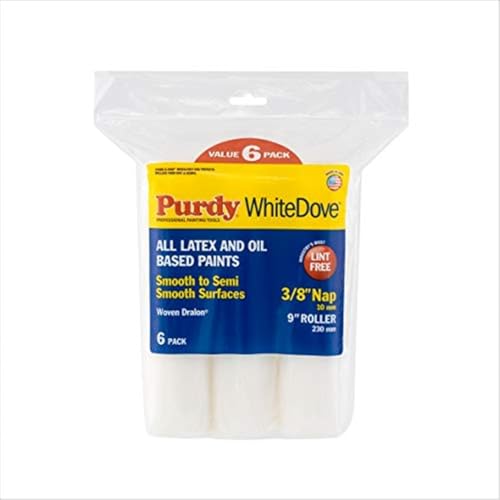
Purdy White Dove Roller Cover
Woven dralon fabric holds a lot of paint and releases it evenly, producing that flat, stipple-free wall finish painters chase. Because it is woven rather than knit, shedding stays minimal even on the first pass, so no fibres end up stuck in fresh paint. Owners report washing and reusing these covers many times without the nap matting down.
Pros
- Almost no lint shedding straight out of the wrapper
- Even paint release leaves minimal stipple
- Washes out and holds shape for repeat use
Cons
- Costs more than a basic knit cover
- Woven nap is less forgiving on heavy texture

Wooster Brush Pro/Doo-Z Roller Cover
Ordinary walls and ceilings in ordinary paint are where most painters reach for the Pro/Doo-Z. Shed-resistant fabric handles both flat and semi-gloss without leaving fibres behind, and beveled ends reduce the paint ridge that builds at the edge of each stroke. Enough nap lengths ship in the line to cover almost any interior job.
Pros
- Wide nap range for almost any interior surface
- Beveled ends reduce edge ridges in the paint
- Core holds up to repeated washing
Cons
- Not the absolute smoothest finish on gloss enamel
- Longer naps can splatter if overloaded

Bates Paint Roller Kit
A frame, several covers, a tray, a small trim roller and brushes all bundle together here, a practical way to start a first room without buying six items separately. Quality runs fair rather than professional, so expect a little shedding on the first cover. For a single weekend repainting a bedroom, it does the job at a fraction of the cost of assembling the same set piece by piece.
Pros
- Everything needed for a first project in one box
- Includes a mini roller for tight spots
- Very low cost per included item
Cons
- Covers shed more than premium fabrics
- Frame cage is less rigid than pro frames

Purdy Colossus Roller Cover
Surfaces that drink paint, such as knockdown texture, stucco and rough masonry, run a standard nap dry too fast, which is exactly what the Colossus is built for. High capacity fabric carries noticeably more paint per dip, cutting trips to the tray and improving coverage down into the texture. On flat drywall it is overkill and leaves a heavier stipple than needed.
Pros
- Carries far more paint per load than standard covers
- Pushes paint into deep texture and block
- Durable enough for exterior masonry work
Cons
- Leaves visible stipple on smooth drywall
- Heavy when fully loaded on a long pole

Wooster Brush Sherlock Roller Frame
A roller head spinning loose on an extension pole is a common annoyance the Sherlock frame solves by locking rigidly onto threaded poles. Its five-wire cage keeps covers from sliding off mid-stroke, and the handle grip resists twisting while rolling a ceiling overhead. Buy the frame once, then pair it with whichever cover suits the surface at hand.
Pros
- Locks solidly to a pole with no wobble
- Cage holds covers securely during long strokes
- Built to outlast dozens of cover changes
Cons
- Costs more than a throwaway frame
- Only fits standard 9 inch covers
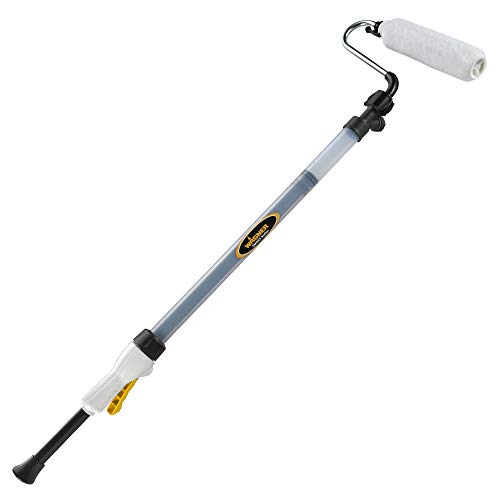
Wagner SMART Roller
A reservoir built into the handle draws paint in and feeds it directly into the cover, removing the tray and the drips that come with one. Ceilings, stairwells and anywhere a tray is awkward to set down all suit this design well. The trade-off is a heavier handle and a cleaning routine that takes longer than rinsing a plain cover.
Pros
- No tray to carry, tip or step in
- Consistent paint load reduces dry streaks
- Handy on ladders and stairwells
Cons
- Heavier in the hand when full
- Cleaning the internal chamber takes time

HomeRight Quick Painter Pad Edge Painter
Paint stored in the handle feeds a flat pad with guide wheels here, letting you run a clean line along ceilings, trim and corners without taping first. It will not replace a roller across open wall area, but it saves real time on the fiddly perimeter work that usually eats an afternoon. Owners report the guide wheels need wiping regularly to avoid smearing.
Pros
- Cuts in clean lines without masking tape
- Reservoir means fewer trips to the can
- Light enough for overhead ceiling lines
Cons
- Guide wheels must be wiped often
- Only useful for edges, not open walls
Compared at a glance
| # | Model | Fabric | Best for | Score | Price |
|---|---|---|---|---|---|
| 1 | Purdy White Dove Roller Cover | Woven dralon | Best overall | 9.4 | Check price |
| 2 | Wooster Brush Pro/Doo-Z Roller Cover | Shed-resistant white fabric | Best value | 9.2 | Check price |
| 3 | Bates Paint Roller Kit | Frame, covers, tray, brushes | Best budget | 9.0 | Check price |
| 4 | Purdy Colossus Roller Cover | High capacity polyamide blend | Best for textured surfaces | 8.8 | Check price |
| 5 | Wooster Brush Sherlock Roller Frame | Five-wire supported cage | Best roller frame | 8.6 | Check price |
| 6 | Wagner SMART Roller | Handle reservoir feeds cover | Best for painting without a tray | 8.3 | Check price |
| 7 | HomeRight Quick Painter Pad Edge Painter | Self-feeding edge pad | Best for cutting in edges | 8.0 | Check price |
Frequently asked questions
What nap should I use for smooth interior walls?
A 3/8 inch nap is the safest all-round choice for smooth drywall, giving good coverage with minimal stipple. Drop to 1/4 inch for doors, cabinets and very smooth plaster for an almost sprayed look. Move up to 1/2 inch only if the wall carries light orange peel texture.
How do I stop a roller from leaving lint in the paint?
Choose a woven or shed-resistant cover, then pre-clean it by wrapping packing tape around the nap and peeling it away a few times. Some painters also rinse and spin the cover before first use. Cheap knit covers shed the most, which is why a budget kit’s first coat often needs a light sand.
Can I reuse a roller cover after a job?
Yes, quality covers wash out and hold their nap through many jobs. Rinse latex paint out under warm water until it runs clear, spin the cover dry, and store it standing on end. For a short break between coats, wrap the loaded cover tightly in plastic to keep it usable for hours.
Do I need a different roller for ceilings?
The same nap rules apply, but a locking frame on an extension pole makes a much bigger difference overhead. Many people also step up slightly in nap for textured ceilings and use a shield or drop cloth, since rolling upward throws more spatter than rolling a wall.
Is a 9 inch or 18 inch roller better for a room?
Nine inch is the standard for rooms, doors and anywhere control matters most. Eighteen inch covers ground much faster on large open walls and ceilings, but it runs heavy when loaded and awkward around windows and fixtures. Most home projects finish faster overall with a 9 inch roller and a good pole.
What roller works best for cabinets and doors?
A short 1/4 inch nap woven cover or a dedicated foam cover gives the smoothest result on enamel. Roll a thin coat, lay it off lightly right away, then let it level. Thick coats are the main cause of visible roller texture in a cured cabinet finish.
Are roller kits worth buying over individual pieces?
For a first project, a kit is good value because it bundles the tray, frame and covers that would otherwise be bought separately. Regular painters do better buying a quality frame and quality covers individually, since the frame in most kits is the first part to fail.
How much wall does one roller cover paint?
A good cover comfortably handles several rooms across its life if washed properly. Within a single job, paint load limits progress rather than cover life, so plan on a full tray or bucket grid setup instead of expecting a cover to wear out mid-room.
What is the difference between a roller cover and a roller frame?
The cover is the replaceable fabric sleeve that holds and releases paint, while the frame is the reusable cage and handle it slides onto. Buying one durable frame like the Sherlock and swapping covers per job costs less over time than replacing an entire roller each project.
Is a self-feeding roller worth it for a whole house?
It earns its keep on ceilings and stairwells where setting down a tray is genuinely awkward, but the heavier handle and longer cleanup make it less practical for large open walls. Most whole-house jobs still move faster with a standard tray and roller.
Final word
For smooth interior walls the Purdy White Dove is the cover worth paying for, since it sheds almost no lint and lays paint down evenly enough to hide roller texture. The Wooster Pro/Doo-Z is the sensible everyday alternative across a wider range of naps, and pairing either with a Wooster Sherlock frame turns ceiling work from a chore into a straightforward job.
Jake Monroe
Jake worked as a residential contractor for over a decade before shifting to full-time writing. He evaluates power tools, hand tools and workshop gear through the lens of someone who has actually used them on job sites, not just read the box.