Over-Ear Headphones for Flights, Studio Work, and Commutes
Sony WH-1000XM5 balances noise cancellation and sound quality for most listeners. Bose QuietComfort Ultra suits frequent flyers chasing the strongest active noise cancellation. Anker Soundcore Q30 fits shoppers who want solid ANC without spending much. Sennheiser HD 560S serves anyone doing critical listening at a desk instead of on the move.
Sony WH-1000XM5 tops this list for most listeners, pairing up to 30 hours of ANC battery life with 30mm drivers tuned for balanced sound. Its plastic-heavy build is the main tradeoff, and some owners feel it undercuts the audio quality.
Comfort, isolation, and codec support pull in different directions, so these seven were sorted by comparing published specifications, owner feedback on long-session fit, and use-case fit across commuting, studio work, and desk listening.
The top picks, ranked

Sony WH-1000XM5
Two 30mm drivers work with Sony’s Integrated Processor V1 across eight microphones for adaptive noise cancellation. Battery life reaches 30 hours with ANC on, and a 3-minute quick charge adds about 3 hours of playback. Multipoint Bluetooth 5.2 connects two devices at once, and LDAC support streams high-resolution audio to compatible Android phones.
Pros
- Adaptive noise cancellation adjusts to ambient sound in real time
- LDAC codec streams high-resolution audio to compatible phones
- Multipoint pairing keeps two devices connected at once
Cons
- Earcups do not fold flat for storage
- Plastic-heavy build feels less substantial than some rivals

Bose QuietComfort Ultra Headphones
Proprietary ANC pairs with an Immersive Audio mode that adds spatial sound and head tracking. Battery life reaches 24 hours with ANC on, dropping to about 18 hours with Immersive Audio running. Bluetooth 5.3 with aptX Adaptive keeps the connection stable through crowded airports and open offices.
Pros
- Immersive Audio mode adds head-tracked spatial sound
- Cushioned earcups spread clamping force evenly for long wear
- Touch controls on the earcup handle volume and calls
Cons
- Immersive Audio mode shortens battery life noticeably
- Case is bulkier than folding-style alternatives

Sennheiser HD 560S
An open-back design built for desk listening rather than travel pairs 38mm drivers with 120-ohm impedance. Frequency response spans 6Hz to 22kHz for the neutral signature mixing engineers favor. A detachable 3-meter cable ships with both 6.3mm and 3.5mm connectors, and there is no battery or Bluetooth to manage.
Pros
- Neutral frequency response suits mixing and critical listening
- Open-back design reduces listening fatigue over long sessions
- No battery means consistent sound with zero charging
Cons
- Open-back design leaks sound and offers no isolation
- 120-ohm impedance benefits from a dedicated headphone amp

Audio-Technica ATH-M50x
Rare-earth magnets drive 45mm drivers in a design that has become a fixture in recording studios. Earcups swivel 90 degrees for one-ear monitoring, and the headband folds flat for storage. Three detachable cables ship in the box: a straight cable, a coiled cable, and a shorter straight cable for portable use.
Pros
- Swiveling earcups allow one-ear monitoring during recording sessions
- Three included cables cover studio and portable use cases
- Foldable design travels well in the included pouch
Cons
- Passive design offers no active noise cancellation
- Clamping force feels tight during the first few wears

Anker Soundcore Q30
Hybrid active noise cancellation pairs with 40mm drivers carrying Hi-Res Audio certification. Battery life reaches 40 hours with ANC on and up to 60 hours with it off, charged through USB-C. The Soundcore app adds an 8-band EQ for custom sound tuning.
Pros
- Long battery life outlasts pricier ANC headphones
- 8-band EQ in the Soundcore app allows detailed tuning
- Hybrid ANC handles both low-frequency and high-frequency noise
Cons
- Bluetooth 5.0 lacks multipoint device switching
- Touch controls occasionally misread swipe gestures

JBL Tour One M2
True Adaptive Noise Cancelling works alongside Qualcomm aptX Adaptive for stable, low-latency wireless audio. Battery life runs up to 50 hours with ANC on, and the JBL Headphones app builds a personalized sound profile from a hearing test. Bluetooth 5.3 supports multipoint connection to two devices at once.
Pros
- Long battery life covers multi-day trips without recharging
- Personalized sound profile adjusts EQ to individual hearing
- Multipoint Bluetooth switches smoothly between laptop and phone
Cons
- Heavier than most rivals in this list
- App requires an account to unlock personalized sound
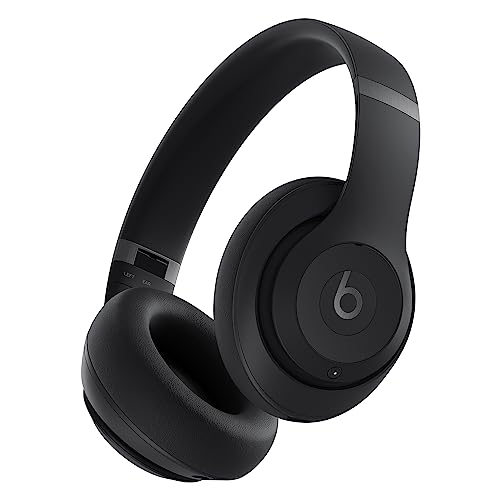
Beats Studio Pro
A custom chip replaces Apple’s H1 or H2, letting these headphones perform evenly across iOS and Android. Battery life reaches 40 hours with ANC off and 24 hours with it on, and a 10-minute fast charge adds about 4 hours. Spatial audio with dynamic head tracking works with compatible Apple devices.
Pros
- USB-C lossless audio works over a wired connection
- Fast charging adds hours of playback in minutes
- Performs evenly well on both iOS and Android
Cons
- ANC is noticeably weaker than Bose or Sony rivals
- Ear cushions run warm during longer listening sessions
The lineup, side by side
| # | Model | Driver size | Best for | Score | Price |
|---|---|---|---|---|---|
| 1 | Sony WH-1000XM5 | 30mm | Best overall | 9.4 | Check price |
| 2 | Bose QuietComfort Ultra Headphones | Adjustable ANC with Immersive Audio mode | Best for noise cancellation | 9.2 | Check price |
| 3 | Sennheiser HD 560S | 38mm | Best for critical listening and mixing | 9.0 | Check price |
| 4 | Audio-Technica ATH-M50x | 45mm | Best for studio monitoring | 8.8 | Check price |
| 5 | Anker Soundcore Q30 | 40mm | Best budget | 8.6 | Check price |
| 6 | JBL Tour One M2 | 40mm | Best value | 8.3 | Check price |
| 7 | Beats Studio Pro | 24 hours ANC on, 40 hours off | Best for iPhone and Apple device users | 8.0 | Check price |
What matters most
What actually separates good over-ear headphones Driver size alone does not decide sound quality; tuning and enclosure design matter just as much. Clamping force determines whether a headphone stays comfortable after two hours or starts pressing on glasses within thirty minutes. Battery life claims usually assume ANC is active, so check whether a listed number includes noise cancellation. Bluetooth version and codec support, including SBC, AAC, aptX, and LDAC, affect both range and streamed audio quality.
Active noise cancellation vs passive isolation Active noise cancellation uses microphones and inverse sound waves to cancel low, steady noise like engine hum. Passive isolation relies on cushion material and earcup seal to physically block sound, which works better against sudden sharp noises. Open-back designs like the Sennheiser HD 560S skip isolation entirely to reduce listening fatigue at a desk. Commuters flying or riding trains generally get more benefit from strong ANC than from passive seal alone.
Wired or wireless: which fits your routine Wired headphones such as the ATH-M50x and HD 560S never need charging and avoid Bluetooth compression artifacts entirely. Wireless models trade that consistency for freedom of movement and, in cases like the Tour One M2, multipoint pairing across a laptop and phone. Studio engineers often prefer wired monitoring to avoid latency during recording. Commuters and travelers usually value wireless convenience enough to accept occasional codec compromises.
Matching headphones to studio work, travel, or a tight budget Mixing engineers need a flat, uncolored response, which is why the HD 560S and ATH-M50x show up in professional studios rather than ANC-heavy travel headphones. Frequent flyers benefit most from the QuietComfort Ultra’s adjustable ANC and Immersive Audio mode during long cabin noise exposure. Shoppers on a tighter budget still get hybrid ANC and a 60-hour battery from the Soundcore Q30 without paying for extras like spatial audio. Apple device owners weighing Beats Studio Pro should factor weaker ANC against the convenience of USB-C lossless audio and cross-platform support.
Questions worth asking
What is the best over-ear headphone for long flights?
Bose QuietComfort Ultra Headphones handle engine hum and cabin noise well through adjustable ANC and an Immersive Audio mode, with up to 24 hours of battery per charge.
Are open-back or closed-back headphones better for mixing music?
Open-back models like the Sennheiser HD 560S reduce listening fatigue and reveal a more neutral frequency response, while closed-back options like the ATH-M50x isolate sound better in untreated rooms.
How long do over-ear headphone batteries typically last?
Wireless ANC headphones here range from 24 hours on the Beats Studio Pro with ANC on to 50 hours on the JBL Tour One M2, and wired models like the HD 560S need no battery at all.
Can over-ear headphones be used wired when the battery dies?
Sony WH-1000XM5, Bose QuietComfort Ultra, and JBL Tour One M2 all accept a wired cable connection so listening continues after the battery runs out, though ANC still needs power.
Is Bose QuietComfort Ultra better than Sony WH-1000XM5 for noise cancellation?
Owners report the QuietComfort Ultra blocks slightly more low-frequency engine noise, while the WH-1000XM5 offers longer battery life and LDAC support for higher-resolution streaming.
Do over-ear headphones work well for gym or workout use?
None of these seven models resist sweat enough for intense workouts, and over-ear designs trap heat, making them better suited to commuting, travel, or desk use than the gym.
Which Bluetooth codec matters most for wireless headphone sound quality?
LDAC, found on the Sony WH-1000XM5, and aptX Adaptive, found on the Bose QuietComfort Ultra and JBL Tour One M2, both stream higher bitrates than the standard SBC codec on Android.
Are budget over-ear headphones like the Anker Soundcore Q30 worth it?
The Soundcore Q30 offers hybrid ANC, an 8-band EQ through its app, and up to 60 hours of battery with ANC off, matching features found on pricier headphones.
What’s the difference between the JBL Tour One M2 and Beats Studio Pro?
The Tour One M2 lasts longer per charge and adds multipoint Bluetooth, while Beats Studio Pro leans on USB-C lossless audio and even performance across iOS and Android.
Our pick
Sony WH-1000XM5 earns the overall recommendation because it balances battery life, adaptive ANC, and LDAC streaming without the bulk of the QuietComfort Ultra. Studio engineers and anyone doing critical listening at a desk should choose the Sennheiser HD 560S instead, since its open-back design and flat response matter more than portability. Shoppers watching a tight budget can still get strong hybrid ANC and a 60-hour battery from the Anker Soundcore Q30.
Marcus Chen
Marcus covered consumer electronics for enthusiast tech publications for six years before joining ChoiceCrest. He specializes in translating manufacturer spec sheets into plain-language buying advice, with a focus on audio, computing accessories and smart-home gear.
You might also need
Earbuds That Actually Stay Put During Workouts
Top Screen Cleaners for Crystal Clear Displays
