Extension Cords Built for Rain, Frost and Real Tool Loads
The US Wire and Cable 74100 12/3 SJTW cord is the strongest overall pick for power tools, since 12-gauge copper keeps voltage drop low on chainsaws and compressors. Iron Forge Cable delivers the same gauge for less, and the AmazonBasics 16 AWG cord fits light seasonal lighting on a tighter budget.
Table saws and pressure washers run without overheating on the US Wire and Cable 74100, whose 12-gauge copper and SJTW jacket handle constant outdoor exposure, though its thick build makes coiling more of a chore than lighter cords.
Gauge ratings, jacket material, outlet layout and owner feedback on cold-weather stiffness separated cords built for daily tool use from ones meant only for seasonal lights.
Our top picks

US Wire and Cable 74100 12/3 SJTW Outdoor Extension Cord
A bright orange SJTW jacket rated for wet locations wraps 12-gauge copper conductors built for constant outdoor exposure. Voltage drop stays low running table saws, chainsaws or air compressors far from an outlet. Owners report the jacket stays flexible after a full season left outside.
Pros
- Handles high-draw tools without tripping breakers
- Jacket resists cracking in sun and rain
- Lighted plug shows live power at a glance
Cons
- Heavier to coil and store than 14-16 gauge cords
- Single outlet limits it to one tool at a time
Iron Forge Cable 12/3 Outdoor Extension Cord
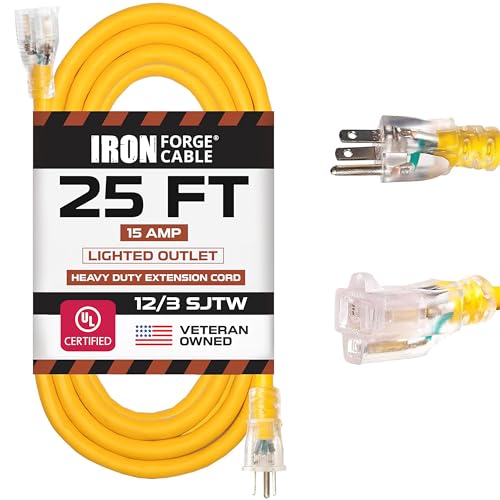
Iron Forge uses the same 12-gauge copper wire found in pricier cords without the usual premium markup. A lighted end plug makes the cord easy to spot after dark near a patio or shed. Reviewers note the connector fits snugly enough to resist accidental unplugging while mowing.
Pros
- Strong copper gauge for the price point
- Lighted plug aids visibility at dusk
- Connector grips tightly during movement
Cons
- Shorter 50-foot length limits reach for large yards
- Single outlet, no splitter end

AmazonBasics 16 AWG 3-Prong Outdoor Extension Cord
Low-draw devices like string lights, inflatables and small fans suit this 16-gauge cord better than power tools do. A thinner jacket coils easily into a small bag between seasons. Most owners reach for it only during holiday displays rather than year-round yard work.
Pros
- Lightweight and easy to coil for storage
- Affordable for occasional seasonal use
- Compact size fits in a small tote
Cons
- 16-gauge wire cannot safely run high-wattage tools
- Jacket stiffens noticeably in cold weather

Southwire 2589SW0002 12/3 SJTW Extension Cord
At 150 feet, this 12/3 cord reaches a detached garage, back fence or far corner of a garden without a splice. Twelve-gauge conductors keep voltage drop manageable even across that distance. Owners running pole saws and pressure washers on large lots cite the length as the main reason to buy it.
Pros
- Reaches far corners of large yards without a splice
- 12-gauge wire limits voltage drop over distance
- Sturdy molded plug ends resist wear
Cons
- Bulky to coil and carries real weight when wound up
- Overkill length for small patios or balconies

Coleman Cable 02419 16/3 Outdoor Multi-Outlet Extension Cord
Three outlets on this short 16/3 cord let one outdoor socket power several light strings or inflatables at once. Its lighter gauge suits low-draw seasonal decor rather than tools. Reviewers mostly wrap it around porch railings each winter and pack it away come spring.
Pros
- Three outlets power several light strings at once
- Short length keeps cords tidy near a single socket
- Compact and easy to store off-season
Cons
- Too short for reaching distant yard areas
- Gauge not rated for power tools or heaters

Yodotek 12/3 SJTW Heavy Duty Outdoor Extension Cord
A rubberized SJTW jacket over thick 12-gauge conductors targets contractors and serious DIYers running gear on concrete or gravel. Miter saws and generators run well through longer projects without heat buildup. The tradeoff is a stiffer, heavier cord than lighter household options.
Pros
- Rubberized jacket resists cuts and abrasion on rough ground
- Handles sustained heavy tool loads
- Grounded plug adds a layer of shock protection
Cons
- Stiffer jacket makes coiling more effort
- Heavier weight than 14-16 gauge alternatives

Clear Power 14/3 All-Weather Extension Cord
Clear Power’s jacket formula resists the stiffening that plagues cheaper vinyl cords left outside through winter. Mid-range loads like leaf blowers and shop lights suit the 14-gauge wire well. Owners in colder climates note it stays workable pulling it straight from a cold shed.
Pros
- Jacket stays flexible in near-freezing temperatures
- 14-gauge wire covers most mid-draw tools
- Compact spool design for easy storage
Cons
- Not rated for the highest-draw tools like table saws
- Single outlet limits simultaneous use
Side by side
| # | Model | Gauge | Best for | Score | Price |
|---|---|---|---|---|---|
| 1 | US Wire and Cable 74100 12/3 SJTW Outdoor Extension Cord | 12 AWG | Best overall | 9.4 | Check price |
| 2 | Iron Forge Cable 12/3 Outdoor Extension Cord | 12 AWG | Best value | 9.1 | Check price |
| 3 | AmazonBasics 16 AWG 3-Prong Outdoor Extension Cord | 16 AWG | Best budget | 8.8 | Check price |
| 4 | Southwire 2589SW0002 12/3 SJTW Extension Cord | 12 AWG | Best for long-length runs | 8.6 | Check price |
| 5 | Coleman Cable 02419 16/3 Outdoor Multi-Outlet Extension Cord | 16 AWG | Best for holiday lights | 8.4 | Check price |
| 6 | Yodotek 12/3 SJTW Heavy Duty Outdoor Extension Cord | 12 AWG | Best for heavy power tools | 8.2 | Check price |
| 7 | Clear Power 14/3 All-Weather Extension Cord | 14 AWG | Best for cold-weather flexibility | 8.0 | Check price |
What to look for
What to look for in an outdoor extension cord Jacket rating comes first. SJTW or SJEOW markings confirm a cord is built for wet, outdoor conditions. Gauge matters next, since a lower AWG number means thicker wire and less voltage drop. Outlet count and length only become relevant once those two safety basics check out.
Matching gauge and amperage to power tools Table saws and pressure washers draw far more current than lights or fans. Twelve-gauge wire handles that load over longer distances without overheating. Sixteen-gauge cords work fine for low-draw devices but can trip a breaker under a saw’s startup surge. The tool’s nameplate lists the amp rating to match against the cord.
Choosing length and outlet count for the yard A small patio rarely needs more than 25 feet of cord. A detached garage or back fence often calls for 100 feet or more. Extra length loses some voltage over distance, so pairing it with a thicker gauge offsets that drop. Multi-outlet cords help when several light strings or small appliances run from one socket, while single-outlet cords stay lighter for one tool.
Handling cold weather and year-round storage Cheap vinyl jackets stiffen and crack after a winter left outside. Cold-flex compounds stay pliable enough to uncoil without kinking in near-freezing temperatures. Anyone running holiday lights or a snowblower through winter should weigh this feature heavily. Storing any cord indoors between uses extends its lifespan no matter the jacket type.
Questions worth asking
What gauge extension cord is best for outdoor use?
Twelve-gauge cords handle power tools and long runs, while 14-gauge suits mid-range loads like leaf blowers. Sixteen-gauge cords belong on lights and other low-draw devices only.
Can I leave an outdoor extension cord out in the rain?
Cords rated SJTW or SJEOW are built for wet locations and can stay outside during rain. Keeping connections off the ground and away from standing water still matters.
How long can an outdoor extension cord be without losing power?
Voltage drop increases with distance, so runs over 100 feet call for 12-gauge wire rather than 14 or 16-gauge. Shorter runs under 50 feet allow more flexibility on gauge.
Is a thicker or thinner gauge extension cord better?
A lower AWG number means thicker wire that carries more current safely. Thicker gauge suits tools, while thinner gauge is fine for lights or small electronics.
What is the difference between indoor and outdoor extension cords?
Outdoor cords use jackets rated for moisture, UV exposure and temperature swings, marked SJTW or similar. Indoor-only cords skip that protection and can crack or short if left outside.
Do outdoor extension cords work in cold weather?
Standard vinyl jackets stiffen and crack in freezing temperatures. Cords labeled cold-flex or all-weather stay more pliable for winter tasks like holiday lights or snow equipment.
How many outlets do I need on an outdoor extension cord?
A single outlet works for one tool or appliance at a time. Multi-outlet cords help when powering several light strings or small devices from one exterior socket.
What amperage can a 12 gauge outdoor extension cord handle?
A 12-gauge cord typically handles up to 20 amps depending on length, enough for most saws, pressure washers and shop equipment. The tool’s nameplate rating should always be checked against the cord’s rated capacity.
Which extension cord reaches farthest across a large yard?
The Southwire 2589SW0002 runs 150 feet on 12-gauge wire, covering a detached garage or back fence without a splice. Shorter 50-foot cords suit tighter properties better.
Is a 14-gauge or 12-gauge cord better for leaf blowers?
Fourteen-gauge cords like the Clear Power handle most leaf blowers and shop lights without issue. Twelve-gauge wire is only necessary for higher-draw tools like table saws or air compressors.
Our take
The US Wire and Cable 74100 12/3 SJTW cord earns the top spot for most yards and job sites, balancing gauge, durability and single-outlet simplicity for real tool use. Buyers on a tighter budget who still want 12-gauge strength should look at the Iron Forge Cable version instead. Anyone only powering holiday lights or small inflatables can skip the heavier cords and choose the Coleman Cable multi-outlet or AmazonBasics option.
Sierra Daniels
Sierra's background is in landscape design and nursery retail. She focuses on lawn and garden equipment, outdoor furniture and gear durability, weighing published specs against how materials actually hold up outside.