Orthopedic Dog Toys for Senior and Recovering Dogs
West Paw’s Zogoflex Qwizl suits dogs on activity restriction after surgery, rewarding slow gnawing instead of jumping or tugging. KONG’s Classic Dog Toy works for gentle chewers of any age through its softer senior rubber. Benebone’s Wishbone gives arthritic dogs an easy-grip shape that needs no lifting or lunging.
West Paw’s Zogoflex Qwizl leads this list for dogs on restricted activity after surgery. Its treat-dispensing design rewards slow, low-impact gnawing rather than the jumping and tugging a harder toy invites, though determined heavy chewers can still puncture it over time.
Arthritis, hip dysplasia, and post-op restrictions do not remove a dog’s need for mental engagement, but a toy demanding hard chewing or high jumps can undo weeks of healing. Material softness and grip shape matter here as much as durability.
The best picks, ranked
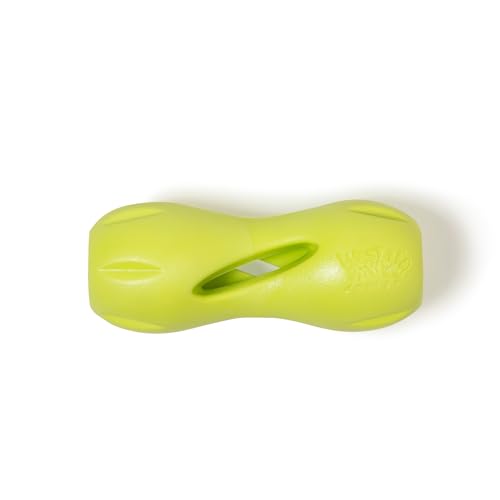
West Paw Zogoflex Qwizl Treat Toy
Slow, gentle gnawing empties this treat-dispensing tube instead of rewarding aggressive chewing, which suits dogs on activity restriction. Zogoflex material flexes under bite pressure rather than resisting it rigidly. Dishwasher-safe and buoyant, it stays easy to keep clean during a recovery period.
Pros
- Flexible material rewards gentle gnawing over hard biting
- Dishwasher-safe design simplifies cleanup during recovery
- Hollow tube works for slow treat dispensing
Cons
- Sustained hard chewing from larger dogs can still puncture it
- Treats must be soft enough to fit the internal channel

KONG Classic Dog Toy
Multiple rubber firmness levels exist for this toy, and the softer Puppy or Senior formulas flex more under bite pressure than standard red rubber. Its rounded shape needs no jumping or lunging to enjoy. Stuffing it with soft food encourages licking over hard chewing.
Pros
- Softer senior rubber formula eases strain on weak jaws
- Stuffable design turns play into slow licking rather than biting
- Rounded shape requires no jumping to use
Cons
- Standard red rubber stays too firm for weak jaws
- Unpredictable bouncing can still trigger chasing in excited dogs

Benebone Wishbone Chew Toy
Sitting flat on the floor, this wishbone shape lets a dog with hip or shoulder pain chew without lifting or lunging for it. Nylon construction resists splintering better than natural bone. Bacon or chicken flavoring is molded into the material rather than coated on, so light gumming will not wear it off.
Pros
- Flat wishbone shape needs no lifting or lunging
- Nylon resists splintering compared with natural bone
- Molded-in flavor lasts longer than a coated surface
Cons
- Firmer nylon construction does not suit very weak jaws
- Dogs missing several teeth may struggle with it

Nylabone DuraChew Textured Ring
A softer DuraChew formulation gives this ring a textured surface without demanding hard bite force. Its ring shape stays accessible on the floor, so a dog can mouth it without holding it upright. Senior-dog owners report it resists splintering better than harder nylon bones.
Pros
- Softer formulation needs less bite force than standard Nylabone
- Ring shape stays reachable without lifting
- Textured surface adds light dental benefit
Cons
- Still firmer than rubber options for frail dogs
- Ring shape can roll away across hard flooring

Outward Hound Invincibles Minis Plush Toy
Very little weight makes this plush toy easy to tug or carry without straining a healing shoulder or neck. Multiple internal squeakers keep it engaging without requiring hard bites. Comfort play like this suits dogs recovering from surgery who still want a stuffed companion.
Pros
- Lightweight build avoids straining healing joints
- Multiple squeakers activate without hard biting
- Comfort factor suits anxious, recovering dogs
Cons
- Durability suffers against dogs that still chew hard
- Torn fabric could be ingested despite the stuffing-free design

Chuckit! Ultra Ball
Softer rubber compound covers this ball instead of tennis-ball felt, easing grinding on worn teeth during pickup. High bounce lets owners roll rather than throw it far, keeping fetch low-impact for hip or knee limits. Buoyancy suits dogs doing water-based rehab exercise.
Pros
- Rubber surface is gentler on teeth than felt-covered balls
- Floats for use during water-based rehab activity
- Rolling instead of throwing keeps play low-impact
Cons
- Running is still encouraged, limiting use right after surgery
- Unpredictable bounce can frustrate dogs with balance issues

Petstages Orka Chew Tube
TPR rubber body and nylon inserts combine in this hollow tube, giving light dental texture without full nylon firmness. Cost stays below specialty enrichment toys while it still works for gentle chewers. Light weight makes it easy for a recovering dog to hold without strain.
Pros
- Affordable compared with specialty enrichment toys
- Lightweight tube is easy to hold without strain
- Combines soft rubber with light dental texture
Cons
- Nylon inserts add firmness for very sensitive jaws
- Smaller size options limit use for larger breeds
Before you buy
What makes a toy safe for joint or dental sensitivity Gentle toys flex under light bite pressure instead of resisting it, easing strain on jaw joints and worn teeth. Shape matters too, since a toy sitting flat on the floor avoids the lifting and lunging a raised toy demands. Weight should stay low enough that carrying it will not tire a sore shoulder or neck.
Best toys for post-surgery activity restriction Treat-dispensing toys like the West Paw Zogoflex Qwizl reward slow engagement over the running and jumping a ball invites. Crate rest and leash-only recovery periods suit this kind of enrichment well. Vets often recommend mental stimulation toys specifically because they replace exercise a dog cannot yet have.
Choosing toys for missing or worn teeth Softer rubber formulations, such as KONG’s senior line or Nylabone’s DuraChew ring, need less bite force than standard nylon chews. Textured surfaces on some toys add light dental cleaning without hard grinding. Dogs missing several teeth generally do better with rubber than nylon.
When fetch or tug still fits a recovery routine Low-impact fetch, using a soft ball rolled rather than thrown, can stay part of a routine with vet approval. Lightweight plush toys allow gentle tug without the resistance of a rope toy. Any toy that encourages sprinting or hard jumping should wait until mobility fully returns.
Side by side
| # | Model | Material | Best for | Score | Price |
|---|---|---|---|---|---|
| 1 | West Paw Zogoflex Qwizl Treat Toy | Zogoflex recycled elastomer | Best overall | 9.3 | Check price |
| 2 | KONG Classic Dog Toy | Natural rubber, senior formula available | Best for gentle chewers | 9.1 | Check price |
| 3 | Benebone Wishbone Chew Toy | Nylon with molded flavoring | Best for arthritic dogs | 8.8 | Check price |
| 4 | Nylabone DuraChew Textured Ring | Softer DuraChew nylon blend | Best for weak teeth | 8.6 | Check price |
| 5 | Outward Hound Invincibles Minis Plush Toy | Plush fabric with internal squeakers | Best for gentle tug and comfort | 8.4 | Check price |
| 6 | Chuckit! Ultra Ball | Durable rubber, no felt coating | Best for low-impact fetch | 8.2 | Check price |
| 7 | Petstages Orka Chew Tube | TPR rubber body, nylon inserts | Best value | 8.0 | Check price |
Questions worth asking
What is an orthopedic dog toy?
It generally describes a toy built around low-impact play, using softer materials and shapes that avoid jumping, lunging, or hard biting. These suit dogs recovering from surgery, arthritis, or dental sensitivity.
Is rubber or nylon better for a senior dog’s teeth?
Rubber typically flexes more under bite pressure, suiting weaker jaws and worn teeth better than firm nylon. Nylon still works for dogs with strong remaining teeth who chew hard.
Can a dog recovering from surgery still play with toys?
Yes, low-impact enrichment toys like treat-dispensing tubes provide mental stimulation without the running or jumping a ball requires. Confirm activity level with a vet during recovery.
What toys work for a dog with hip dysplasia?
Toys that sit flat on the floor, such as the Benebone Wishbone or Nylabone ring, avoid the lunging and jumping that can aggravate hip pain. Rolling a soft ball instead of throwing it also reduces strain.
Do soft dog toys clean teeth as well as hard chews?
Textured soft toys, like the Nylabone DuraChew ring, offer light dental cleaning through surface texture, though less abrasive action than harder chews. Regular brushing still matters more for dental health.
How can I tell if a toy is too hard for my dog’s teeth?
If a toy does not flex at all under firm hand pressure, it likely demands more bite force than a sensitive jaw should provide. Rubber toys rated for puppies or seniors tend to flex noticeably more.
Are squeaky toys safe for anxious or recovering dogs?
Plush squeaky toys can offer comfort without physical strain, since minimal bite force activates the squeaker. Supervise use if a dog tends to destuff or ingest fabric.
Which toy works best for a three-legged or mobility-limited dog?
Flat, easy-to-reach shapes like the wishbone or ring designs avoid the need to stand and balance while chewing, which suits limited mobility better than toys that bounce or roll away.
Are treat-dispensing toys good for dogs on crate rest?
Yes. A toy like the West Paw Zogoflex Qwizl rewards slow, calm engagement, giving a crate-rest dog mental stimulation without any running or jumping.
Our take
West Paw’s Zogoflex Qwizl remains the strongest pick for dogs on activity restriction, since its treat-dispensing design rewards calm engagement over running or jumping. Dogs with weaker jaws or missing teeth do better with the softer KONG senior rubber. Owners of dogs with hip or shoulder limits should lean toward flat-shaped chews like the Benebone Wishbone that need no lifting to use.
Olivia Hartley
Olivia spent several years working at an animal shelter and a pet-supply retailer before joining the editorial team. She researches pet gear with an emphasis on safety, comfort and the fine print that owners often miss.