Which Cat Litter Is Gentlest on Arthritic Paws?
Dr. Elsey’s Precious Cat Senior Cat Litter, World’s Best Cat Litter Multi-Cat Clumping Formula, and okocat Soft Paper Pellet Litter stand out for arthritic or sensitive-pawed cats. Fine or soft granules replace standard clay’s sharp edges in each one. Low dust and reliable clumping keep daily scooping simple without irritating sore joints.
Joint pain, healing paws, and missing claws all change what a litter box needs. Finer, softer granules ease pressure on tender pads, while lower dust protects cats that rest near the box more often.
No bag is labeled orthopedic, so granule size, material, dust output, and bag weight become the real signals to compare. We compared listed specifications, ingredient types, and owner feedback across seven widely sold litters rather than relying on marketing claims.
Our top picks

Dr. Elsey’s Precious Cat Senior Cat Litter
Fine, unscented clumping clay targets senior cats with stiffer joints in this formula. Ground granules land softer underfoot than standard clay, cutting dust in the process. Clumps form fast, which keeps scooping simple across multiple daily changes.
Pros
- Fine clay texture feels softer underfoot than standard granules
- Unscented formula avoids fragrance sensitivity in older cats
- Hard clumps make daily scooping fast and thorough
Cons
- 40 lb bags challenge owners managing their own joint pain
- Clay dust still settles near the box compared to paper litters
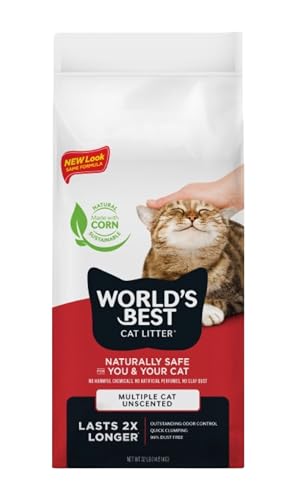
World’s Best Cat Litter Multi-Cat Clumping Formula
Whole-kernel corn replaces clay entirely in this formula. Rounded granules weigh less than mineral litter, easing pressure on tender paws. Tight clumps form even in multi-cat homes, allowing one-scoop cleanup.
Pros
- Corn granules are gentler on paws than sharp-edged clay
- Lighter bags carry easier than standard clay
- Tight clumps simplify scooping without breaking apart
Cons
- Costs more per pound than standard clay litters
- Cats used to clay may need a gradual transition

Purina Tidy Cats Lightweight Free & Clean Unscented
Lightweight clumping clay trades bulk for convenience here. Bags weigh roughly half of standard clay while holding onto clump strength, easing the physical load on owners. An unscented, low-dust mix suits cats sensitive to fragrance.
Pros
- Half the weight of standard clay eases bag handling
- Budget-friendly price per pound
- Unscented formula works well for fragrance-sensitive cats
Cons
- Medium-grain texture feels less soft than paper or corn options
- Clumps break apart more easily during scooping than premium clay

okocat Soft Paper Pellet Cat Litter
Recycled paper pellets replace mineral litter entirely in this formula. Rounded, soft pellets suit cats healing from declaw surgery or other paw procedures. Odor control comes from the paper base rather than added fragrance.
Pros
- Rounded pellets minimize pressure on healing or sensitive paw pads
- Paper base produces almost no airborne dust
- Unscented formula avoids added fragrance
Cons
- Pellets clump less tightly than clay
- Larger pellet size can feel unfamiliar to cats used to fine litter

Naturally Fresh Quick-Clumping Cat Litter
Ground walnut shells give this litter a soft, fine texture with low dust output. Granules stay gentle underfoot, an advantage for cats that flinch at coarse clay. Tracking stays minimal, keeping floors cleaner around the box.
Pros
- Walnut granules stay soft for cats with tender paws
- Low tracking limits litter spread outside the box
- Unscented formula suits fragrance-sensitive households
Cons
- Dark granule color makes waste harder to spot
- Earthy walnut smell isn’t for every owner

Boxiecat Simply Unscented Clumping Clay Litter
Ultra-fine clumping clay targets sensitive cats in this formula. Small granule size keeps the surface soft, which matters for cats recovering from surgery or injury. Clumps form hard and hold together for easy removal.
Pros
- Ultra-fine texture is gentle on paws healing from surgery
- Hard clumps simplify daily maintenance
- Unscented formula suits cats with fragrance sensitivity
Cons
- Priced higher per pound than mainstream clay brands
- Clay litter carries heavier than plant-based alternatives

PrettyLitter
Silica crystals trade bulk for lightness in this litter. Crystals weigh far less than clay by volume, making bags easier to lift and carry. Low dust and minimal tracking keep the area around the box cleaner.
Pros
- Crystal litter weighs far less than clay for easier handling
- Rounded texture is gentle on sensitive or arthritic paws
- Low dust and tracking reduce mess in multi-cat homes
Cons
- Crystal texture and sound take some cats time to accept
- A full monthly change replaces daily topping off
Before you buy
What Makes a Cat Litter Joint-Friendly? Orthopedic litter isn’t an official category; it comes down to texture and effort. Cats with arthritis or healing paws benefit from finer, softer granules that don’t dig into sensitive pads. Bag weight matters too, since owners managing their own joint pain need something they can lift without strain. Dust reduction protects airways in cats that already spend more time resting near the box.
Which Litter Texture and Dust Level Suit Sensitive Paws? Paper pellets and fine clay feel softest against tender pads, while coarse clay can feel sharp by comparison. Dust settles fastest with paper and silica formulas, and stays lowest with fine-ground clay blends like Boxiecat. Walnut shell litter splits the difference, offering a soft granule with moderate dust output. Granule size, more than brand marketing, predicts how comfortable a litter actually feels.
Best Litter Types for Senior, Declawed, and Post-Surgery Cats Senior cats with stiff joints often do best with lightweight, low-effort formulas such as Tidy Cats Lightweight or PrettyLitter. Declawed cats and those healing from paw surgery tend to prefer soft pellets, since okocat’s rounded paper shape avoids pressure points. Ultra-fine clay like Boxiecat clumps without leaving sharp edges, which suits post-surgery cats. Matching texture to the specific condition beats chasing one universal pick.
How Should You Set Up a Litter Box for Limited Mobility? Low-entry boxes reduce the strain of stepping over a high rim for cats with sore joints. Placing at least one box on each floor of the home cuts down on stairs for cats with reduced mobility. A litter depth around two inches gives enough cushioning without requiring deep digging. Frequent scooping keeps the surface soft and encourages consistent use of the box.
How they compare
| # | Model | Material | Best for | Score | Price |
|---|---|---|---|---|---|
| 1 | Dr. Elsey’s Precious Cat Senior Cat Litter | Sodium bentonite clumping clay | Best overall | 9.4 | Check price |
| 2 | World’s Best Cat Litter Multi-Cat Clumping Formula | Whole-kernel corn | Best value | 9.2 | Check price |
| 3 | Purina Tidy Cats Lightweight Free & Clean Unscented | Lightweight clumping clay | Best budget | 8.9 | Check price |
| 4 | okocat Soft Paper Pellet Cat Litter | Recycled paper pellets | Best soft-textured for declawed cats | 8.7 | Check price |
| 5 | Naturally Fresh Quick-Clumping Cat Litter | Ground walnut shells | Best low-dust | 8.5 | Check price |
| 6 | Boxiecat Simply Unscented Clumping Clay Litter | Fine-grain clumping clay | Best for post-surgery recovery | 8.2 | Check price |
| 7 | PrettyLitter | Silica gel crystals | Best lightweight | 8.0 | Check price |
Questions worth asking
What is the best cat litter for arthritic cats?
Fine-grain or paper-pellet litters tend to work best, since they cushion sore joints better than coarse clay. Dr. Elsey’s Precious Cat Senior Cat Litter and okocat Soft Paper Pellet Litter both use softer textures.
Is paper litter better than clay for sensitive paws?
Paper litter is generally softer and produces less dust, suiting cats with tender or healing paws. Clay clumps more tightly, so the choice often comes down to texture versus cleanup convenience.
Can declawed cats use clumping clay litter?
Yes, but fine-grain, low-dust clay formulas like Boxiecat Simply Unscented are easier on healing pads than coarse, standard clay. Many owners switch to paper pellets during initial recovery.
How do I choose litter for a senior cat with joint pain?
Look for a lightweight bag that’s easy to lift, a low-entry box, and a soft, fine granule. Tidy Cats Lightweight Free & Clean and PrettyLitter both reduce the physical effort of maintenance.
Which cat litter is lowest in dust?
Paper pellet and fine clumping clay formulas generally produce the least airborne dust. okocat Soft Paper Pellet Litter and Boxiecat Simply Unscented both list near dust-free formulas on their packaging.
Is lightweight litter better for cats with mobility issues?
Lightweight litter mainly benefits owners by making bags easier to carry and lift. For the cat, granule softness and dust level matter more than overall bag weight.
Does litter texture affect a cat’s willingness to use the box?
Texture ranks among the most common reasons cats avoid a litter box. Cats with sore paws may reject coarse or sharp-edged granules in favor of softer, rounded options.
What is the best cat litter for post-surgery recovery?
Soft, low-dust options such as okocat Soft Paper Pellet Litter or Boxiecat Simply Unscented Clumping Clay Litter are commonly used during recovery from spay, neuter, or declaw procedures. Both avoid the sharp edges found in standard clay.
Clumping clay vs paper pellet litter: which is gentler on paws?
Paper pellets are rounder and softer overall, while fine clumping clay comes close and clumps more tightly. The right pick depends on whether softness or scooping convenience matters more to you.
Our pick
No single litter fits every arthritic or recovering cat, since paw sensitivity and mobility needs vary widely. Softer, finer textures and lower dust generally make the litter box easier to use. Matching material, granule size, and bag weight to your cat’s specific situation works better than chasing one universal pick.
Olivia Hartley
Olivia spent several years working at an animal shelter and a pet-supply retailer before joining the editorial team. She researches pet gear with an emphasis on safety, comfort and the fine print that owners often miss.