OLED TVs Worth the Upgrade From a Standard LED Set
The LG C3 remains the strongest value across current OLED TVs, balancing picture quality and price. Buyers who want extra brightness for a sunlit room should consider the LG G3 or Samsung S95C instead. Budget shoppers can still get a true OLED panel with the LG B3.
The LG C3 is the easiest OLED recommendation for most living rooms, balancing picture quality against a price well below flagship panels. Rooms with heavy daylight do better with the brighter LG G3 or Samsung S95C. Buyers who want the widest color volume should look at a QD-OLED panel like the Samsung S90C or Sony A95L instead.
OLED shopping gets complicated once panel type enters the picture, since Samsung and Sony’s QD-OLED differs from LG’s white OLED approach to brightness and color. We compared panel technology, peak brightness features and processing before ranking these seven current models.
Our top picks
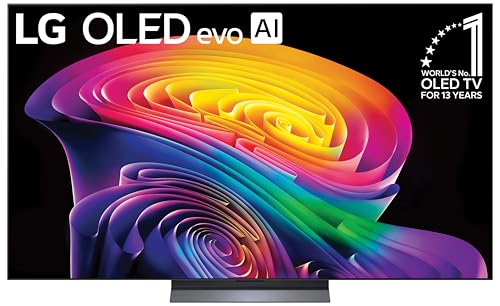
LG C3 OLED evo 65-Inch Class
C3 uses LG’s OLED evo panel with a brightness boosting algorithm but skips the Micro Lens Array found on the step up G series. Its a9 AI processor handles upscaling and motion well for streaming and broadcast content alike. webOS ships with LG’s full smart platform and remote control included.
Pros
- Strong all around picture quality for the price
- Excellent motion handling for live sports
- Full smart platform with wide app support
Cons
- Less peak brightness than the G3 above it
- Stand design is less flush to the wall

Sony BRAVIA XR A95L QD-OLED 65-Inch
A95L combines a QD-OLED panel with Sony’s Cognitive Processor XR for the brand’s most capable picture this generation. The wider color volume from the quantum dot layer pairs with Sony’s film accurate color tuning. It is Sony’s answer to Samsung’s S95C rather than a budget alternative.
Pros
- Widest color volume in Sony’s current OLED lineup
- Film accurate color tuning out of the box
- Strong motion handling for both movies and sports
Cons
- Premium price near the top of the OLED market
- Fewer full bandwidth HDMI 2.1 ports than LG’s C or G series

Samsung S95C OLED 65-Inch (QD-OLED)
S95C pairs the same QD-OLED panel family as the S90C with Samsung’s One Connect box, which moves all cable connections to a separate unit near your outlet. The panel sits in an ultra slim frame designed to mount nearly flush against a wall. Samsung tunes it for higher peak brightness than the S90C.
Pros
- One Connect box keeps cables out of sight
- Slimmer wall mounted profile than most OLED TVs
- Higher peak brightness than the S90C
Cons
- Costs more than the S90C for the same core panel
- One Connect cable run matters for the install

LG G3 OLED evo 65-Inch Class
G3 adds LG’s Micro Lens Array to the OLED evo panel, which raises peak brightness well beyond the C3 for HDR highlights. LG designs it as a Gallery series set meant to sit flush against a wall with an included bracket. The higher brightness ceiling matters most in rooms with some ambient light.
Pros
- Noticeably brighter HDR highlights than standard OLED
- Slim profile designed for flush wall mounting
- Same excellent black levels as other LG OLED panels
Cons
- Costs more than the C3 for the brightness gain
- Wall mount focused design suits fewer room layouts
Samsung S90C OLED 65-Inch (QD-OLED)
S90C uses a QD-OLED panel, which pairs quantum dots with an OLED backlight for wider color volume than a traditional white OLED panel. Samsung skips the One Connect external box found on the S95C, keeping cabling at the TV itself. Tizen smart platform and Samsung Gaming Hub both come built in.
Pros
- Wider color volume than standard white OLED panels
- Lower price than the One Connect equipped S95C
- Samsung Gaming Hub for cloud play built in
Cons
- No One Connect box for simplified cable routing
- Peak brightness trails Samsung’s flagship S95C

Sony BRAVIA XR A80L OLED 65-Inch
A80L runs Sony’s Cognitive Processor XR, which maps contrast and color the way Sony’s own mastering monitors do for streamed movies. Sony tunes its OLED panels historically toward natural skin tones over the punchier look some rivals favor. The included Acoustic Surface Audio uses the screen itself as part of the speaker system.
Pros
- Natural color and skin tone accuracy for movies
- Acoustic Surface Audio adds clarity without a soundbar
- Strong motion processing for film and broadcast content
Cons
- Peak brightness lower than Samsung’s QD-OLED models
- Fewer gaming focused HDMI 2.1 ports than LG models
LG B3 OLED 65-Inch Class
B3 keeps LG’s core OLED panel but pairs it with a less powerful a6 processor than the C or G series. Everyday streaming and live TV still look sharp, though upscaling of lower resolution sources is less refined. It remains the most affordable path into an LG OLED panel this size.
Pros
- Lowest price among current LG OLED sizes this large
- Same deep black levels as pricier LG OLED models
- Full webOS smart platform included
Cons
- Weaker upscaling on lower resolution sources
- Lower peak brightness than the C or G series
How they compare
| # | Model | Panel | Best for | Score | Price |
|---|---|---|---|---|---|
| 1 | LG C3 OLED evo 65-Inch Class | OLED evo | Best overall | 9.4 | Check price |
| 2 | Sony BRAVIA XR A95L QD-OLED 65-Inch | QD-OLED | Best picture quality overall | 9.2 | Check price |
| 3 | Samsung S95C OLED 65-Inch (QD-OLED) | QD-OLED | Best premium design | 9.0 | Check price |
| 4 | LG G3 OLED evo 65-Inch Class | OLED evo with Micro Lens Array | Best for bright rooms | 8.9 | Check price |
| 5 | Samsung S90C OLED 65-Inch (QD-OLED) | QD-OLED | Best value QD-OLED | 8.7 | Check price |
| 6 | Sony BRAVIA XR A80L OLED 65-Inch | OLED | Best for color accuracy | 8.6 | Check price |
| 7 | LG B3 OLED 65-Inch Class | OLED | Best budget | 8.3 | Check price |
Before you buy
What makes OLED different from LED or QLED TVs Every pixel in an OLED panel lights itself, so there is no backlight to dim or bloom around bright objects. That self lighting lets individual pixels turn fully off, producing black levels a backlit LED panel cannot match. Viewing angles stay consistent too, since there is no backlight shining through layers at an angle. Trade offs show up mainly in peak brightness, where backlit Mini LED and QLED panels still hold an edge.
White OLED vs QD-OLED panels LG’s panels use a white OLED layer filtered through red, green and blue color filters to produce the final image. Samsung and Sony’s QD-OLED panels instead pass blue OLED light through a quantum dot layer, which both brands say widens color volume. Brightness differs by model within each camp rather than strictly by panel type, since Micro Lens Array and One Connect equipped sets push brightness further. Picking between the two camps comes down more to brand ecosystem and specific model than to a universal winner.
Choosing OLED brightness for your room A north facing room with heavy curtains rarely needs the extra brightness a Micro Lens Array or QD-OLED panel adds. South facing rooms or open floor plans with large windows benefit from the LG G3’s Brightness Booster Max or Samsung’s S95C instead. Mid range options like the S90C or A80L sit between a standard panel and the brightest flagships. Matching brightness to your actual lighting avoids paying for headroom you will not use.
Living with OLED: burn-in, warranty and placement Static logos or news tickers held on screen for extended periods carry some long term pixel wear risk, though modern panels include automatic pixel refresh routines. Most major brands back their OLED panels with a multi year warranty that covers this specific concern. Wall mounting works well with Gallery style sets like the LG G3 or the slim framed S95C, while standard tabletop models suit a media console setup better.
Questions worth asking
What is the difference between OLED and QD-OLED?
Standard OLED, used by LG, filters a white OLED layer through color filters. QD-OLED, used by Samsung and Sony, passes blue OLED light through a quantum dot layer, which both brands market as producing wider color volume.
Do OLED TVs get burn in from static images?
It is possible with content like a news ticker or channel logo held on screen for very long periods, but modern panels include pixel refresh features that significantly reduce the real world risk.
Is OLED good in a bright room?
Standard OLED panels like the LG C3 can struggle against strong daylight. Brighter options such as the LG G3, Samsung S95C or Sony A95L handle glare noticeably better.
How long do OLED TVs typically last?
Most major brands back current OLED panels with warranties covering several years, and typical household use rarely approaches the point where brightness noticeably declines.
Is LG or Samsung OLED better?
LG uses white OLED with color filters, while Samsung uses QD-OLED with a quantum dot layer. Samsung’s panels often measure brighter and more color saturated; LG’s lineup offers more model choices and price points.
What is a Micro Lens Array on an OLED TV?
It is a layer of microscopic lenses LG adds to select OLED panels, including the G3, that focuses more light forward to raise peak brightness without changing the underlying OLED technology.
Are QD-OLED TVs brighter than regular OLED?
Generally yes, within comparable price tiers, though a brightness boosted white OLED panel like the LG G3 can close much of that gap.
Is an OLED TV worth it over a Mini LED TV?
OLED wins on black levels, motion clarity and viewing angles, while Mini LED usually wins on peak brightness. The better fit depends on room lighting and whether you prioritize contrast or glare resistance.
Do OLED TVs need a special wall mount?
Standard tabletop OLED models use a normal VESA compatible mount. Gallery style sets like the LG G3 or slim framed Samsung S95C ship with a dedicated slim bracket designed for a near flush wall install.
Our take
The LG C3 is the smartest buy for most living rooms that want OLED contrast without paying flagship prices. Rooms with heavy daylight should step up to the LG G3 or Samsung S95C for the extra brightness. Buyers on a strict budget still get genuine OLED black levels from the LG B3.
Marcus Chen
Marcus covered consumer electronics for enthusiast tech publications for six years before joining ChoiceCrest. He specializes in translating manufacturer spec sheets into plain-language buying advice, with a focus on audio, computing accessories and smart-home gear.


