How Student and Artist Grade Oil Paints Really Differ
Winsor & Newton Artists’ Oil Colour delivers the heaviest pigment load here, best for painters building a lasting palette. Budget painters should reach for Winton instead, since it shares the same handling at a lower price. Gamblin 1980 Oil Colors suit anyone who needs fast, low-odor drying in a shared studio.
Winsor & Newton Artists’ Oil Colour carries the strongest pigment concentration in this lineup, built for painters ready to commit to a full palette. Its higher price only pays off once brush technique, not paint quality, becomes the limiting factor. Winton, made by the same company, hands beginners nearly identical handling at a fraction of the cost.
Grade labels on a tube rarely explain why one brand costs three times another, since student lines cut pigment with filler to reach a lower price point. We compared stated pigment concentration, printed lightfastness ratings, drying speed, and binder oil across seven lines currently sold rather than judging by tube color alone.
What we recommend

Winsor & Newton Artists’ Oil Colour
Minimal filler keeps pigment concentration high, so mixed colors stay vivid even thinned with medium. Every tube prints its own lightfastness rating, letting painters plan which colors hold up over decades. Painters moving up from student grade report the biggest jump in mixing clarity right here.
Pros
- Highest pigment concentration in this comparison
- Lightfastness rating printed per color
- Mixes cleanly with minimal chalkiness
Cons
- Costs more per tube than student lines
- Some earth tones dry slower than synthetic pigments

Winsor & Newton Winton Oil Colour
Filler lowers the cost without changing brush handling, since Winton shares a manufacturer with the artist line. Painters can graduate to Artists’ Oil Colour later without relearning drying behavior. Many keep a Winton set around for underpainting even after switching their top layers to artist grade.
Pros
- Same brand handling as the artist line at lower cost
- Wide color range for a student set
- Good for underpainting and practice work
Cons
- Filler reduces vibrancy compared to artist grade
- Fewer single-pigment colors available

Gamblin 1980 Oil Colors
Safflower oil replaces linseed as the binder, cutting the strong smell that fills small studios. Layers dry noticeably faster than traditional linseed-bound paint, suiting painters who build up color over a few days rather than blending wet-into-wet. Painters without a dedicated studio room mention lower odor as the main draw.
Pros
- Low odor suits shared or ventilation-limited spaces
- Faster drying speeds up layered work
- Consistent handling across the color range
Cons
- Faster drying limits wet-into-wet blending time
- Safflower binder yellows less but ages differently than linseed

Gamblin Artist’s Oil Colors
Single-pigment formulas dominate this line, keeping mixed colors predictable instead of muddy. Traditional stone-ground methods produce each batch by hand. Painters focused on color theory and clean mixing tend to reach for this line specifically.
Pros
- Single-pigment colors mix predictably
- Traditional stone-ground consistency
- Strong lightfastness across the line
Cons
- Smaller color range than mass-market brands
- Premium price limits large-scale use

Grumbacher Pre-Tested Oil Colors
Batch testing keeps viscosity and color consistent tube to tube, which matters when a classroom shares supplies. Handling stays smooth even for students still learning paint-to-medium ratios. Art schools have stocked this line for decades on that reliability alone.
Pros
- Predictable consistency across tubes and batches
- Smooth handling for beginners
- Long track record in art education
Cons
- Color range smaller than newer competing lines
- Less pigment intensity than premium artist grade

Holbein Artist Oil Color
A buttery, soft consistency spreads thin for glazing without dragging on the canvas. Many colors carry higher transparency than comparable Western brands, suiting layered luminous technique. Portrait and figure painters often reach for this line for skin tone glazes.
Pros
- Soft texture spreads thin for glazing
- High transparency suits layered technique
- Smooth blending with minimal drag
Cons
- Softer body handles less well for heavy impasto
- Higher cost than student-grade alternatives
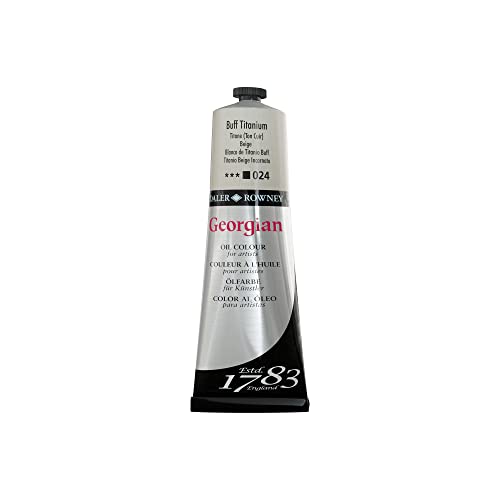
Daler-Rowney Georgian Oil Colour
A wide, inexpensive color range gets beginners painting without a large upfront cost. Consistency runs thinner than premium student lines, so extra layers build the same depth. First-time painters testing whether oil suits them often start here before investing further.
Pros
- Lowest cost entry point into oil painting
- Wide color range for beginners
- Good for practice canvases and studies
Cons
- Thinner pigment load needs more layers for depth
- Less lightfast than artist-grade lines
What matters most
What to look for in oil paint Pigment load sets both color strength and price, since artist grade packs more pure pigment than student grade. Lightfastness ratings, usually shown as a letter or star scale, predict how well a color resists fading over years. Blending time depends on drying speed, which varies by pigment and binder oil. Binder oil itself, typically linseed or safflower, changes smell and how a color shifts over time.
Student grade versus artist grade: what changes Filler cuts pigment concentration in student paint to hit a lower price, which mutes color strength and adds extra layers for full coverage. Artist grade concentrates pigment for stronger, more vivid mixing straight from the tube. Many painters start on student paint and upgrade only a few colors, often blues and reds, to artist grade first. Full artist sets make more sense once brush technique, not paint quality, limits the work.
Best oil paint for beginners on a budget Winton or Georgian give new painters a full palette without a large investment while they learn brush control and medium ratios. Buying artist grade before technique is set often wastes the extra pigment through poor mixing. Save artist-grade purchases for the colors used most, typically titanium white and a handful of key hues. Student paint stays useful for underpainting even after skill improves.
Which paints work in small or shared studios Safflower-bound paints like Gamblin 1980 cut the strong linseed smell that builds up in closed rooms. Faster drying suits painters working in short sessions rather than long wet-into-wet blending stretches. Ventilation still matters even with low-odor paint, since solvent used for cleanup carries its own smell. Painters who rely on extended blending time should stick with slower-drying, traditionally bound paint instead.
How they stack up
| # | Model | Grade | Best for | Score | Price |
|---|---|---|---|---|---|
| 1 | Winsor & Newton Artists’ Oil Colour | Artist (professional) grade | Best overall | 9.4 | Check price |
| 2 | Winsor & Newton Winton Oil Colour | Student grade | Best value | 9.1 | Check price |
| 3 | Gamblin 1980 Oil Colors | Student grade | Best for fast, low-odor drying | 8.9 | Check price |
| 4 | Gamblin Artist’s Oil Colors | Artist grade | Best for single-pigment mixing | 8.7 | Check price |
| 5 | Grumbacher Pre-Tested Oil Colors | Professional grade, moderate cost | Best for classroom and group use | 8.4 | Check price |
| 6 | Holbein Artist Oil Color | Artist grade | Best for luminous glazing | 8.2 | Check price |
| 7 | Daler-Rowney Georgian Oil Colour | Student grade | Best budget | 8.0 | Check price |
Common questions
What is the difference between student and artist grade oil paint?
Artist grade uses a higher concentration of pure pigment, giving stronger color and better lightfastness. Student grade cuts pigment with filler to lower the cost, which mutes vibrancy and often needs more layers to build the same depth.
Which oil paint brand is best for beginners?
Winsor & Newton Winton and Daler-Rowney Georgian both give new painters a full, affordable color range with predictable handling, which matters more early on than maximum pigment strength.
Do oil paints expire?
Properly capped tubes last for years, though the oil binder can separate over long storage. A layer of oil on top of settled pigment is normal and mixes back in with a palette knife.
How long does oil paint take to dry?
Most oil paint reaches touch-dry in one to several days depending on pigment and layer thickness, with full curing taking months. Safflower-bound lines like Gamblin 1980 dry faster than traditional linseed-bound paint.
Can you thin oil paint without solvent?
Yes, walnut or linseed oil thins paint without the fumes of turpentine or mineral spirits, though it slows drying time further.
What does a lightfastness rating mean on an oil paint tube?
It predicts how well a pigment resists fading under light exposure over time, usually shown as a letter grade or star rating. Higher ratings suit work meant to last decades without color shift.
Is Gamblin or Winsor & Newton better for oil painting?
Both rank among trusted artist-grade lines. Gamblin’s 1980 line stands out for lower odor and faster drying, while Winsor & Newton’s Artists’ line carries a slightly heavier pigment load in many colors.
Why is some oil paint more expensive than others in the same brand?
Cost tracks the raw pigment used per color, since some pigments like cadmium and cobalt cost far more to produce than iron oxide earth tones, even within the same artist-grade line.
Can you mix student grade and artist grade oil paint?
Yes, many painters mix both freely, since binder and drying behavior stay similar across grades from the same brand. Combining grades from different brands can cause uneven drying or texture.
Final word
Painters ready to commit to a full palette get the most from Winsor & Newton Artists’ Oil Colour, since its pigment load and per-color lightfastness support long-term work. Beginners should start with Winton instead and upgrade single colors later. Anyone painting in a shared or poorly ventilated room should reach for Gamblin 1980 for its lower odor and faster drying.
Jake Monroe
Jake worked as a residential contractor for over a decade before shifting to full-time writing. He evaluates power tools, hand tools and workshop gear through the lens of someone who has actually used them on job sites, not just read the box.