Wired vs Wireless: Picking the Right Computer Mouse
Logitech MX Master 3S wins for daily desk work, thanks to its electromagnetic scroll wheel and instant multi device switching. Competitive players should pick the Logitech G Pro X Superlight 2 for its low weight and lag free wireless connection. Wrist strain responds best to the Logitech MX Vertical, which angles the hand upright.
Daily desk work calls for the Logitech MX Master 3S, the most complete mouse in this lineup. Competitive players get better results from the feather light Logitech G Pro X Superlight 2. Wrist strain sufferers should start with the Logitech MX Vertical instead.
Choosing a mouse is tricky because advertised specs, DPI counts and polling rates, rarely predict comfort. Hand size and grip style decide almost everything instead. We compared shell dimensions against common grip styles, weight, button placement, scroll behavior, connection type and battery life. Owner reports on long session comfort and switch durability shaped the final ranking.
How to choose
How much does grip style matter? Grip style outweighs any single spec on a mouse’s page. Palm grippers rest the whole hand on the shell and need a tall, contoured body. Claw grippers arch their fingers and prefer a shorter shell with a defined hump. Fingertip users want something small and light. A highly rated mouse that fights your grip causes discomfort no sensor can fix.
What hand measurements should I check before buying? Hand length from wrist crease to middle fingertip is the single most useful number for sizing a mouse. Most listings publish shell dimensions you can compare against it directly. Longer hands generally need a longer shell to avoid cramping. Smaller hands find big ergonomic mice force an awkward reach to the far buttons.
Does DPI actually matter when choosing a mouse? Modern sensors, including budget ones, track more accurately than a human hand can move. Almost nobody uses the extreme DPI numbers printed on the box. What matters is consistent tracking at the speed you actually move the mouse. Polling rate only matters at the margins, for competitive play, and is irrelevant for office work.
Is wireless good enough for competitive gaming now? Dedicated low latency receivers on current gaming mice perform indistinguishably from wired connections for almost every player. Battery life has improved enough that charging is now a weekly task rather than a daily one. Bluetooth suits productivity use but adds more latency, so treat it as a travel connection. Anyone switching between machines often should pick a mouse offering both modes.
The best picks, ranked

Logitech MX Master 3S
MX Master 3S pairs a sculpted palm grip with an electromagnetic scroll wheel that shifts between ratcheted and free spin modes. That shift speeds up long documents and spreadsheets. Clicks stay quiet enough for shared offices. Multi device pairing lets it jump between a laptop and desktop instantly.
Pros
- Electromagnetic wheel handles long scrolling fast
- Pairs with three devices and switches instantly
- Quiet switches suit open offices
Cons
- Too tall and heavy for competitive gaming
- Shaped for right hands only

Logitech G Pro X Superlight 2
Competitive players favor this mouse for its minimal weight and symmetrical shape. Lightspeed wireless removes any perceptible input delay. Logitech skipped extra buttons on purpose, keeping the shell small for fast aim adjustments. Battery life stretches to weeks, so charging becomes a background chore rather than a daily one.
Pros
- Minimal weight speeds up fast aim swings
- Wireless connection with no noticeable delay
- Symmetrical shape suits several grip styles
Cons
- Few buttons limit everyday productivity use
- No Bluetooth mode for casual device switching

Razer DeathAdder V3 Pro
DeathAdder’s contour has anchored right handed ergonomic gaming mice for years, and the V3 Pro keeps that shape while trimming weight substantially. A pronounced thumb rest supports a relaxed grip through long sessions. Owners with larger hands report noticeably less fatigue than with compact symmetrical mice.
Pros
- Comfortable contour built for larger hands
- Light weight despite the ergonomic shell
- Optical switches avoid accidental double clicks
Cons
- Shaped for right hands only
- Fewer side buttons than MMO focused mice

Logitech MX Vertical Advanced Ergonomic Mouse
MX Vertical tilts the hand to a steep angle, keeping the forearm closer to a neutral handshake position. Wrist discomfort often eases after roughly a week of adjustment, according to owner reports. Precise pointer work takes practice to relearn, and fast gaming is not its strength.
Pros
- Neutral forearm angle cuts wrist twisting
- Multi device pairing matches the MX line
- Grippy surface with a solid overall build
Cons
- Precision work needs a learning curve
- Not built for fast paced gaming
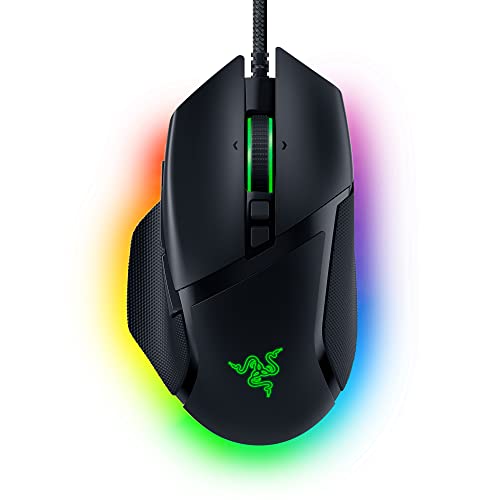
Razer Basilisk V3
Basilisk V3 adds a tilt capable scroll wheel that switches to free spin on demand. Eleven programmable buttons cover game bindings and workflow shortcuts alike. Being wired removes battery concerns entirely, and the added weight suits people who prefer a planted feel over a light glide.
Pros
- Eleven programmable buttons cover most workflows
- Free spin scroll mode speeds up long pages
- No battery or charging to manage
Cons
- Cable limits movement for some players
- Heavier than dedicated competitive gaming mice

SteelSeries Aerox 3 Wireless
A perforated shell keeps Aerox 3 light without pushing the price into flagship territory. Both a low latency 2.4GHz receiver and Bluetooth ship in the same mouse. Owners describe it as close to premium lightweight mice in daily use, though the open shell needs occasional dust cleaning.
Pros
- Very light for its price bracket
- Both wireless modes included in one mouse
- Water resistant coating protects the internals
Cons
- Perforated shell collects dust over time
- Smaller shell fits medium hands at most
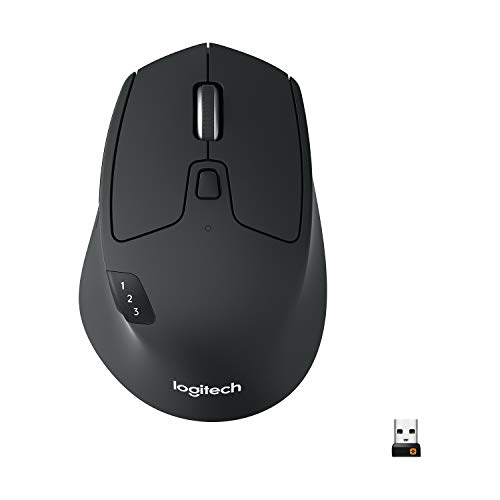
Logitech M720 Triathlon
M720 covers office essentials: multi device switching, a free spinning wheel and battery life measured in months. A single replaceable AA cell powers it, which some people prefer over recharging. Build quality and sensor are ordinary, but that is enough for browsing and document work.
Pros
- Battery life measured in months, not days
- Pairs with up to three devices at once
- Free spin wheel at a modest price
Cons
- Plastic build feels basic compared to rivals
- Not suited to fast paced gaming
Compared at a glance
| # | Model | Connection | Best for | Score | Price |
|---|---|---|---|---|---|
| 1 | Logitech MX Master 3S | Bluetooth and USB receiver | Best overall | 9.4 | Check price |
| 2 | Logitech G Pro X Superlight 2 | Lightspeed wireless receiver | Best for competitive gaming | 9.2 | Check price |
| 3 | Razer DeathAdder V3 Pro | HyperSpeed wireless and USB-C | Best for large hands | 9.0 | Check price |
| 4 | Logitech MX Vertical Advanced Ergonomic Mouse | Bluetooth and USB receiver | Best for wrist comfort | 8.7 | Check price |
| 5 | Razer Basilisk V3 | Wired USB | Best for customisation | 8.5 | Check price |
| 6 | SteelSeries Aerox 3 Wireless | 2.4 GHz receiver and Bluetooth | Best value gaming mouse | 8.2 | Check price |
| 7 | Logitech M720 Triathlon | Bluetooth and Unifying receiver | Best budget | 8.0 | Check price |
Frequently asked questions
Is a gaming mouse good enough for office work?
Not really. Gaming mice prioritize light weight, fast sensors and quick switches. Productivity mice add better scroll wheels, smarter button placement and multi device switching. Spreadsheets and browsing feel more comfortable on a productivity mouse.
How much does mouse weight actually matter?
For competitive gaming it matters a lot, since lighter mice allow faster direction changes with less fatigue. For general use it comes down to preference, and some people prefer a heavier, more planted feel. No single weight is correct for everyone.
Do vertical mice really help with wrist pain?
Many owners report improvement, since the vertical shape reduces forearm rotation. Results vary, and no mouse replaces adjusting desk height, chair position and taking breaks. Give it about a week before judging whether it helps.
Is wired still better than wireless for gaming?
For practical purposes, no. Current low latency wireless receivers match wired performance for almost all players. Wired still appeals if you dislike managing charging or want the lowest possible cost.
What DPI setting should I use?
Most people land somewhere in the low to mid thousands, adjusted so a comfortable arm or wrist movement crosses the screen. Gamers often run lower settings than marketing implies, since consistent muscle memory beats raw sensitivity.
How long do mice typically last before switches wear out?
Switch ratings run into tens of millions of clicks, and owners commonly report several years of daily use. Double clicking from worn mechanical switches is the most common failure, which pushed some brands toward optical switches instead.
Can one mouse work across a laptop and a desktop?
Yes, if it supports multi device pairing. Several mice here store connections to two or three computers and switch with a button press, far more convenient than re-pairing each time.
Are left handed mice available?
Options are limited. Symmetrical gaming mice work in either hand, though side buttons usually sit on one side only. Fully ambidextrous models with buttons on both sides are rare, and most ergonomic productivity mice are shaped for right hands.
The bottom line
Most people at a desk all day should buy the Logitech MX Master 3S, since its scroll wheel and device switching change how you work, not just how you click. Competitive players belong with the G Pro X Superlight 2 instead. Anyone whose wrist complains by afternoon should give the MX Vertical a fair one week trial before looking elsewhere.
Marcus Chen
Marcus covered consumer electronics for enthusiast tech publications for six years before joining ChoiceCrest. He specializes in translating manufacturer spec sheets into plain-language buying advice, with a focus on audio, computing accessories and smart-home gear.
You might also need

Picking the Right Computer Monitor for Work or Gaming

Picking a Wireless Keyboard That Won’t Lag or Disconnect

Wireless Mice Compared by Grip, Sensor and Battery Life
